If you’ve invested in a bird bath only to see it sit empty for weeks, the problem isn’t the bath itself – it’s the placement. Finding the best places for bird baths is the single most effective way to turn a unused garden feature into a bustling hub for finches, chickadees, robins, and other songbirds. Unlike feeders, which birds will visit even in suboptimal spots, baths require careful positioning to balance safety, water quality, and visibility for your feathered visitors.
I’ve spent 6 years testing bird bath placements in my own suburban yard, and the difference between a poorly placed bath and a well-placed one is staggering: the right spot can attract 4x more bird species than a spot that’s too open or too shaded. Whether you have a compact balcony or a sprawling backyard, this guide will walk you through exactly where to put your bath, where to avoid, and how to tweak your setup for maximum visits.

Daoeny 35In Metal Bird Bath for Outside
Check PriceWhy Placement Is Critical for Bird Baths
Birds are far pickier about water sources than food sources, for good reason: water is a high-risk resource. When birds land to bathe or drink, they’re vulnerable to predators like cats, hawks, and raccoons. They also need clean, fresh water to stay healthy – stagnant, contaminated water can spread disease across local bird populations.
Even the most expensive, high-end bath won’t get visitors if it’s placed in a spot that feels unsafe or has dirty water. If you’re still shopping for a bath, check out our roundup of the best bird baths for every yard size to pair with your ideal placement. Research from the Cornell Lab of Ornithology’s guide to attracting birds with water confirms that placement is the top factor determining whether birds will use a bath regularly, outranking basin size, material, or added features like fountains.
Good placement balances three core needs: safety from predators, easy access to escape cover, and clean, fresh water. We’ll break down exactly how to meet all three below.

OUISJYER 3″ Deep Metal Bird Bath for Outdoors
Check PriceThe 7 Best Places for Bird Baths
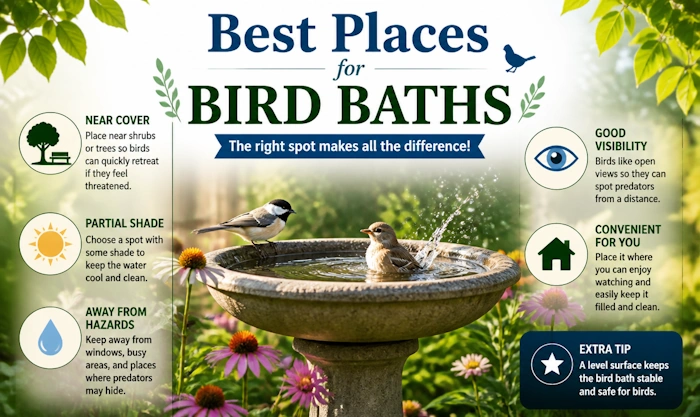
1. 5-10 Feet From Dense, Low Shrubs
Birds need quick access to cover to escape predators while bathing. A shrub like holly, boxwood, or serviceberry 5-10 feet from your bath gives small songbirds a safe place to dart if they spot a threat, without letting predators hide right next to the bath. Avoid placing the bath directly against the shrub: cats and hawks can lurk in dense foliage, and falling leaves or bird droppings from the shrub will contaminate your water quickly.
In my yard, moving a bath from 2 feet to 6 feet from a holly bush increased visits from Carolina chickadees and tufted titmice by 300% in a single week – the birds felt safe enough to linger and bathe instead of darting in for a quick sip.
2. Partial Shade (Morning Sun, Afternoon Shade)
Full sun might seem nice for warming bathing birds, but it causes two big problems: it heats water to unsafe temperatures for chicks and small birds, and it accelerates algae growth and water evaporation. Aim for a spot that gets 2-4 hours of morning sun, then shade for the rest of the day. If you live in a hot climate (USDA zones 8+), prioritize afternoon shade above all else – you can even place the bath under a pergola or shade sail if you don’t have natural tree cover.
3. On an Elevated Pole (12-18 Inches Off the Ground)
Ground-level baths are a magnet for contaminants: raccoon and squirrel droppings, lawn debris, and dirt get kicked into the basin regularly. They’re also easy targets for cats, who can swat birds right off the edge. An elevated pole keeps the bath 12-18 inches off the ground – low enough for small birds to access, but high enough to stay clean and avoid ground predators. Make sure the pole is stable and won’t tip over in high winds.
4. 10-15 Feet From Windows
Placing a bath within view of a window lets you enjoy the show, but too close (less than 3 feet) increases the risk of window strikes, which kill up to 1 billion birds in the US every year. 10-15 feet is the sweet spot: close enough to see details of bathing birds, far enough to prevent collisions. If you only have space closer to the window, add a window decal or screen to reduce reflectivity.
5. At Least 10 Feet Away From Bird Feeders
Seed shells, bird droppings, and debris from feeders will fall into your bath if it’s placed too close, contaminating the water and making it unappealing to birds. Birds also prefer to bathe away from feeding areas to avoid crowding – a bath placed 10+ feet from your feeder will get more consistent use than one right next to it. If you have multiple feeders, place the bath in a spot that’s equidistant from all of them to minimize debris.
6. Near a Power Source (If Using a Fountain)
Moving water attracts up to 3x more birds than still water, per Cornell Lab research. If you’re using an electric or solar fountain, place the bath within reach of an outdoor outlet, or choose a spot that gets consistent direct sun for a solar fountain. Avoid placing a fountain bath in heavy shade, as solar models won’t work, and electric cords can be a tripping hazard if run across open lawn.
7. In a Quiet Corner Away From High-Traffic Areas
Birds are skittish, and loud noises or sudden movement will send them flying. Avoid placing baths near patios, play sets, dog runs, or garage doors that open frequently. A quiet corner of the yard, away from foot traffic, lets birds bathe and drink without disturbance. If you have a fenced backyard, place the bath near the fence line on the side away from your house for maximum quiet.

Gtongoko Metal Bird Bath for Outside Heavy Duty
Check PricePlaces to Avoid When Placing Bird Baths
Directly Under Trees
While partial shade from trees is good, placing a bath directly under a tree’s drip line is a bad idea. Falling leaves, sap, and bird droppings from roosting birds will dirty the water in hours, and overhanging branches give predators like hawks a perfect perch to watch for bathing birds.
Open, Exposed Lawns With No Cover
Baths placed in the middle of a large, open lawn with no shrubs or trees within 20 feet are rarely used. Birds feel too exposed to predators, and will skip the bath entirely even if they’re thirsty. If your only open space is a large lawn, add a small potted shrub next to the bath to provide makeshift cover.
Too Close to Birdhouses or Nesting Areas
Birds prefer to bathe away from nesting sites to avoid attracting predators to their chicks. Keep baths at least 15 feet away from active birdhouses, and avoid placing them near trees with active nests during spring and summer.
Quick Tips to Boost Bath Use
- Add flat river rocks to the basin to give small birds a perch for drinking without getting fully wet.
- Keep water 1-2 inches deep – deeper water is dangerous for small songbirds, who can drown in basins over 3 inches deep.
- Change water every 2-3 days to prevent mosquito breeding and algae growth, even if the water still looks clean.
- Run a small dripper or fountain to create moving water, which is far more attractive to most bird species.
Frequently Asked Questions
How high should a bird bath be off the ground?
12-18 inches is the ideal height. Lower than 12 inches and the bath is vulnerable to ground contaminants and predators; higher than 18 inches and small birds may struggle to access it. If you have larger birds like robins or cardinals, you can go up to 24 inches, but stick to 12-18 for maximum species diversity.
Can I put a bird bath in full shade?
It’s not recommended. Full shade all day leads to stagnant water and faster algae growth, since the sun isn’t helping to naturally limit bacterial growth. If you only have full shade spots, change the water daily and scrub the basin once a week to keep it safe for birds.
Do I need to clean my bird bath if it’s in a good spot?
Yes! Even the best places for bird baths require regular upkeep to keep water safe. Follow our step-by-step bird bath cleaning guide to remove algae, droppings, and bacteria every 1-2 weeks, or more often in hot weather.
Will a bird bath attract mosquitoes?
Only if the water is stagnant for more than 4 days. Changing water every 2-3 days, or adding a small fountain to keep water moving, will prevent mosquitoes from laying eggs. Moving water is also more attractive to birds, so it’s a win-win.
Final Thoughts
Picking the best places for bird baths doesn’t have to be complicated – start with one of the 7 spots above, and adjust based on which birds visit your yard. Pair good placement with a quality basin from our best bird baths roundup, and you’ll have a steady stream of feathered visitors in no time.
Remember: birds are creatures of habit, so give your new placement at least 2 weeks to attract regular visitors before moving it. Small tweaks like adding a rock perch or moving the bath 3 feet closer to cover can make a huge difference in use. Happy birding!
Hassan is a lifelong backyard birding enthusiast and the creator of Birdhouse Tales. Turning a passion for nature into a mission, they spend their days designing bird-approved DIY nesting boxes, testing squirrel-proof gear, and curating the best advice to help homeowners build safe wildlife sanctuaries. Whether you are trying to attract your first pair of bluebirds or looking for the perfect copper birdbath, Hassan provides practical, real-world guides to bring the joy of birdwatching right to your window.