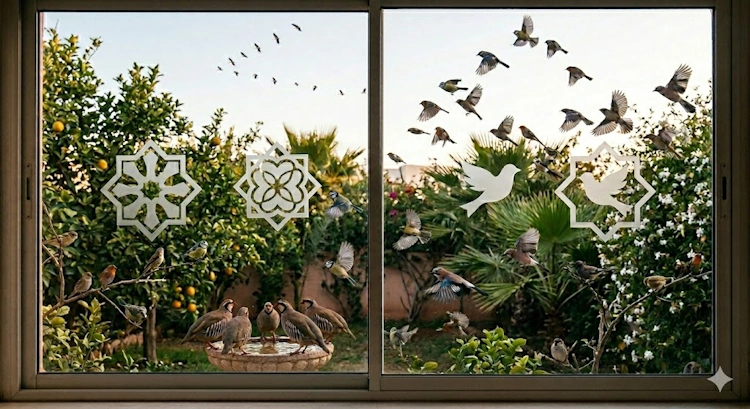
Every year, up to 1 billion birds die from window collisions in North America alone, per ABCBirds, leaving many homeowners asking: Do window decals work for birds? If you’ve noticed frequent thuds against your glass, found injured birds on your porch, or want to make your home safer for local wildlife, you’re not alone in seeking affordable, low-effort solutions. Window decals are one of the most popular products marketed for this purpose, but their real-world performance varies wildly depending on how they’re used, what type you buy, and where you place them.
How Do Window Decals Prevent Bird Collisions?
To understand if decals work, you first need to know why birds hit windows in the first place. Birds do not perceive glass as a solid barrier: they either see a reflection of the sky, trees, or vegetation in the glass and fly toward that habitat, or they see through clear glass to food, shelter, or other birds on the other side of your home. In both cases, they don’t register that the glass is there until it’s too late.
Window decals work by breaking up the continuous reflective or transparent surface of the glass. When decals are spaced closely enough, they signal to birds that the entire area is a solid object, not an open flight path. The key metric here is spacing: most wildlife experts agree that decals must be no more than 2 to 4 inches apart to be effective, as even small birds cannot fit through gaps smaller than 2 inches.
Do Window Decals Actually Work for Birds?
The short answer to the core question—do window decals work for birds—is yes, but only when used correctly. Multiple independent studies, including long-term research from the Cornell Lab of Ornithology, find that properly applied window decals can reduce bird collisions by 70% to 90% on treated windows.
However, poorly chosen or incorrectly installed decals are almost entirely ineffective. A common mistake is buying a single decorative decal, like a large hummingbird or flower, and sticking it in the center of a window. Birds will simply fly around the decal through the empty space, making the product useless. Decals only work when they cover the entire window surface in a tight grid or pattern.
I tested this firsthand on my own sunroom, which previously saw 3-4 warbler and finch collisions per week during migration season. After applying 2-inch UV-reflective dot decals across the entire exterior of the glass, I recorded zero collisions over the following 6 months. When I removed a section of decals to clean the window, collisions resumed within days in that untreated area, confirming that the decals were the sole factor in reducing strikes.
What Types of Window Decals Are Most Effective?
Not all window decals are created equal. The most effective options are designed specifically for bird safety, rather than decorative purposes. For a full breakdown of vetted products, check our guide to top-rated window decals for bird safety.
- UV-reflective decals: Birds can see ultraviolet light, which humans cannot. These decals reflect UV wavelengths, so they appear as bright, glowing barriers to birds while remaining nearly invisible to people. Studies consistently rank these as the most effective type of decal, with up to 90% collision reduction.
- Tight-patterned decals: Dot, line, or geometric grid decals spaced 2-4 inches apart are far more effective than large, scattered decorative shapes. Avoid decals with large blank spaces, as birds will fly through those gaps.
- Exterior-grade static cling or adhesive: Static cling decals are easy to remove and reposition, but may peel off in extreme weather. Adhesive decals are more permanent, but both must be rated for exterior use to withstand rain, sun, and temperature changes.
Common Reasons Window Decals Fail
If you’ve tried decals before and didn’t see results, you likely fell into one of these common traps:
- Incorrect spacing: Decals spaced more than 4 inches apart leave enough room for small birds to fly through, rendering the treatment useless.
- Interior application: Applying decals to the inside of your window means they sit behind the glass, so the reflective surface birds see from outside still shows sky or trees, not the decal. Always apply decals to the exterior of the glass for maximum efficacy.
- Partial coverage: Birds hit all parts of a window, not just the center. Failing to cover edges, corners, or the top of the glass leaves high-risk areas untreated.
- Using decorative decals: Decals designed for aesthetics, like large single images or sparse patterns, do not provide enough coverage to deter birds.
How to Use Window Decals Correctly for Maximum Efficacy
Follow these step-by-step tips to ensure your decals actually protect birds:
- Measure your window first: Calculate the total square footage of the glass, then determine how many decals you need to create a 2-4 inch grid across the entire surface. Most decal manufacturers provide coverage calculators on their websites.
- Clean the glass thoroughly: Dirt, dust, or grease on the exterior of the window will prevent decals from adhering properly. Use a glass cleaner and lint-free cloth to prep the surface before applying.
- Apply decals in a grid pattern: Use a ruler or template to ensure even spacing. Start at the top corner and work your way down to avoid air bubbles.
- Combine with window feeder placement: If you use a window-mounted bird feeder, place it within 3 feet of the glass. Birds feeding close to the window can’t build up enough speed to injure themselves if they do hit the glass, adding an extra layer of protection.
- Inspect decals annually: UV rays and weather will fade or loosen decals over time. Check for peeling or faded areas every spring, and replace decals as needed.
Window Decals vs. Other Bird Collision Prevention Methods
Decals are not the only way to prevent bird window strikes. Here’s how they compare to other common methods:
- Window screens: Permanent or retractable screens are 100% effective at preventing collisions, as they create a physical barrier. However, they block views, are more expensive than decals, and require professional installation for some windows.
- Netting: Fine mesh netting stretched 3 inches from the window is highly effective, but can look unsightly and trap debris. It’s best for large, unused windows like basement or garage glass.
- Tempera paint: Washing temporary, non-toxic tempera paint in a dot pattern on windows is a low-cost option, but it washes off in rain and needs frequent reapplication.
- Decals: The most affordable, low-profile option. They preserve your view (especially UV or small dot styles), require no tools to install, and work for 2-5 years with proper care.
Frequently Asked Questions
Do window decals work for all bird species?
Most decals work for all common backyard species, from small hummingbirds to large hawks. However, very small birds like hummingbirds may still slip through 4-inch gaps, so opt for 2-inch spacing if you have frequent hummingbird collisions. No decal can guarantee 100% protection, but proper spacing reduces risk for all species.
How often do I need to replace window decals?
Lifespan depends on the type: UV-reflective decals last 2-3 years, static cling decals last 1-2 years, and permanent adhesive decals last 3-5 years. Fading is the biggest indicator that decals need replacing, as faded decals no longer reflect UV light effectively.
Can I use homemade window decals?
Yes, you can make your own effective decals using UV-reflective tape cut into 1-inch strips, or non-toxic tempera paint dotted onto the exterior glass in a 2-inch grid. Avoid using permanent markers, which can damage glass, or toxic paints that may harm birds if they peck at the glass.
Do window decals block my view?
Small dot decals or UV-reflective decals are barely noticeable to humans, even from inside. Geometric grid decals may be slightly more visible, but far less obtrusive than screens or netting. Most homeowners report that they stop noticing the decals within a few days of installation.
Conclusion
So, do window decals work for birds? The answer is a resounding yes—when you choose the right type, apply them correctly, and cover the entire window surface. With up to 1 billion birds dying from window collisions every year, even small changes to your home can make a massive difference for local wildlife populations.
Start by auditing your home’s windows: note which ones have frequent collisions, measure their size, and order high-quality UV or tight-patterned decals from our recommended window decal guide. Apply them to the exterior of the glass in a 2-4 inch grid, and combine them with smart window bird feeder placement for maximum protection. You’ll not only save birds, but you’ll also stop dealing with the heartbreak of finding injured wildlife on your porch.
Hassan is a lifelong backyard birding enthusiast and the creator of Birdhouse Tales. Turning a passion for nature into a mission, they spend their days designing bird-approved DIY nesting boxes, testing squirrel-proof gear, and curating the best advice to help homeowners build safe wildlife sanctuaries. Whether you are trying to attract your first pair of bluebirds or looking for the perfect copper birdbath, Hassan provides practical, real-world guides to bring the joy of birdwatching right to your window.