Figuring out what to wear for bird watching can feel trickier than it sounds. You want to stay comfortable during long hours in the field, blend into your surroundings so you don’t startle shy species, and adapt to sudden weather changes that are common in outdoor spaces. Whether you’re a total beginner packing for your first local park walk or an intermediate birder planning a trip to a remote wetland, your outfit can make or break your day out. For foundational birding ethics and species ID tips, refer to the Audubon Society’s official beginner birding guide. If you’re mapping out a longer birding adventure, our birdwatching road trip planning guide has route, gear, and lodging tips to pair with your new outfit.
Why Your Bird Watching Outfit Matters
Many new birders focus on binoculars and field guides, but overlook how much their clothing impacts their success. First, comfort is key: birding often involves standing still for long periods, walking uneven trails, or crouching in brush to get a better view. If your clothes are itchy, too tight, or trap sweat, you’ll be distracted from spotting rare species. Second, camouflage (in the form of neutral earth tones, not military gear) helps you blend in. Birds have excellent color vision and will flee from bright, contrasting colors that stand out against natural surroundings. Third, weather protection keeps you safe: hypothermia, heat exhaustion, and sunburn are real risks even on short trips. A well-planned outfit lets you focus on the birds, not your discomfort.
I learned this lesson the hard way on a spring birding trip to a coastal marsh. I wore a bright blue hoodie and cotton jeans, and within 20 minutes, every bird within 50 yards had flown off. A local birder lent me an olive-green jacket and tan pants, and suddenly I was spotting warblers and sandpipers I’d missed earlier. That day, I realized my outfit was the only thing holding me back from a successful day.
Core Clothing Rules for All Bird Watchers
Regardless of the season or location, a few universal rules apply to every birding outfit. These guidelines work for beginners and intermediate birders alike, and can be adjusted for specific conditions.
Stick to Neutral, Earthy Tones
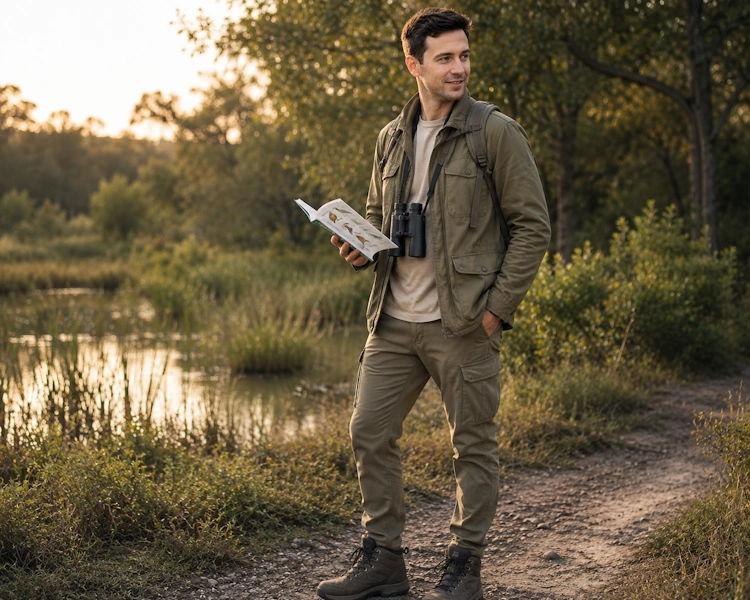
Birds see a wider range of colors than humans, including ultraviolet light, so even colors that look muted to you may stand out to them. Stick to solid, matte earth tones: olive green, brown, tan, charcoal gray, and forest green. These mimic the colors of trees, soil, and brush, helping you blend in naturally. Avoid bright colors (red, orange, neon yellow), white (which reflects light and stands out), and high-contrast patterns like bold plaid or stripes. Muted, small-scale plaid is acceptable in some environments, but solid colors are always the safer choice.
You don’t need full camouflage gear for birding, and military-style camo with high contrast can actually be counterproductive. Most birders find that simple, solid earth tones work better than specialized camo, and are more versatile for post-birding stops like coffee shops or grocery stores.
Prioritize Moisture-Wicking and Breathable Fabrics
Avoid 100% cotton at all costs. Cotton absorbs sweat and moisture, then stays wet for hours, which can lead to chafing in warm weather and hypothermia in cold weather. Instead, choose moisture-wicking synthetic fabrics (polyester, nylon) or natural merino wool for base layers. These fabrics pull sweat away from your skin, dry quickly, and regulate body temperature. For mid-layers, fleece or wool are excellent insulators that still breathe. Avoid stiff, non-breathable fabrics like rain gear for base layers, as they trap sweat and cause overheating.
Merino wool is a favorite among experienced birders: it’s naturally odor-resistant, regulates temperature in both hot and cold weather, and doesn’t itch like traditional wool. It’s more expensive than synthetic options, but lasts for years with proper care.
Layer for Changing Conditions
Weather can change in minutes when you’re outdoors, so layering is the best way to adapt without packing a full suitcase. A three-layer system works for almost all conditions: 1) Base layer: tight-fitting, moisture-wicking fabric that sits against your skin. 2) Mid layer: insulating layer that traps heat, like fleece, down, or wool. 3) Outer layer: waterproof, windproof shell that protects against rain, snow, and wind. You can add or remove mid-layers as temperatures rise or fall, and stash your outer layer in a backpack if the sun comes out.
For example, a summer birding outfit might be a merino wool t-shirt (base), no mid layer, and a lightweight windbreaker (outer) if rain is forecast. A winter outfit would be a merino wool long-sleeve base, a fleece mid layer, and a down-filled waterproof parka as the outer layer.
Seasonal Outfit Breakdowns
Each season brings unique challenges, from bugs in summer to snow in winter. Adjust your outfit to match the conditions you’ll face:
What to Wear for Spring Bird Watching
Spring weather is notoriously variable: mornings can be near freezing, while afternoons climb to 70°F (21°C), with sudden rain showers common. Start with a lightweight moisture-wicking base layer (long-sleeve if mornings are cold). Pack a packable fleece mid-layer that stuffs into a small pocket, and a waterproof, breathable outer shell that you can throw on if rain hits. Footwear should be waterproof hiking shoes or trail runners with good grip, plus gaiters to keep mud and water out of your shoes if trails are soggy from snowmelt. Accessories: a lightweight beanie for cold mornings, fingerless gloves (so you can still adjust binoculars), and polarized sunglasses to cut glare from wet trails and ponds.
Spring is peak migration season for many species, so you’ll likely be out early in the morning when temperatures are lowest. Understanding bird daily activity cycles can help you decide if you need an extra mid-layer for pre-dawn hikes when birds are most active.
What to Wear for Summer Bird Watching
Summer birding means heat, humidity, biting insects, and strong sun. Choose loose, lightweight, long-sleeved shirts and pants to protect your skin from sunburn and ticks (which are common in grassy and wooded areas). Light-colored earth tones (tan, light olive) reflect sunlight better than dark colors, keeping you cooler. Treat your clothes with permethrin (a CDC-recommended insect repellent that’s safe for humans once dry) to keep mosquitoes, ticks, and chiggers away. Footwear should be breathable trail runners or hiking shoes with moisture-wicking socks (merino wool or synthetic, no cotton) to prevent blisters. Accessories: a wide-brimmed hat to protect your neck and face from the sun, polarized sunglasses, and a small bottle of DEET or picaridin insect repellent for exposed skin.
What to Wear for Fall Bird Watching
Fall brings cooler temperatures, frequent rain, and another round of migration. Earth tones that match fallen leaves (brown, tan, olive) work best to blend in. Use the three-layer system: moisture-wicking base, fleece or wool mid-layer, and waterproof outer shell. Footwear should be waterproof and insulated if you’re birding in late fall when temperatures drop below freezing. Accessories: a warm beanie, waterproof gloves (so you can still handle binoculars), and a neck gaiter that can be pulled up over your face if wind picks up. Fall trails are often covered in wet leaves, so choose footwear with aggressive tread to prevent slips.
What to Wear for Winter Bird Watching
Winter birding requires the most preparation, as exposure to cold and wind can be dangerous. Start with a heavyweight merino wool base layer (long-sleeve top and bottom). Add a thick fleece or down mid-layer, then a waterproof, windproof outer shell that’s rated for sub-freezing temperatures. Footwear is critical: insulated, waterproof boots rated for at least 20°F (-7°C) below the expected temperature, plus thick merino wool socks (wear two pairs if needed) and gaiters to keep snow out. Accessories: a heavyweight beanie that covers your ears, mittens (which are warmer than gloves, since fingers share body heat), hand warmers, and a face mask or balaclava to protect your skin from windburn. Chemical hand warmers are a great addition to your pocket for especially cold days.
Essential Accessories You Shouldn’t Skip
Beyond core clothing, a few accessories make a big difference in your comfort and success:
Headwear
A wide-brimmed hat is the best choice for most conditions: it protects your face, neck, and ears from the sun in summer, and adds an extra layer of warmth in winter. Baseball caps are acceptable, but don’t protect your neck from sun or wind. In cold weather, pair a beanie with your hat, or choose a beanie with a brim for dual protection. Avoid hats with bright logos or shiny brims, which can startle birds.
Footwear and Socks
Invest in a good pair of waterproof hiking shoes or boots with ankle support, especially if you’ll be walking uneven trails. Trail runners are lighter and more breathable for summer, while insulated boots are necessary for winter. Always pair with moisture-wicking socks: merino wool is best, as it stays warm even when wet. Avoid cotton socks at all costs, as they cause blisters and cold feet. Gaiters are a cheap, useful addition to keep mud, water, and snow out of your footwear.
Protective Gear
Polarized sunglasses are a must: they cut glare from water and wet surfaces, making it easier to spot birds near ponds and rivers. Choose UV-protective lenses to prevent eye strain during long days outside. Sunscreen is necessary even in winter, as snow reflects UV rays and increases your risk of sunburn. Tick checks after every birding trip are critical: run your hands over your clothes and skin to check for ticks, and shower within 2 hours of returning home to reduce the risk of Lyme disease.
What to Avoid Wearing While Bird Watching
- Bright colors, white, and high-contrast patterns: these startle birds and make you stand out.
- 100% cotton clothing: holds moisture, causes chafing and hypothermia.
- Loud, rustling fabrics: stiff nylon or plastic fabrics make noise when you move, alerting birds to your presence.
- Open-toed shoes or sandals: leave your feet vulnerable to bites, cuts, and ticks.
- Perfume, cologne, or scented lotions: birds have sensitive respiratory systems, and strong scents can mask natural bird odors used for identification.
- Shiny jewelry or watches: reflect light and startle birds.
Frequently Asked Questions
Can I wear jeans for bird watching?
Avoid traditional 100% cotton jeans at all costs. They absorb sweat and water, get heavy when wet, and take hours to dry, leading to discomfort and increased risk of hypothermia in cold weather. If you prefer the fit of jeans, choose moisture-wicking, stretchy denim alternatives made from synthetic blends, but hiking pants are still a better choice for mobility and comfort.
Do I need to wear camouflage for bird watching?
Full camouflage gear is not necessary for birding. Neutral, solid earth tones work just as well to blend in, and are more versatile for everyday use. Military-style camo with high contrast can actually startle birds, so stick to matte, solid colors instead. If you already own camo clothing in muted earth tones, it’s fine to wear, but don’t go out and buy it specifically for birding.
What colors should I avoid for bird watching?
Avoid any bright, saturated colors (red, orange, neon yellow, hot pink), white, and high-contrast patterns like bold stripes or plaid. These colors stand out sharply against natural backgrounds, alerting birds to your presence long before you spot them. Shiny fabrics or clothing with reflective logos should also be avoided, as they reflect light and startle wildlife.
Can I wear perfume or cologne while bird watching?
No, you should skip scented products entirely when birding. Birds have very sensitive respiratory systems, and strong artificial scents can irritate them. Scented products can also mask natural bird odors that you might use to identify species, and attract unwanted insects like mosquitoes and bees. Stick to unscented laundry detergent and personal care products on birding days.
Conclusion
Choosing the right outfit for bird watching doesn’t have to be complicated. Stick to neutral earth tones, moisture-wicking fabrics, and a layered system that adapts to changing weather, and you’ll be comfortable and successful in the field. Remember that your outfit’s job is to help you blend in, stay safe, and focus on the birds, not to make a fashion statement. Test your outfit on a short local walk before a big trip to make sure everything fits well and works for your needs. With the right clothes, you’ll spend less time worrying about your comfort and more time spotting rare and beautiful species.
Hassan is a lifelong backyard birding enthusiast and the creator of Birdhouse Tales. Turning a passion for nature into a mission, they spend their days designing bird-approved DIY nesting boxes, testing squirrel-proof gear, and curating the best advice to help homeowners build safe wildlife sanctuaries. Whether you are trying to attract your first pair of bluebirds or looking for the perfect copper birdbath, Hassan provides practical, real-world guides to bring the joy of birdwatching right to your window.