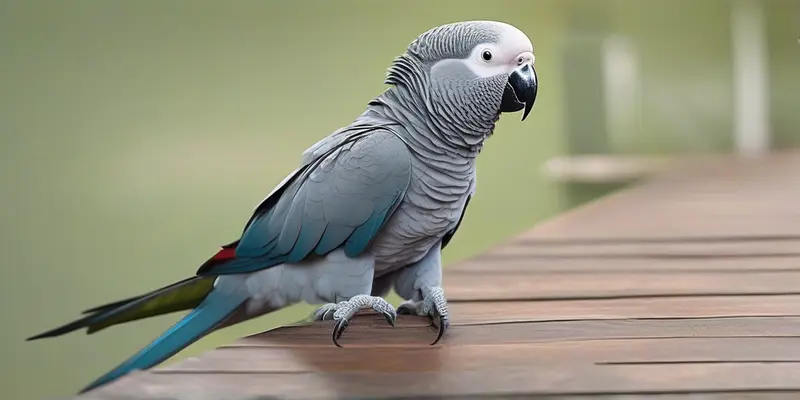
If you’ve ever watched a grey parrot repeat a phrase in a perfect human voice, you’ve probably asked: How smart are grey parrots? These birds are far more than mimicry machines. Decades of research show they have cognitive abilities matching 3- to 5-year-old human children, with problem-solving skills, emotional awareness, and contextual understanding that surprise even seasoned bird experts.
What Makes Grey Parrots Cognitively Unique?

Super Bird Creations SB1107 Bagel Cascade Bird Toy, Large Bird Size, Refillable Bagels, 15” x 4.5”
Check PriceBrain Structure Similarities to Humans
Most birds have small, simple brains, but grey parrots (specifically African Grey parrots, the most common pet grey species) have a highly developed pallium, the bird equivalent of the human cerebral cortex. This region handles complex cognitive tasks like decision-making, memory, and sensory processing.
A 2018 study found that grey parrot brains have a higher neuron density in the pallium than primates of similar size, explaining their advanced problem-solving abilities. Their pallium is organized into specialized clusters that work together to process information, letting them form long-term memories and adapt to new situations quickly.
The Famous Alex Study Results
No discussion of grey parrot intelligence is complete without mentioning Alex, the African Grey studied by scientist Irene Pepperberg for 30 years. Alex wasn’t just trained to mimic words; he learned to identify colors, shapes, numbers up to 6, and even express emotions like frustration or boredom. He could ask for specific items, answer questions about objects, and correct researchers when they made mistakes.
One of his most famous breakthroughs was his demonstration of an understanding of zero as a numerical concept, a skill that even some young children struggle to grasp. His work, documented by Brandeis University’s Pepperberg Lab for Avian Cognition, revolutionized how scientists view bird intelligence, proving that parrots have conscious thought rather than just rote memorization.
Key Signs of Grey Parrot Intelligence

BBjinronjy Large Parrot Toys Bird Chewing Toys-Natural Nuts Corn Loofah Wooden Bird Cage Toy for African Grey,Macaws,Conure,Cokatoos,Cockatiel,Amazon Parrots and Other Medium and Small Birds
Check PriceVocabulary and Contextual Understanding
Grey parrots can learn hundreds of words, with some recorded cases of birds knowing over 1,000 distinct phrases. But what sets them apart is their ability to use words in context. For example, a grey parrot might say “water” when they’re thirsty, or “scared” when a loud noise startles them, rather than just repeating phrases they’ve heard randomly. In a 2020 study, researchers tested grey parrots’ ability to categorize objects: the birds could sort items by color, shape, and material, then label each category correctly using learned vocabulary, proving they attach meaning to words rather than just memorizing sounds.
Problem-Solving and Tool Use
Grey parrots are skilled at solving multi-step puzzles to access food or toys. In lab tests, they’ve figured out how to stack blocks to reach a treat, unscrew jar lids, and even use sticks to push food out of narrow tubes. Some pet greys have been known to figure out how to open their cage latches, leading owners to invest in secure best cage for African grey parrot models with escape-proof locks.
Tool use is particularly impressive: in one experiment, grey parrots were given a short stick that couldn’t reach a treat, and a longer stick placed out of reach. The birds figured out to use the short stick to drag the long stick closer, then use the long stick to retrieve the treat, a two-step process requiring planning and foresight.

Bird Toys, Parrot Toys for Large Birds, Natural Peppered Wood African Grey Parrots, Macaws, Cockatoos, Amazon Parrot chew Toys, Aviary Hanging Toys
Check PriceEmotional Intelligence and Social Awareness
Grey parrots are highly social animals that form strong bonds with their human families. They can read human facial expressions and tone of voice, responding with empathy when their owners are upset. Many pet greys will nuzzle their owners when they’re crying, or act out when they feel ignored—signs of emotional awareness that rival dogs and cats. They also understand social hierarchies: in multi-bird households, greys will quickly learn which birds (or humans) are in charge, and adjust their behavior accordingly. They can even hold grudges, refusing to interact with someone who scolded them harshly for days after the fact.
Numerical and Color Recognition
Beyond basic counting, grey parrots can perform simple addition and subtraction. Alex the parrot could add two small sets of objects and tell researchers the total number, up to 6. They also recognize every color in the human visible spectrum, and can match colors across different objects—for example, identifying that a red block and a red ball share the same color.
- Recognize 7+ distinct colors consistently
- Count objects up to 6 with 80% accuracy
- Add small numbers (1+1, 2+3) correctly in lab tests
- Distinguish between shapes like triangles, squares, and circles
How Grey Parrot Intelligence Compares to Other Animals
Grey Parrots vs. Dogs and Cats
While dogs are better at following human commands, and cats are more independent, grey parrots outperform both in verbal cognition and problem-solving tasks. A 2019 study compared grey parrots, dogs, and cats on puzzle-solving tests: parrots solved 70% of multi-step puzzles on the first try, while dogs solved 50% and cats solved 30%.
However, dogs have better olfactory intelligence, and cats have superior spatial awareness. Grey parrots excel in areas that require language processing and abstract thought, which is why they’re often considered the smartest talking bird species.
Grey Parrots vs. Other Smart Bird Species
Other smart bird species like crows, ravens, and cockatoos also have impressive cognitive abilities. Crows can make tools out of wire, and ravens can plan for the future. But grey parrots outpace most other birds in vocal learning and contextual language use. While a crow might figure out how to open a trash can, a grey parrot can tell you exactly what it’s doing while it does it.
That said, Timneh grey parrots (a smaller subspecies of African Grey) tend to be slightly more adaptable than Congo greys, while Congo greys have larger vocabularies on average. Both subspecies are far smarter than common pet birds like budgies or canaries.
Factors That Influence Grey Parrot Intelligence
Genetics and Species Type
Congo and Timneh grey parrots have slight differences in cognitive strengths, but both are highly intelligent. Hybrid greys (crosses between Congo and Timneh) tend to have a mix of traits. Unfortunately, some unethical breeders prioritize looks over health, which can lead to birds with cognitive delays—always adopt from reputable breeders who prioritize genetic health.
Enrichment and Social Interaction
A grey parrot’s environment plays a massive role in their cognitive development. Birds that are kept in small cages with no toys or social interaction will become bored, depressed, and may even develop destructive behaviors like feather plucking.
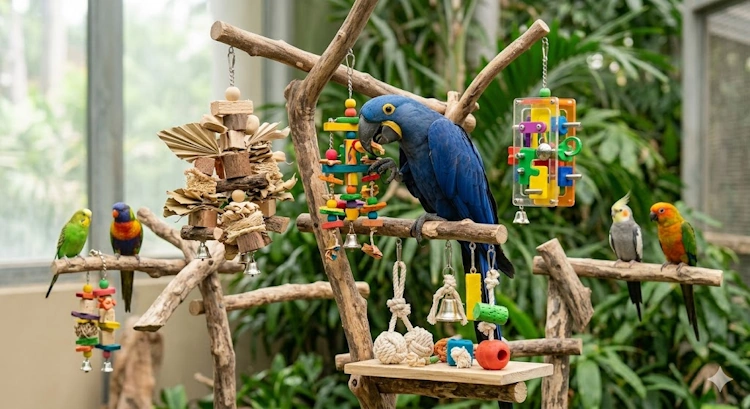
Smart greys need daily mental stimulation: puzzle toys, training sessions, and at least 2 hours of out-of-cage social time with their owners each day. Investing in high-quality best toys for African grey parrot options, like foraging puzzles, chew toys, and interactive talking toys, can help keep their minds sharp. Rotating toys every week prevents boredom and encourages new problem-solving skills.
Common Myths About Grey Parrot Smarts
Myth 1: They Only Mimic, Not Understand
This is the most persistent myth about grey parrots. As Alex’s study proved, greys use words to communicate needs, not just repeat sounds. If a grey parrot says “hello” when you walk in the room, they’re greeting you, not just mimicking a phrase they heard earlier. Researchers have recorded greys using words they haven’t heard in months to describe new objects, proving they retain meaning long-term.
Myth 2: All Grey Parrots Are Equally Smart
Like humans, individual grey parrots have different cognitive strengths and weaknesses. Some greys are excellent at problem-solving but have smaller vocabularies, while others pick up words quickly but struggle with multi-step puzzles. Age also plays a role: young greys (under 1 year) learn much faster than senior birds over 30 years old.
Myth 3: They Don’t Form Long-Term Memories
Grey parrots have excellent long-term memories. They can remember owners they haven’t seen in years, recall specific training commands from years prior, and even hold onto traumatic memories that affect their behavior later in life. This is why positive reinforcement training is so important—harsh punishment can leave a lasting negative impression on a grey parrot for decades.
Frequently Asked Questions About Grey Parrot Intelligence
Can grey parrots learn to use tools?
Yes, grey parrots are one of the few bird species that use tools in both lab and home settings. They can learn to use sticks to retrieve food, keys to open locks, and even pieces of paper to wipe up spills. Tool use comes naturally to most greys, especially if they’re provided with safe, bird-safe objects to experiment with.
Do grey parrots recognize their owners?
Absolutely. Grey parrots can recognize their owners by face, voice, and even scent. They often greet their favorite humans enthusiastically, and may act wary around strangers. Some greys will even refuse to step up for anyone other than their primary caregiver, showing strong individual recognition.
How many words can a grey parrot learn?
The average pet grey parrot learns 50-100 words, but highly trained birds can learn over 1,000. The record holder is a grey named Prudle, who was recorded knowing 1,200 words and short phrases. Most greys pick up new words quickly if they’re repeated consistently in context.
Are Congo grey parrots smarter than Timneh greys?
Neither subspecies is “smarter” overall—they have different strengths. Congo greys tend to have larger vocabularies and better verbal skills, while Timneh greys are more adaptable, less nervous, and better at problem-solving in new environments. Both are equally intelligent, so choose based on personality rather than perceived smarts.
Can grey parrots solve puzzles on their own?
Yes, most grey parrots can solve simple to moderate puzzles without human help. More complex puzzles may require a few tries, but Grey is a persistent learner. If a puzzle is too hard, they may ask for help using words like “open” or “help”, another sign of their contextual intelligence.
Final Thoughts on Grey Parrot Intelligence
So, how smart are grey parrots? Smarter than most people realize. They have the cognitive abilities of preschoolers, with advanced language skills, problem-solving abilities, and emotional awareness that make them one of the most intelligent animal species on Earth.
If you’re considering adding a grey parrot to your family, remember that its intelligence comes with responsibility. You’ll need to provide plenty of mental stimulation, social interaction, and a safe, spacious environment to keep them happy and healthy. With the right care, a grey parrot can be a loving, talkative companion for 50+ years, plenty of time to be amazed by their smarts every day.

Hassan is a lifelong backyard birding enthusiast and the creator of Birdhouse Tales. Turning a passion for nature into a mission, they spend their days designing bird-approved DIY nesting boxes, testing squirrel-proof gear, and curating the best advice to help homeowners build safe wildlife sanctuaries. Whether you are trying to attract your first pair of bluebirds or looking for the perfect copper birdbath, Hassan provides practical, real-world guides to bring the joy of birdwatching right to your window.