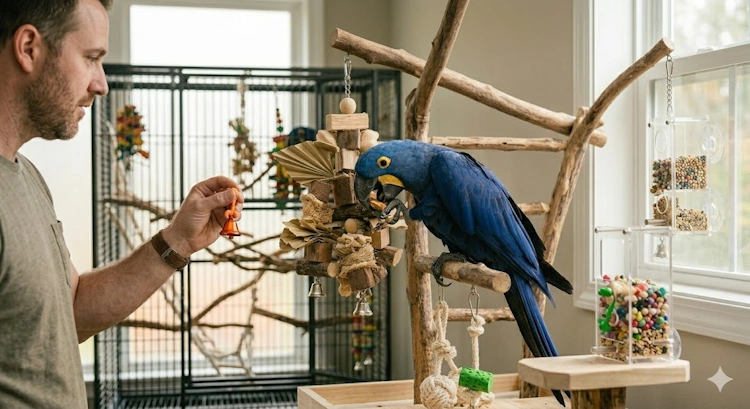
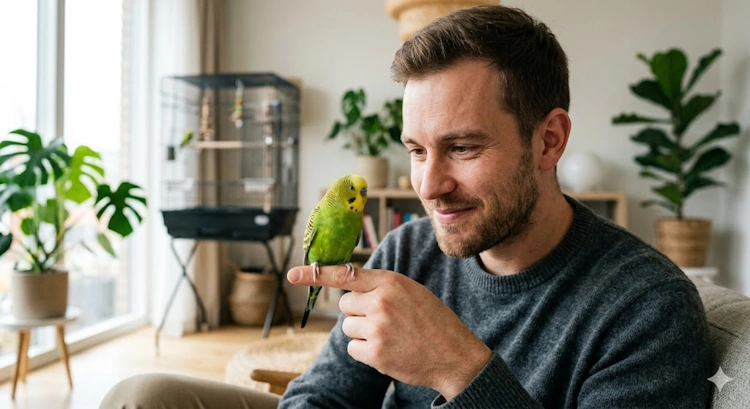
Bringing home a new budgie is exciting, but if your feathered friend spends all day hiding in the corner of their cage, you’re probably wondering how to tame a budgie companion so they’ll perch on your finger and chat with you. Taming a budgie (also called a parakeet) takes patience, consistency, and a gentle approach, but it’s far from impossible.
As a budgie owner who’s tamed 5 parakeets over the past 12 years, I’ve tested every method in this guide and refined them to work for even the shyest birds. Most budgies can learn to trust humans within 2-4 weeks if you follow the right steps, even if they’re initially skittish. In this guide, we’ll walk through every stage of the taming process, from setting up their space to teaching them to step up, plus common mistakes to avoid and answers to frequently asked questions.

VEVOR 64-inch Open Top Large Parrot Bird Cage with Detachable Rolling Stand for Parakeets Finches Canaries Lovebirds Cockatiels Budgies Small Quaker Conures Flight Birdcage with Swing and Perch
Check PriceWhat You Need Before You Start Taming
Jumping straight into taming without prepping your space or supplies will only frustrate you and scare your budgie. Take 3-5 days to get everything ready before you start your first training session.
Essential Supplies for Budgie Taming
You don’t need fancy tools to tame a budgie, but these 4 items will make the process much smoother:
- Proper cage: A cage that’s too small, has wide bar spacing, or is placed in a high-traffic area will stress your bird and make taming impossible. Our guide to best budgie cage options breaks down exactly what size, bar spacing, and features to look for to keep your bird calm and safe.
- Millet spray: This is the gold standard high-value treat for taming. Most budgies go crazy for millet, and it’s easy to hold while training. Avoid using regular seeds or pellets for training, as they’re not exciting enough to hold your budgie’s attention. According to the official budgie care guidelines, millet should make up no more than 10% of your bird’s daily diet, so only use small sprigs during training sessions.
- Quiet training space: Choose a small, quiet room with no other pets, loud electronics, or foot traffic. Close windows and doors to block outside noise, and turn off ceiling fans to avoid startling your bird.
- Patience: This isn’t a physical supply, but it’s the most important one. Budgies move at their own pace, and rushing will only set you back.
Step-by-Step Guide: How to Tame a Budgie
Follow these 7 steps in order – skipping ahead will only confuse your budgie and slow your progress. If your bird seems scared at any step, go back to the previous one and spend 2-3 extra days building trust before moving forward.
Step 1: Let Your Budgie Adjust to Their New Home
When you first bring your budgie home, they’re in a completely new environment with strange smells, sounds, and people. They need time to adjust before you start interacting with them. Place their cage in a quiet area at eye level (not on the floor, where they feel vulnerable to predators), and leave them alone for 3-7 days. Don’t reach into the cage, don’t try to hand-feed them, and only change food and water quickly when they’re not looking. Sit near the cage for 10-15 minutes a day, talking softly to them in a calm voice, so they get used to your presence and voice. You’ll know they’re adjusted when they start eating, drinking, and playing with toys while you’re in the room.
Step 2: Build Trust With Hand-Fed Treats
Once your budgie is comfortable with you near the cage, start using millet spray to build trust. Clip a small sprig of millet to the inside of the cage near a perch for 2-3 days, so they associate the treat with their safe space. Next, hold the millet spray just inside the cage door, resting your hand on the cage floor so it’s not moving. Sit quietly nearby, reading a book or scrolling on your phone, so your bird gets used to your still presence. Once they fly down to eat the millet from your hand, hold still – don’t try to touch them yet. Repeat this for 3-5 days until they eat confidently from your hand while it’s inside the cage. Then, hold the millet just outside the cage door, so they have to come to the opening to eat. This gets them used to approaching your hand outside their enclosed space.
Step 3: Teach the “Step Up” Command
The “step up” command is the foundation of all budgie training – it teaches your bird to perch on your finger on command. Once your budgie eats from your hand outside the cage, hold a sprig of millet in one hand, and use your other index finger to gently press against their lower belly (just above their feet). Say “step up” in a clear, calm voice as you press. Most budgies will instinctively step onto your finger to avoid the pressure. As soon as they step up, give them a small piece of millet and praise them in a soft voice. Repeat this 5-10 times per session, keeping sessions to 10 minutes max. If your budgie flies away, don’t chase them – go back to hand-feeding treats for another day before trying again.
Step 4: Practice Short, Consistent Sessions
Consistency is more important than length when taming budgies. Aim for 10-15 minute sessions at the same time every day – budgies thrive on routine, and they’ll start to expect and look forward to training time. If your budgie steps up confidently 3 days in a row, start moving your hand slowly while they’re perched on your finger, first inside the cage, then just outside the cage door. Always end sessions on a positive note, even if it’s just giving them a millet treat for stepping up once. This keeps training associated with positive rewards, not stress.
Step 5: Introduce Out-of-Cage Time
Once your budgie steps up reliably and stays on your finger for 1-2 minutes, you can start letting them out of the cage for short periods. Close all windows, turn off fans, and cover mirrors or windows to prevent crashes. Sit on the floor with your budgie perched on your finger, and let them fly to a nearby perch or play gym if they want. Don’t force them to stay on your hand – let them explore at their own pace. Use millet to lure them back to your finger when it’s time to go back in the cage. Start with 5-10 minutes of out-of-cage time per day, increasing by 5 minutes every few days as they get more comfortable.
Step 6: Teach Tricks and Vocal Cues
Once your budgie is comfortable out of the cage, you can start teaching simple tricks like turning in circles, waving, or targeting a stick. Use the same millet reward system, and keep sessions short. You can also teach vocal cues, like whistling a specific tune before feeding them, so they learn to associate the sound with positive experiences. This strengthens your bond and keeps your budgie mentally stimulated, which reduces destructive behaviors like feather plucking.
Step 7: Maintain Long-Term Trust
Taming isn’t a one-time process – you need to maintain trust long-term to keep your budgie friendly. Spend at least 30 minutes a day interacting with your budgie, whether that’s training, talking to them, or letting them perch on your shoulder while you work. Avoid sudden changes to their routine, and never grab or chase them. Once your budgie is fully tamed, check out our guide on safe ways to play with budgies for ideas on puzzle toys, training tricks, and bonding activities that will keep your bird happy and engaged.
Common Mistakes to Avoid When Taming Budgies
Even with the best intentions, it’s easy to make mistakes that set back your taming progress. Here are the 5 most common errors to avoid:
- Rushing the process: Trying to skip steps (like going straight to teaching “step up” before your budgie eats confidently from your hand) will trigger fear responses and undo progress. Move at your bird’s pace, not yours.
- Grabbing or chasing your budgie: Never reach into the cage to catch your bird – this activates their natural prey instinct, and can erase weeks of trust-building work. If your budgie flies away, wait for it to come to you, or use millet to lure them back.
- Inconsistent training sessions: Skipping days or varying session lengths confuses your budgie. Aim for 10-15 minute sessions at the same time every day for best results.
- Loud noises or sudden movements: Budgies are prey animals, so loud music, slamming doors, or fast hand movements will startle them. Keep the training space quiet and move slowly around your bird.
- Punishing fear responses: If your budgie bites or flies away, never yell, tap the cage, or spray them with water. This increases fear, and makes future taming much harder. Simply end the session calmly and try again the next day.
How to Tame a Scared or Rescued Budgie
Scared, aviary-bred, or rescued budgies may take longer to tame than hand-raised babies, but it’s absolutely possible with a few adjustments to your timeline.
Adjusting Your Timeline for Shy Birds
If your budgie is extremely skittish, double the time you spend on each step. For example, spend 7-10 days letting them adjust to their home instead of 3-5, and 1-2 weeks hand-feeding treats instead of 3-5 days. You may also want to cover the sides of the cage with a light cloth for the first week, to reduce visual stimuli and help them feel more secure. Never force interaction – if your budgie is panting, fluffing up, or pressing themselves into the corner of the cage, they’re overwhelmed, and you need to slow down.
Using Food to Build Trust Faster
Shy budgies often respond better to food-based trust building than anything else. Try putting a small dish of millet just inside the cage door, then gradually move it closer to your hand over several days, until they have to eat next to your hand to get the treat. You can also try feeding them fresh veggies (like spinach or carrot tops) from your hand, as many budgies find fresh food more exciting than dry seeds.
Frequently Asked Questions About Taming Budgies
How long does it take to tame a budgie?
Most hand-raised budgies tame within 1-2 weeks, while aviary-bred or rescued budgies may take 4-8 weeks. Consistency is more important than speed – rushing will only set back your progress. If you train every day for 10 minutes, you’ll see steady progress even with the shyest birds.
Can you tame an older budgie?
Yes! Older budgies may take longer to adjust than babies, but they can absolutely learn to trust humans. Follow the same steps, but extend the adjustment period to 1-2 weeks instead of 3-5 days, and spend extra time hand-feeding treats before moving to step up training.
Why does my budgie bite me when I try to tame them?
Biting is usually a fear response, not aggression. If your budgie bites, stop the session immediately, give them space, and go back to the previous step (usually hand-feeding treats) until they’re comfortable again. Never punish biting – it will only make your budgie more scared of you.
Do I need to tame a pair of budgies separately?
Yes. Budgies bond strongly to each other, so if you try to tame a pair together, they’ll focus on each other instead of you. Separate them into individual cages for taming sessions, then reintroduce them once both are tamed. You can also tame them in the same room, as long as their cages are on opposite sides of the space so they can’t interact through the bars.
Conclusion
Taming a budgie is a rewarding process that strengthens the bond between you and your feathered friend. Remember to move at your bird’s pace, never force interaction, and celebrate small wins like eating from your hand or stepping up for the first time. If you hit a plateau, go back to the previous step and spend a few extra days building trust before moving forward. With patience and consistency, you’ll have a friendly, chatty budgie perched on your shoulder in no time.

Hassan is a lifelong backyard birding enthusiast and the creator of Birdhouse Tales. Turning a passion for nature into a mission, they spend their days designing bird-approved DIY nesting boxes, testing squirrel-proof gear, and curating the best advice to help homeowners build safe wildlife sanctuaries. Whether you are trying to attract your first pair of bluebirds or looking for the perfect copper birdbath, Hassan provides practical, real-world guides to bring the joy of birdwatching right to your window.