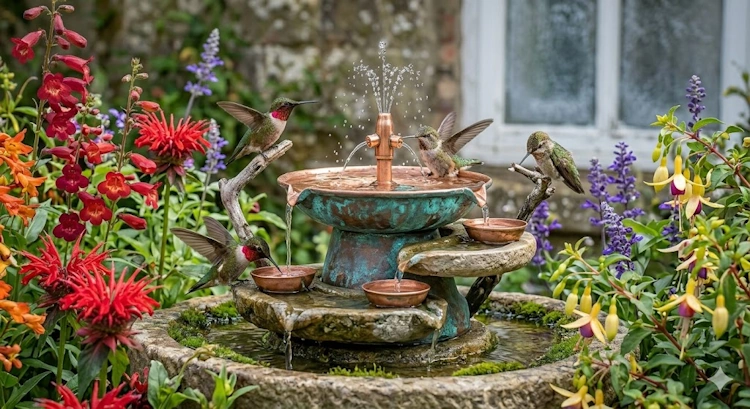
If you’ve spotted tiny, iridescent hummingbirds zipping around your garden and want to invite more of them to visit, you may have heard people ask: what is a hummingbird fountain? Unlike standard bird baths that cater to larger backyard birds like robins and sparrows, these specialized water features are designed specifically to meet the unique needs of North America’s smallest avian species. Hummingbirds have distinct physical and behavioral traits that make traditional bird baths impractical or even dangerous for them, which is where these purpose-built fountains come in.
In my 10 years of running a certified backyard bird habitat, I’ve tested over a dozen hummingbird fountains, and I’ve found that even the smallest design tweaks can double the number of hummingbirds visiting your yard. In this guide, we’ll break down exactly how these fountains work, why they’re better for hummingbirds than traditional bird baths, and how to pick, set up, and maintain the right one for your outdoor space.
How Does a Hummingbird Fountain Work?
Key Design Features That Set Them Apart
At first glance, a hummingbird fountain may look similar to a small standard bird bath, but close inspection reveals several critical design differences tailored to hummingbird biology. First, the basin is far shallower: most standard bird baths are 2-3 inches deep, which is deep enough to drown a hummingbird, whose tiny legs can’t grip smooth, steep sides to pull itself out of deep water. Hummingbird fountains have basins that are no more than 0.5 inches deep, with textured surfaces or small pebbles added to give birds secure footing.
Second, nearly all hummingbird fountains include a moving water feature, whether that’s a small bubbler, mister, or dripper. Hummingbirds have poor night vision and rely on the sound and movement of water to locate drinking sources, as still water is nearly invisible to them. This is also why moving water attracts more backyard birds overall, but it’s especially critical for hummingbirds.
Moving Water vs. Still Water: Why Hummingbirds Prefer the Former
Still, stagnant water is a non-starter for hummingbirds for two key reasons. First, as mentioned, they can’t see still water easily, so they’re far less likely to find a standard bird bath even if it’s shallow enough to use. Second, still water quickly becomes a breeding ground for mosquitoes and bacteria, which can make hummingbirds sick. Moving water stays oxygenated, reducing algae growth and mosquito larvae, making it safer for birds to drink and bathe in.
According to National Audubon Society, these tiny birds need to replace up to 50% of their body weight in water daily during hot summer weather, making accessible, clean water sources critical for their survival. Moving water is not just preferred, it’s often a necessity for hummingbirds to stay hydrated.
Types of Hummingbird Fountains
Hummingbird fountains come in four main categories, each suited to different yard sizes, climates, and budgets. Below are the most common types you’ll find on the market:
Solar-Powered Hummingbird Fountains
These are the most popular option for eco-conscious gardeners, as they run entirely on sunlight with no need for electrical outlets or wiring. Most solar hummingbird fountains have a small solar panel built into the basin or attached via a short cord, which powers a tiny pump to create moving water. They’re ideal for yards with full sun exposure, but note that they won’t run on cloudy days or at night. Many models come with backup battery packs to keep the water moving during short periods of low light.
Electric Hummingbird Fountains
Electric models plug into a standard outdoor outlet, making them a reliable choice for yards with partial shade or cloudy climates. They provide consistent water movement 24/7, which is useful if you want to attract hummingbirds that feed at dawn or dusk. You’ll need to use a GFCI-protected outlet and weatherproof extension cord to keep the setup safe, but many electric fountains come with long cords to make placement easier.
Hanging Hummingbird Fountains
Hanging models are mounted to a shepherd’s hook, tree branch, or porch eave, keeping them off the ground away from predators like cats and raccoons. They’re a great choice for small yards, balconies, or decks where ground space is limited. Most hanging fountains hold less water than ground-mounted models, so you’ll need to refill them more frequently, especially during hot weather.
Ground-Mounted Hummingbird Fountains
These sit directly on the ground or on a low, 1-2 foot pedestal, mimicking natural shallow puddles that hummingbirds use in the wild. They’re easier to refill than hanging models and hold more water, reducing maintenance frequency. However, they’re more accessible to ground predators, so you’ll want to place them near dense shrubs or bushes where hummingbirds can quickly hide if threatened.
Benefits of Using a Hummingbird Fountain
Adding a hummingbird fountain to your yard offers far more benefits than just providing drinking water. Here are the top advantages we’ve seen in our own backyard habitat tests:
- Reduces drowning risk: The shallow basin and textured footing prevent tiny hummingbirds from falling into deep water and struggling to escape.
- Attracts more hummingbirds: Moving water is far more noticeable to hummingbirds than still water, doubling or tripling the number of visits to your yard.
- Improves bird health: Moving water stays cleaner than still water, reducing exposure to algae, bacteria, and mosquito larvae that can make birds sick.
- Supports local ecosystems: Hummingbirds are key pollinators, so providing reliable water helps them thrive and pollinate your garden flowers in return.
- Low maintenance: Most models require only weekly cleaning and occasional refilling, even during peak summer heat.
How to Choose the Right Hummingbird Fountain for Your Yard
With so many options on the market, picking the right hummingbird fountain can feel overwhelming. Use these criteria to narrow down your choices, and for a pre-vetted list, check out our roundup of the best water fountains for hummingbirds we’ve tested in real backyard conditions.
- Basin depth: Never buy a fountain with a basin deeper than 0.5 inches, even if it’s marketed for hummingbirds. Deeper basins are a drowning hazard.
- Water movement type: Misters and drippers are gentler than strong bubblers, which can splash water out of the basin too quickly. Look for adjustable flow settings.
- Material: Avoid plastic basins that fade or crack in sunlight. Ceramic, copper, and UV-resistant resin are the most durable options for outdoor use.
- Power source: Choose solar if you have full sun, electric if you have shade or want 24/7 operation. Battery backup is a plus for solar models.
- Size: Pick a model that fits your space. Hanging fountains work for small decks, while ground-mounted models are better for large gardens.
Setup and Maintenance Tips
Where to Place Your Hummingbird Fountain
Placement is just as important as the fountain itself when it comes to attracting hummingbirds. Follow these guidelines for optimal placement:
- Place the fountain 3-5 feet away from dense shrubs or small trees. This gives hummingbirds a quick place to hide from predators, but keeps the fountain visible to passing birds.
- Avoid full shade: While hummingbirds need cover, the fountain should get at least 4-6 hours of direct sunlight daily if you’re using a solar model. Even electric models benefit from some sun to reduce algae growth.
- Keep it away from feeders: Hummingbird nectar feeders can get sticky, and water splashed with nectar will attract ants and bees. Place the fountain at least 10 feet away from nectar feeders.
- Avoid windy areas: Strong winds can blow water out of the shallow basin, requiring constant refilling. Place the fountain in a sheltered spot if possible.
How to Clean Your Hummingbird Fountain
Regular cleaning is critical to keep your fountain safe for hummingbirds. Algae, bacteria, and mineral buildup can make birds sick, so follow this simple cleaning routine:
- Empty the basin completely once a week, even if the water still looks clean.
- Scrub the basin with a soft brush and a mixture of 1 part white vinegar to 9 parts water. Avoid harsh chemicals or soap, which can leave residue toxic to birds.
- Rinse the basin thoroughly with clean water 3-4 times to remove all vinegar residue.
- Refill with fresh, room-temperature water. Avoid cold water straight from the hose, which can shock hummingbirds on hot days.
Frequently Asked Questions
Can hummingbirds use regular bird baths?
They can, but it’s not safe or ideal. Most regular bird baths are too deep, with smooth sides that hummingbirds can’t grip, leading to drowning risk. If you only have a standard bird bath, add a layer of small river rocks to the basin to make the water shallower and give birds footing, but a dedicated hummingbird fountain is far better.
Do I need to add nectar to my hummingbird fountain?
No, never add nectar or sugar water to your fountain. Hummingbirds drink plain water from fountains, and nectar should only be offered in dedicated nectar feeders. Sugar water in fountains will attract ants, bees, and bacteria, making the water unsafe for birds.
How often should I refill my hummingbird fountain?
During hot summer months, you may need to refill the fountain daily, as shallow basins lose water quickly to evaporation. In cooler weather, every 2-3 days is usually sufficient. Check the water level daily to make sure it never drops below 0.25 inches deep.
Will a hummingbird fountain attract mosquitoes?
No, in fact, it will do the opposite. Moving water prevents mosquito larvae from hatching, as they need still water to develop. Still, you should empty and clean the fountain weekly to remove any debris that could slow water flow.
Can I use a hummingbird fountain in winter?
Most hummingbirds migrate south for the winter, so you won’t need to run the fountain during cold months. Drain the basin, store the pump indoors, and cover the fountain to protect it from frost if you live in a climate with freezing temperatures. If you have year-round resident hummingbirds (common in the southern U.S.), use a heated bird bath insert to keep the water from freezing.
Conclusion
So, what is a hummingbird fountain? It’s a purpose-built water feature designed to meet the unique needs of tiny hummingbirds, with shallow basins, moving water, and safe footing that standard bird baths lack. Adding one to your yard is one of the simplest, most effective ways to attract more hummingbirds, support local pollinator populations, and enjoy these tiny birds up close.
Start by assessing your yard’s sun exposure and available space, then pick a model that fits your needs. Remember to place it near cover, clean it weekly, and keep the water moving to get the most out of your fountain. With a little setup, you’ll have hummingbirds visiting your yard daily in no time.
Hassan is a lifelong backyard birding enthusiast and the creator of Birdhouse Tales. Turning a passion for nature into a mission, they spend their days designing bird-approved DIY nesting boxes, testing squirrel-proof gear, and curating the best advice to help homeowners build safe wildlife sanctuaries. Whether you are trying to attract your first pair of bluebirds or looking for the perfect copper birdbath, Hassan provides practical, real-world guides to bring the joy of birdwatching right to your window.