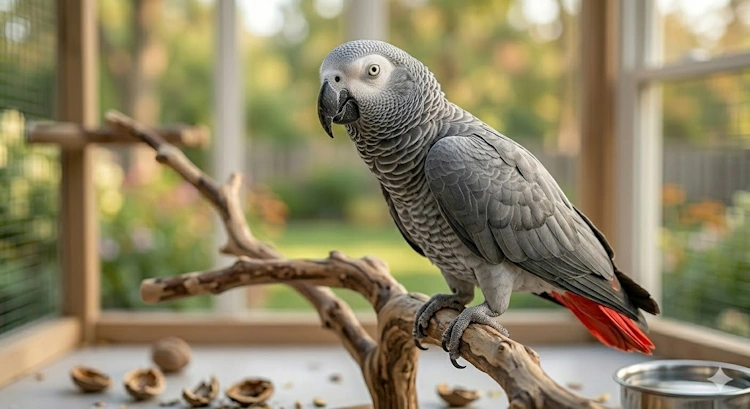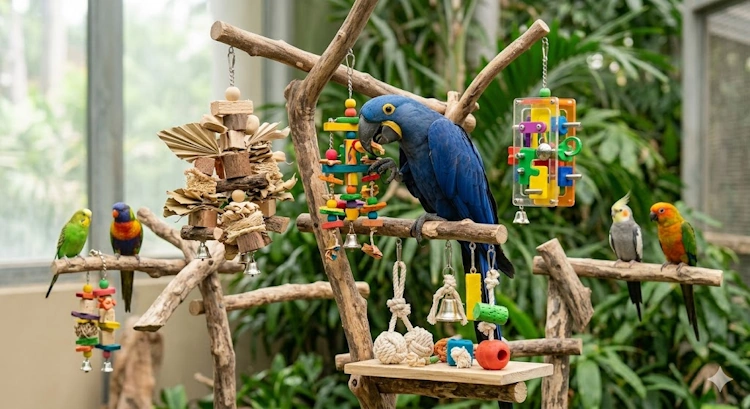
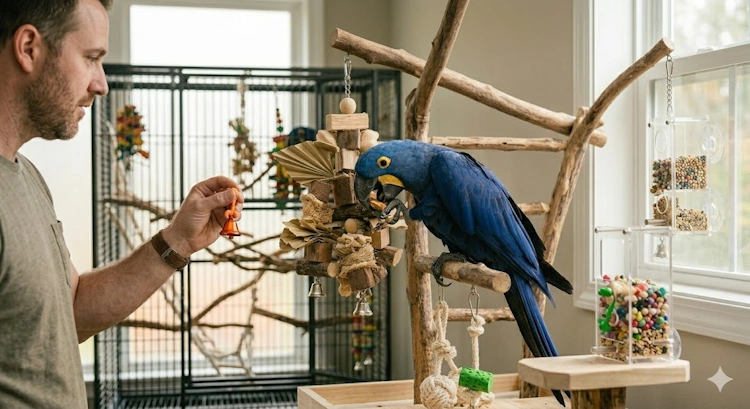
If you’ve ever typed How do I entertain my parrot into a search bar, you’re not alone. Parrots are highly intelligent, social birds that require far more mental and physical stimulation than the average pet. Without proper enrichment, they can develop destructive behaviors like feather plucking, excessive screaming, and chewing on furniture or cage bars. Unlike cats or dogs, parrots don’t self-entertain for long periods – they need intentional, daily interaction to thrive.

Natural Corn Cob Loofah Slice Bird Chew Toys
Check PriceWhy Parrot Enrichment Is Non-Negotiable
Parrots have the cognitive capacity of a 3-5 year old human child, depending on the species. Large parrots like African Greys and Macaws can solve complex multi-step puzzles, while smaller parrots like Budgies and Conures need constant novelty to avoid boredom. Boredom isn’t just annoying for owners – it’s a serious welfare issue for birds. Chronic boredom can lead to self-mutilation, suppressed immune systems, and shortened lifespans.
Signs Your Parrot Is Bored
Not sure if your parrot needs more entertainment? Watch for these common red flags:
- Excessive screaming or repetitive vocalizations
- Feather plucking or chewing at their own skin
- Chewing on cage bars, furniture, or electrical cords
- Lethargy or sitting fluffed up for long periods
- Aggression toward handlers or other pets
- Refusing to eat or play with previously favorite toys
If you notice any of these signs, ramp up your enrichment routine immediately. Most parrots bounce back quickly once they have regular stimulating activities.

RUBY.Q 20in Large Parrot Chewing Toy
Check Price12 Proven Ways to Entertain Your Parrot
These tips are vetted by avian behaviorists and work for parrots of all sizes, from tiny Budgies to massive Hyacinth Macaws. Adjust the complexity of each activity to match your bird’s species, age, and personality.
Rotate Toys Weekly (Don’t Buy New Ones Constantly)
Parrots get bored of the same toys quickly, but you don’t need to spend hundreds on new ones monthly. Buy 10-15 safe toys, keep 3-4 in the cage at a time, and swap every 7-10 days. Store unused toys in a sealed bin so they smell fresh when rotated back. For size-specific picks, check our guide to the best toys for parrots.
Offer Daily Foraging Opportunities
In the wild, parrots spend 60-70% of their day foraging for food. Captive parrots have food handed to them in a bowl, which eliminates this natural behavior. Recreate foraging by hiding treats in cardboard egg cartons, wrapping nuts in unbleached paper, or stuffing pellets into pine cones. DIY options work as well as store-bought options and cost far less.
Teach 10-Minute Trick Training Sessions
Trick training is mental exercise for parrots, and most birds love the one-on-one attention. Start with simple tricks like “step up”, “wave”, or “spin”. Use small healthy treats like safflower seeds or diced fruit as rewards. Keep sessions short – 10 minutes max – to avoid frustrating your bird. Training also strengthens your bond with your pet.
Schedule 1-2 Hours of Out-of-Cage Time Daily
Parrots need space to stretch their wings, climb, and explore. Set up a bird-safe play gym on a table or the floor, with perches, toys, and a water bowl. Supervise your bird at all times to prevent accidents like window collisions or chewing toxic plants. For enclosure sizing help, check our roundup of the best parrot cages for all species.
Play Interactive Games With Your Parrot
Parrots love games that mimic flock play. Try peek-a-boo, rolling balls back and forth, or chasing feather wands. Some learn fetch – toss a small toy, reward them for returning it. Avoid finger wrestling, which can reinforce biting. Keep games low-stress and stop if your bird seems overwhelmed.
Use Puzzle Feeders for All Meals
Replace your parrot’s regular food bowl with a puzzle feeder 2-3 times a week. Puzzle feeders require birds to slide levers, lift lids, or rotate cylinders to access food, turning mealtime into a 20-minute mental workout. Start with simple puzzles, and work up to more complex ones as your bird gets the hang of it. This also slows fast eaters to reduce crop impaction risk.
Provide Chew-Safe Natural Perches and Branches
Parrots need to chew to keep their beaks trimmed and relieve stress. Avoid plastic perches, which can splinter and cause injuries. Instead, use natural wood perches like manzanita, eucalyptus, or apple wood. You can also give your bird clean, pesticide-free branches from your yard (avoid oak, cherry, and apricot, which are toxic to birds).
Play Ambient Noise or Parrot-Specific Media
Parrots are social animals that hate silence. Play soft music, nature sounds, or parrot-specific videos (like flocks of parrots eating or playing) when you’re not home. Avoid loud TV or aggressive music, which can stress your bird out. Some parrots even learn to sing along to their favorite songs, which is entertaining for both of you.
Create a Vertical Cage Climbing Structure
Most parrot cages come with flat perches, which don’t mimic the vertical climbing parrots do in the wild. Add rope perches, ladders, and hanging chains to create a multi-level climbing structure. This encourages physical exercise, which is key for preventing obesity – a common problem in captive parrots. Make sure all structures are securely attached to avoid falls.
Offer Weekly Bath Time or Misting
Most parrots love water, and bath time is great enrichment. Fill a shallow bowl with lukewarm water and let your bird splash, or mist them with a spray bottle set to gentle mist. Some parrots learn to shower with owners (use lukewarm water, avoid getting water in their ears). Bath time also keeps feathers clean and reduces skin infection risk.
Hide Treats Around the Room During Out-of-Cage Time
Turn out-of-cage time into a scavenger hunt by hiding small treats (diced berries or sunflower seeds) around the room. Place them on bookshelves, inside empty cardboard boxes, or behind plant pots. Supervise your bird to ensure they don’t eat anything toxic, and avoid hiding treats near electrical outlets or heating vents.
Train Target Training for Mental Stimulation
Target training teaches your parrot to touch a specific object (like a chopstick or small ball) with their beak. Once mastered, use the target to guide them through obstacle courses or onto a scale for weigh-ins. Target training is low-stress, and most parrots pick it up in a few sessions. It also makes vet visits easier, as you can target your bird into a carrier without chasing them.
The Association of Avian Veterinarians recommends rotating enrichment activities every 2 weeks to prevent habituation, and tailoring activities to your parrot’s natural behaviors. For example, ground-foraging parrots like Budgies prefer floor scavenger hunts, while tree-dwelling parrots like Macaws prefer climbing structures and hanging toys.

Colorful Rope Perch Chewing Foraging Toy
Check PriceFrequently Asked Questions
How many hours of entertainment does a parrot need daily?
Small parrots need 2 hours of active enrichment daily plus 4-6 hours passive (music, foraging toys). Large parrots need 3-4 hours active, due to higher cognitive needs. Passive enrichment should be available 24/7 in-cage.
Can I leave my parrot alone with toys while I’m at work?
Yes, as long as all toys are safety-checked. Avoid toys with small swallowable parts, loose strings that can tangle feet, or toxic materials like lead-based paint. Foraging toys and puzzle feeders are great for keeping parrots busy while you’re away, as they take 20-30 minutes to complete.
What are the best DIY parrot toys?
Cheap, safe DIY toys include cardboard toilet paper rolls stuffed with hay and treats, unbleached coffee filters wrapped around nuts, pine cones stuffed with pellets, and egg cartons with hidden berries. Avoid glue, tape, or dyed paper, which are toxic if ingested.
My parrot ignores all new toys – what do I do?
Some parrots are shy about new objects. Place the new toy outside the cage for a few days so your bird gets used to it, then put it near the food bowl. Rub a small amount of almond butter or fruit on the toy to encourage investigation. Never force your bird to interact with a toy, as this will increase fear.
Can I use cat toys for my parrot?
Avoid most cat toys, as many contain small parts, catnip (toxic to parrots), or toxic stuffing. The only safe cat toys for parrots are plain feather wands with no small bells or strings, and sturdy plastic balls with no holes. Always supervise your parrot with any new toy, even if labeled for another pet.
Conclusion
Entertaining your parrot doesn’t have to be expensive or time-consuming. Small daily changes like rotating toys, adding foraging opportunities, and 10-minute training sessions can make a huge difference in your bird’s happiness and health. Remember every parrot has a unique personality – experiment with activities to find what your bird loves most. Consistent enrichment will prevent destructive behaviors, strengthen your bond, and help your parrot live a long, fulfilling life.
Hassan is a lifelong backyard birding enthusiast and the creator of Birdhouse Tales. Turning a passion for nature into a mission, they spend their days designing bird-approved DIY nesting boxes, testing squirrel-proof gear, and curating the best advice to help homeowners build safe wildlife sanctuaries. Whether you are trying to attract your first pair of bluebirds or looking for the perfect copper birdbath, Hassan provides practical, real-world guides to bring the joy of birdwatching right to your window.