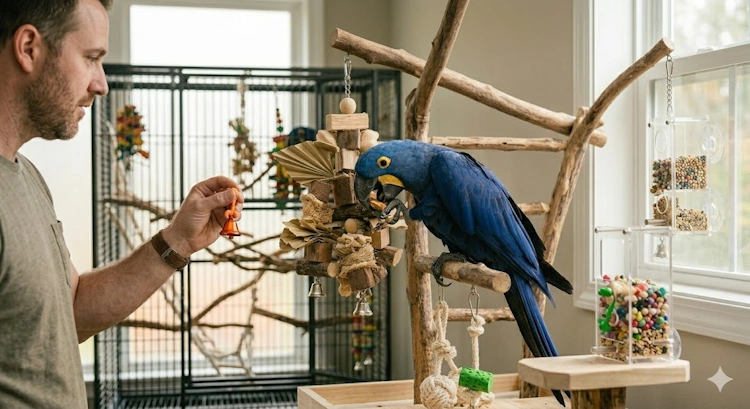
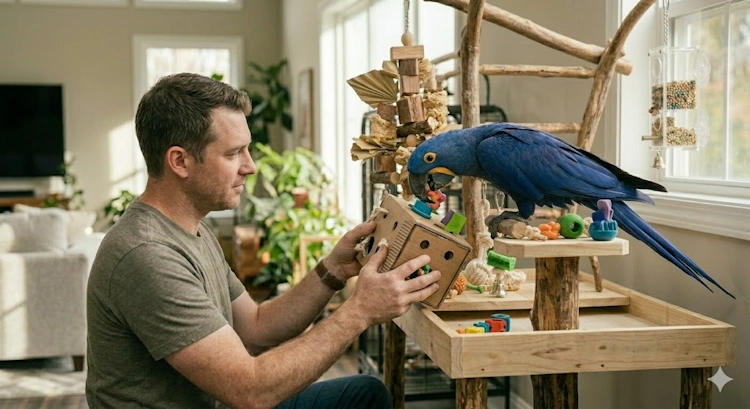
Parrots are intelligent, social creatures that thrive on interaction, but many new owners struggle to figure out how to play with a parrot without stressing their bird or breaking hard-won trust. Unlike cats or dogs, parrots have unique social needs, sensitive respiratory systems, and complex communication cues that you need to respect during every play session. A bored parrot can develop destructive behaviors like feather plucking or excessive screaming, so regular, safe playtime is non-negotiable for their mental and physical health.
If you’re already looking for fun ways to entertain your parrot between play sessions, you’ll find that structured playtime builds on those daily enrichment habits to deepen your bond even further.

Natural Corn Cob Loofah Slice Bird Chew Toys
Check PricePre-Play Prep: Set Your Parrot Up for Success
Wait for Trust Before Playing
Never try to play with a parrot that hasn’t bonded with you yet. If your bird fluffs up, hisses, or moves away when you approach, it’s not ready for interactive play. Spend 1-2 weeks sitting near its cage, talking softly, and offering small treats like millet or chopped fruit before attempting any games. Rushing this step can make your parrot fear you, which undoes months of progress.
For rescue parrots or birds with past trauma, this trust-building phase may take months. Watch for signs your parrot is comfortable: relaxed feathers, head bobbing, or stepping onto your finger willingly. Only then should you introduce play.
Gather Bird-Safe Supplies
Parrots chew everything, so every item you use for play must be non-toxic. Avoid toys with lead, zinc, or small plastic parts that can be swallowed. We recommend browsing our guide to top-rated parrot toys to find options that are both fun and safe for your bird’s size. Small parrots like budgies need soft, lightweight toys, while large macaws need heavy-duty wood and rope that can withstand strong beaks.
Always cross-check supplies against vet-approved parrot safety standards to avoid accidental poisoning or choking hazards. Common household items like rubber bands, glue, or scented candles are toxic to parrots and should never be near play areas.
Pick the Right Time
Parrots are most active in the morning and late afternoon, matching their natural circadian rhythms. Avoid playing right after your parrot eats (they may be too sleepy) or late at night (it can disrupt their sleep schedule). Aim for 10-15 minute sessions for small parrots, and 20-30 minutes for large breeds, 2-3 times a day.
7 Safe, Engaging Games to Play With Your Parrot
1. Foraging Games
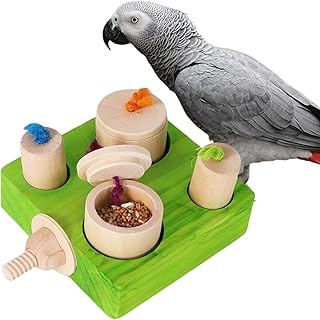
YOOSO WING Birdie Puzzle Feeder – Interactive Foraging Toy for Parrots
Check PriceForaging (searching for food) is a natural parrot behavior that stimulates their brain. You don’t need fancy toys for this: hide small pieces of your parrot’s favorite treat in a cardboard egg carton, wrap them in plain paper, or tuck them into a clean sock with knots tied in it. Start easy, then make the hides harder as your parrot gets better at finding treats.
For large parrots, try hiding treats in a stack of untreated wood blocks. For small parrots, use shredded paper or toilet paper rolls. This game can keep your parrot occupied for 20+ minutes, and it’s easy to scale up as they learn.
2. Target Training
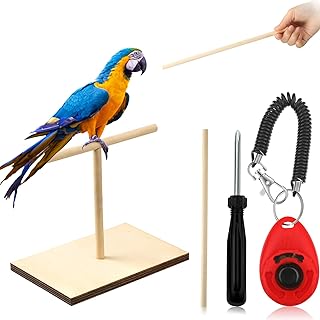
Cunno 3 Pcs Bird Training Stand Kit, Parrot Training Clicker
Check PriceTarget training uses a small stick (like a chopstick or dowel) to teach your parrot to follow a cue. Hold the stick near your parrot’s beak: when they touch it with their beak, give a treat and say “good job!” within 2 seconds. Once they get the hang of it, you can use the target to guide them to different parts of the room, or to step onto your hand. This game builds communication and trust, and it’s useful for vet visits or cage cleaning too.
3. Fetch (Yes, Parrots Can Play!)

Kewkont Hanging Interactive Chew Toy
Check PriceMany parrots, especially conures and African greys, love playing fetch. Use a small, soft ball or a lightweight wooden toy. Toss it 2-3 feet away, then encourage your parrot to pick it up by pointing to it. When they bring it back, give a high-value treat like a sunflower seed (in moderation) and praise. Some parrots will drop the toy in your hand, others will drop it nearby: either way, reward the effort.
Tip: Don’t throw the toy too far at first, and never chase your parrot if they don’t bring it back. That turns the game into a stressor instead of fun.
4. Shredding Activities

BBjinronjy Natural Nut Corn Loofah Wood Bird Toy
Check PriceParrots love destroying things: it’s a natural behavior that lets them exercise their beaks. Give them plain cardboard, untreated pine wood, or seagrass mats to shred. You can even make a shredding toy by stringing cardboard pieces onto a cotton rope. Avoid glossy paper or colored cardboard with dyes, which can be toxic if ingested.
Shredding is especially great for anxious parrots: the repetitive motion helps them calm down. Clean up shredded pieces after playtime to avoid your parrot eating large chunks of cardboard.
5. Mimicry Games
Parrots are famous for mimicking sounds, so turn that into a game. Whistle a short tune, then wait for your parrot to repeat it. When they do, give a treat and clap. You can also teach them to mimic simple words like “hello” or “treat” using the same reward system. This game works best for parrots that already know a few words, but even beginners will enjoy listening to you whistle and chirp.
6. Climbing Challenges

Rypet Wooden Block Parrot Chew Toy
Check PriceParrots are natural climbers, so set up a small obstacle course using cotton ropes, wooden perches, and ladders. Guide your parrot through the course with treats, praising them when they climb a rope or step onto a new perch. For small parrots, use a tabletop course; for large parrots, use a freestanding play gym. Never force your parrot to climb something they’re scared of: if they hesitate, go back to an easier step.
7. Gentle Touch Games
Once your parrot is fully bonded, you can introduce gentle touch games like head scratches or beak rubs. Most parrots love having the feathers around their ears and neck scratched: watch for them lowering their head or leaning into your hand, which means they want more. Avoid touching their back or wings unless they initiate it: many parrots find this overstimulating and may bite.
What to Avoid When Playing With Your Parrot
Never Force Interaction
If your parrot walks away, fluffs up, or pins its eyes (rapid pupil dilation), stop playing immediately. These are clear signs of overstimulation or fear. Forcing your parrot to keep playing will damage your bond and may lead to biting. It’s better to end a session early than to push your bird past its comfort zone.
Skip Dangerous Objects
Never use household items with small parts, sharp edges, or toxic materials for play. This includes: jewelry, rubber ducks with plastic eyes, scented wood, or toys with glue. Also avoid playing with your parrot near ceiling fans, open windows, or other pets (like cats or dogs) that may startle them.
Avoid Loud, Sudden Movements
Parrots have sensitive hearing and startle easily. Don’t yell, clap loudly, or wave your arms during play. Move slowly and speak in a soft, calm voice. If there’s a sudden loud noise (like a door slamming), pause play and comfort your parrot until they relax.
How to Read Your Parrot’s Body Language During Play
Parrots can’t use words to tell you they’re having fun or feeling stressed, so you need to watch their body language. Here are common cues to look for:
- Happy parrot signs: Relaxed feathers, head bobbing, chirping, leaning into your touch, playing with toys eagerly, slow blinking (a sign of trust).
- Overstimulated/stressed signs: Fluffed up feathers, rapid pupil pinning (eyes dilate and shrink quickly), hissing, lunging, moving away from you, screaming.
- Scared signs: Crouching low, wide eyes, tail fanning, freezing in place, biting.
If you see any stressed or scared signs, end play immediately and give your parrot space to calm down. Never punish a parrot for biting: it’s almost always a sign they feel threatened, not that they’re “bad.”
Frequently Asked Questions About Playing With Parrots
How long should parrot playtime be?
Small parrots (budgies, conures, lovebirds) need 10-15 minutes of interactive play 2-3 times a day. Large parrots (macaws, cockatoos, African greys) need 20-30 minutes 2-3 times a day. Always watch your parrot’s body language: if they get tired or overstimulated, end the session early.
Can I play with my parrot outside its cage?
Yes, as long as the room is bird-proofed. Close all windows and doors, cover mirrors (parrots may fly into them), turn off ceiling fans, and remove toxic plants or chemicals. For first outdoor play sessions, keep your parrot on a harness or in a carrier to prevent escape.
What if my parrot bites me during play?
Stay calm: yelling or pulling away quickly can startle your parrot more. Gently put your parrot back in its cage, and don’t give treats or attention for 10 minutes. This teaches them that biting ends playtime. Never hit or yell at your parrot: this will make them fear you and bite more often.
Do different parrot species like different games?
Yes. Small parrots like budgies and lovebirds prefer shredding and climbing games. Medium parrots like conures and quaker parrots love fetch and mimicry games. Large parrots like macaws and cockatoos prefer foraging and gentle touch games. Adjust games to your parrot’s size and personality: a timid parrot may hate fetch but love shredding.
Conclusion
Learning how to play with a parrot takes patience, but the bond you’ll build with your feathered friend is worth the effort. Stick to safe, bird-specific games, always respect your parrot’s boundaries, and prioritize trust over forcing interaction. Remember that playtime is about having fun together, not teaching tricks or meeting a quota. With consistent, gentle play, your parrot will look forward to sessions with you, and you’ll get to enjoy their playful, intelligent personality for years to come.
Start with short 5-minute sessions this week, and work your way up as your parrot gets more comfortable. If you’re ever unsure about a game or toy, consult your avian vet or reference our parrot toy guide for safe options.
Hassan is a lifelong backyard birding enthusiast and the creator of Birdhouse Tales. Turning a passion for nature into a mission, they spend their days designing bird-approved DIY nesting boxes, testing squirrel-proof gear, and curating the best advice to help homeowners build safe wildlife sanctuaries. Whether you are trying to attract your first pair of bluebirds or looking for the perfect copper birdbath, Hassan provides practical, real-world guides to bring the joy of birdwatching right to your window.