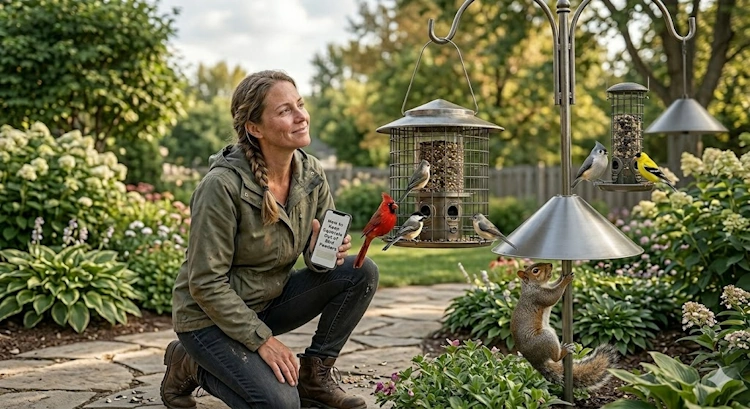
If you’ve ever filled a bird feeder only to watch a gray squirrel empty it in under 10 minutes, you’re far from alone. Learning how to keep squirrels out of bird feeders is one of the top concerns for backyard birders across North America, and for good reason: these agile rodents can devour up to 1 pound of bird seed per week, chase away smaller songbirds, and even chew through cheap plastic or wooden feeder hardware.
As a birder with 8 years of experience testing squirrel deterrents, I’ve found that you don’t have to choose between supporting local bird populations and dealing with persistent pests. Below, we break down 10 expert-backed, humane strategies to protect your feeders, plus common mistakes to avoid and answers to the most frequently asked questions from fellow birders.

Squirrel Buster Plus Squirrel-proof Bird Feeder w/Cardinal Ring and 6 Feeding Ports, 5.1-pound Seed Capacity, Adjustable, Pole-mountable (POLE ADAPTOR SOLD SEPARATELY), Green
Check PriceWhy Squirrels Target Your Bird Feeders
To deter squirrels effectively, understand their behavior: they prioritize high-calorie seeds like sunflower and peanuts, and have physical adaptations to raid feeders easily. They can jump up to 10 feet horizontally and 4 feet vertically, climb smooth surfaces with sharp claws, and gnaw through almost any material except heavy-gauge metal with their ever-growing incisors. Beyond wasted seed, squirrel activity scares off timid songbirds like chickadees and finches, and can crack feeder hardware or bend hangers. For durable, gnaw-resistant hardware, check our guide to squirrel-proof feeder poles.
10 Proven Ways to Keep Squirrels Out of Bird Feeders
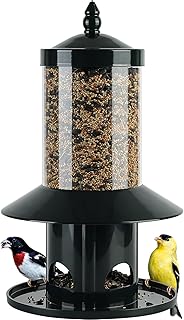
Squirrel Proof Bird Feeder – 360° Feeding Perch Tray for Outdoor Hanging Wild Bird Seeds, Dark Green
Check PriceUpgrade to Squirrel-Proof Feeder Designs
The single most effective deterrent is swapping open feeders for models built specifically to block rodent access. Look for weight-activated perches: when a heavy squirrel steps on the perch, a metal guard slides shut to block seed access, while lighter songbirds can still feed normally. Caged feeders are another reliable option: a heavy-gauge wire cage surrounds the seed tube, with gaps small enough to let songbirds through but too narrow for squirrels to squeeze into. We tested dozens of models for our roundup of top-rated squirrel-proof bird feeders, with picks for every budget and backyard size.
Install Baffles on Feeders and Poles
Baffles are dome-shaped or cylindrical barriers that prevent squirrels from climbing up poles or jumping down onto feeders from above. For pole-mounted feeders, use an 18-inch wide cylindrical metal baffle placed 4-5 feet up the pole: squirrels cannot climb over the smooth, curved surface. For hanging feeders, install a dome baffle above the feeder to block squirrels from jumping down from tree branches, and a second dome baffle below the feeder to stop them from climbing up the hanging wire. Avoid plastic baffles, which squirrels can easily gnaw through—opt for powder-coated metal or heavy-duty polycarbonate instead.
Adjust Feeder Placement Strategically
Squirrels can jump 10 feet horizontally and 4 feet vertically, so placement is critical. Mount feeders on poles at least 5 feet off the ground, and ensure they are at least 10 feet away from any jumping points: this includes tree trunks, fence rails, roof eaves, and shrubbery. If you hang feeders from tree branches, make sure the branch is at least 10 feet away from any other jumping surface, or use a baffle to block access. A common mistake is placing feeders too close to trees—always measure the 10-foot clearance before installing new feeders.
Switch to Squirrel-Resistant Seed
Squirrels prefer high-fat seeds like sunflower and peanuts, but there are seed blends they will avoid. Safflower seed has a bitter taste that squirrels dislike, but cardinals, chickadees, and nuthatches love it. White proso millet is another good option, as squirrels rarely bother with it, and it attracts sparrows, juncos, and doves. Avoid blends with cracked corn or milo, which are cheap fillers that squirrels love, and stick to straight seed types rather than mixed blends to reduce waste. You can also find pre-mixed squirrel-resistant seed blends at most garden centers, which combine safflower, millet, and nyjer seed to attract songbirds without drawing rodents.
Add a Decoy Squirrel Feeder
This might sound counterintuitive, but giving squirrels their own dedicated feeding station can keep them away from your bird feeders. Place a ear corn or peanut feeder in a far corner of your yard, at least 20 feet away from your bird feeders. Fill it with cheap corn or peanuts—squirrels will prefer the easy, high-calorie food in their own feeder, and stop bothering your bird seed. Make sure to place the decoy feeder on the ground or a low stump, so squirrels don’t associate elevated feeders with food. This method works best if you also use other deterrents, as some persistent squirrels will still try to raid bird feeders even with a decoy available.
Use Weight-Activated Feeder Closures
Many modern squirrel-proof feeders use weight sensors to block access, but you can also add aftermarket weight-activated closures to existing feeders. These small metal attachments fit over the perches of tube or hopper feeders: when a squirrel (weighing 8+ ounces) steps on the perch, the closure slides shut, while smaller songbirds (weighing 0.5-2 ounces) can still access seed. Make sure to adjust the weight setting correctly—if it’s set too low, large songbirds like blue jays will trigger the closure, and if it’s set too high, squirrels will still be able to feed.
Lubricate Poles or Hanging Wires
Squirrels rely on friction to climb smooth surfaces, so adding a slippery coating to feeder poles or hanging wires can stop them in their tracks. Use food-grade silicone spray or petroleum jelly (avoid toxic lubricants that could harm birds or squirrels) to coat the top 3 feet of feeder poles, or the entire length of hanging wires. Reapply every 2-3 weeks, or after heavy rain, as the coating will wear off over time. Note that this method works best on metal poles—wooden poles will absorb the lubricant, making it ineffective.
Trim Overhanging Tree Branches
Squirrels often use tree branches as launching pads to jump onto feeders. Trim any branches that are within 10 feet of your feeders, using clean, sharp pruners to avoid damaging the tree. If you can’t trim branches (for example, if they are on a neighbor’s property), install a dome baffle above the feeder to block squirrels from dropping down onto it. Avoid trimming branches more than 25% of the tree’s canopy, as this can stress the tree and make it more susceptible to disease.
Use Capsaicin-Based Seed Additives
Capsaicin, the compound that makes chili peppers spicy, is harmless to birds (who lack the receptors to taste spice) but unbearable to mammals like squirrels. You can buy pre-treated capsaicin seed, or mix food-grade capsaicin powder into your existing seed blend. Sprinkle 1 teaspoon of powder per 5 pounds of seed, mix thoroughly, and reapply every 2 weeks, as rain will wash away the capsaicin. Note that capsaicin can irritate human skin and eyes, so wear gloves when handling treated seed, and avoid breathing in the powder.
Secure Feeder Hardware
Squirrels are strong enough to knock over unsecured feeders, so make sure all feeders are tightly attached to poles or hangers. Use lock washers and rust-resistant screws to mount pole feeders, and check hardware every month for signs of loosening or gnawing. If you use hanging feeders, use thick, coated wire (14-gauge or thicker) instead of thin twine or fishing line, which squirrels can easily chew through. For added security, use a feeder pole with a ground stake to prevent squirrels from tipping the entire pole over.

Gbekery Squirrel Proof Bird Feeder for Outdoors Hanging, Metal Mesh Bird Feeder for Outsides with Gravity Protection for Small Birds, Weatherproof and Durable, Green
Check PriceCommon Mistakes to Avoid
Even with the right tools, many birders make small mistakes that render their squirrel deterrents ineffective. Avoid these common errors:
- Placing feeders too close to jumping points: Remember the 10-foot rule—feeders must be 10 feet away from any tree, fence, or roof.
- Using plastic baffles or feeders: Squirrels can gnaw through thin plastic in minutes, so always opt for metal or heavy-duty polycarbonate.
- Skipping regular maintenance: Lubricants wear off, capsaicin washes away, and hardware loosens over time—check your setup monthly.
- Using toxic deterrents: Avoid mothballs, poison, or sticky adhesives, which can harm birds, squirrels, and other wildlife.
- Feeding squirrels from your bird feeder: Never intentionally feed squirrels from your bird feeders, as this trains them to associate the feeder with food.
Frequently Asked Questions
Will spicy bird seed hurt my songbirds?
No—birds lack the TRPV1 receptors that detect capsaicin, so spicy seed is completely harmless to them. Squirrels, chipmunks, and other mammals have these receptors, so they will avoid the treated seed. Always use food-grade capsaicin, not industrial-grade, to ensure it’s safe for wildlife.
Do ultrasonic squirrel repellents work?
Most scientific studies, including research from the Cornell Lab of Ornithology’s squirrel deterrent guidelines, find that ultrasonic repellents are ineffective for deterring squirrels. Squirrels quickly get used to the high-pitched sounds, and the devices do not cover enough area to protect most backyard feeders. Stick to physical deterrents like baffles and squirrel-proof feeders for better results.
How much money can I save by deterring squirrels?
A single squirrel can eat up to 1 pound of bird seed per week. If you buy a 20-pound bag of seed for $15, a squirrel will cost you $0.75 per week, or $39 per year. Multiply that by 2-3 squirrels, and you could save over $100 per year by deterring them—more than enough to cover the cost of a squirrel-proof feeder or baffle.
Are there any plants that deter squirrels?
Some gardeners report success planting daffodils, alliums, and crown imperial bulbs around feeder poles, as squirrels dislike the smell of these plants. However, this is not a standalone solution—you will still need physical deterrents to fully protect your feeders. These plants can also add color to your backyard, making them a nice supplemental addition to your deterrent setup.
Can I use a motion-activated sprinkler to deter squirrels?
Yes—motion-activated sprinklers that spray a short burst of water when they detect movement can startle squirrels away from your feeders. However, they can also startle birds, so place the sprinkler so it targets the ground around the feeder pole, not the feeder itself. You will need to turn off the sprinkler during freezing weather to avoid damaging the hardware.
Conclusion
Keeping squirrels out of your bird feeders doesn’t have to be a constant battle. By combining 2-3 of the strategies above—such as upgrading to a squirrel-proof feeder, installing a baffle, and adjusting feeder placement—you can create a setup that welcomes songbirds while deterring pests. Start with the most cost-effective methods, like trimming branches and switching to safflower seed, then add more advanced deterrents if needed. Remember that consistency is key: check your setup monthly, reapply lubricants or capsaicin as needed, and replace damaged hardware immediately. With a little effort, you’ll be able to enjoy watching songbirds at your feeders without the frustration of squirrel raids.
Hassan is a lifelong backyard birding enthusiast and the creator of Birdhouse Tales. Turning a passion for nature into a mission, they spend their days designing bird-approved DIY nesting boxes, testing squirrel-proof gear, and curating the best advice to help homeowners build safe wildlife sanctuaries. Whether you are trying to attract your first pair of bluebirds or looking for the perfect copper birdbath, Hassan provides practical, real-world guides to bring the joy of birdwatching right to your window.