If you’ve ever watched a hummingbird dart between flower clusters in your garden, you’ve probably wondered: do hummingbirds like fountains? These tiny, energetic birds have very specific needs when it comes to water sources, and not all backyard water features will catch their attention. Understanding what makes a fountain appealing (or dangerous) to hummingbirds can help you choose the right setup to attract these pollinators to your yard all season long.
The Short Answer: Do Hummingbirds Like Fountains?
Yes, hummingbirds are strongly attracted to fountains, but only fountains that meet their unique size and safety needs. According to the ruby-throated hummingbird overview, these birds weigh just 3 to 4 grams on average, roughly the weight of a single penny. Their tiny size means they cannot use deep bird baths or high-pressure fountains, which can trap or drown them.
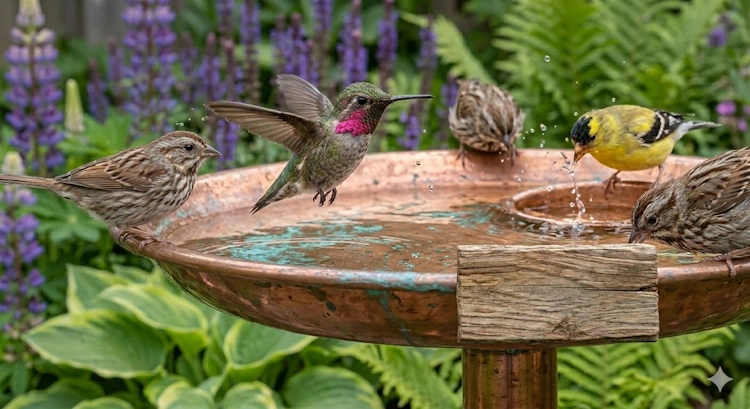
Hummingbirds prefer fountains with gentle moving water, shallow basins no deeper than 0.5 inches, and low-pressure mist or drip settings. Traditional tiered fountains with deep pools are rarely used by hummingbirds, as they cannot reach the water safely. When a fountain checks the right boxes, however, it can become a favorite stopping point for hummingbirds to drink, bathe, and cool off on hot days.
Why Hummingbirds Are Drawn to Fountains
Hummingbirds get most of their water intake from nectar (which is 70-80% water) and morning dew, but they still seek out additional water sources on hot, dry days. Fountains appeal to them for several key reasons:
Moving Water Is Easier to Spot
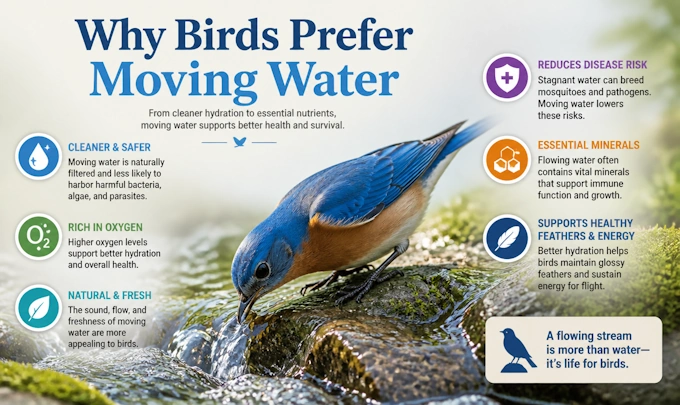
Hummingbirds have excellent color vision but struggle to see still, flat water surfaces. As we cover in our guide to why most bird species are drawn to moving water sources, rippling, dripping, or misting water reflects light and creates subtle noise that hummingbirds can detect from hundreds of feet away. Still water in a bird bath or pond often looks like a solid surface to them, so they will fly right past it.
Misting Mimics Natural Rain Showers
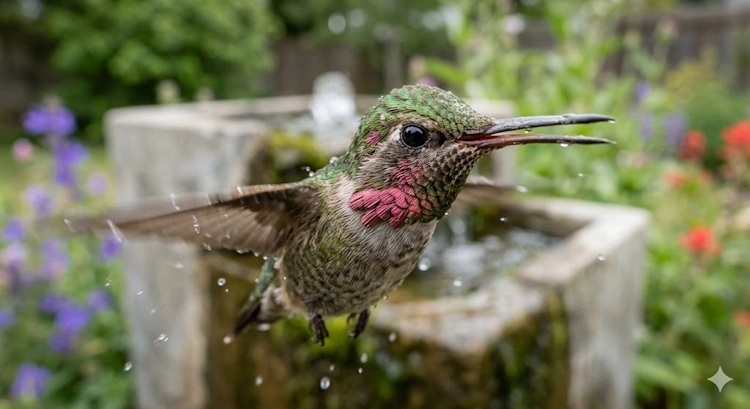
In the wild, hummingbirds bathe by flying through light rain showers or brushing against wet leaves. Mist fountains replicate this natural behavior perfectly: the tiny water droplets cling to their feathers without weighing them down, and they can fly through the mist without landing, which reduces their risk of being caught by predators while perched.
Shallow Water Reduces Drowning Risk
Because hummingbirds are so small, even 1 inch of water can be a drowning hazard. Fountains with shallow basins (0.25 to 0.5 inches deep) let them stand on the edge and sip water without submerging their bodies. Many hummingbird-specific fountains also include textured perches or small rocks in the basin to give them extra footing.
What Type of Fountain Do Hummingbirds Like Best?
Not all fountains are created equal when it comes to hummingbird appeal. Here’s how the most common fountain types stack up:
Mist Fountains: The Top Choice for Hummingbirds
Mist fountains are far and away the most popular option for hummingbirds. These fountains use a high-pressure pump to create a fine cloud of water droplets, rather than a stream or spray. Hummingbirds will fly through the mist repeatedly to wet their feathers, and the shallow basin below catches excess water for them to sip from. If you’re shopping for a pre-made option, check out our roundup of the best water fountains designed specifically for hummingbirds, which all include adjustable mist settings and shallow basins.
Drip Fountains: A Close Second
Drip fountains release a slow, steady stream of water into a shallow basin, creating gentle ripples that attract hummingbirds. These are a good choice if you want a quieter fountain than a mist model, and they use less water overall. Look for drip fountains with adjustable flow controls so you can set the drip to the slowest possible setting — fast drips can startle hummingbirds.
Traditional Tiered Fountains: Only With Modifications
Standard tiered garden fountains are rarely suitable for hummingbirds on their own, as they have deep basins and strong water flow. If you already own a traditional fountain, you can modify it by adding a shallow tray insert to the top tier, filling it with 0.5 inches of water, and reducing the pump flow to the lowest setting. You can also add small rocks or glass pebbles to the basin to create shallow perching spots.
How to Set Up Your Hummingbird Fountain
Even the best fountain won’t attract hummingbirds if it’s placed incorrectly. Follow these setup tips to maximize visits:
Place It Near Feeders and Flowers
Hummingbirds are creatures of habit — they will visit the same food and water sources daily. Place your fountain within 10 to 15 feet of hummingbird feeders and native nectar-rich flowers like bee balm, salvia, or trumpet vine. Avoid placing the fountain directly under trees or shrubs where predators like cats could hide.
Choose a Sunny, Open Spot
Hummingbirds prefer open areas where they can spot predators while they drink. A spot that gets 4 to 6 hours of morning sun is ideal — the sunlight will make the moving water sparkle, which attracts hummingbirds from farther away. Avoid fully shaded spots, as they can promote algae growth in the fountain.
Clean It Weekly to Prevent Disease
Algae, bacteria, and mosquito larvae can build up quickly in small fountains, especially in hot weather. Clean your fountain at least once a week with a solution of 1 part white vinegar to 9 parts water, and rinse thoroughly before refilling. Never use soap or chemical cleaners, as they can leave residue that is toxic to hummingbirds.
Common Mistakes to Avoid
Even well-meaning birders make these errors when setting up hummingbird fountains:
- Using high-pressure spray nozzles: Strong water jets can knock hummingbirds out of the air, or soak them so thoroughly they can’t fly.
- Letting water sit stagnant: If your fountain’s pump breaks, empty it immediately. Stagnant water attracts mosquitoes and grows toxic algae fast.
- Adding sugar to the water: Hummingbirds get sugar from nectar feeders. Adding sugar to fountain water causes mold and attracts ants, bees, and wasps.
- Placing it too close to windows: Hummingbirds can fly into windows at high speeds. Keep fountains at least 3 feet away from glass, or apply window decals to prevent collisions.
Frequently Asked Questions
Can hummingbirds drink from fountains?
Yes, but they don’t drink from fountains the same way larger birds do. They rarely submerge their beaks fully — instead, they sip from shallow edges, brush against wet perches to collect water on their feathers, or fly through mist to wet their bills.
Do I need to add sugar water to a hummingbird fountain?
Never. Hummingbirds get all the sugar they need from dedicated nectar feeders. Adding sugar to fountain water will cause rapid mold growth, attract pests, and can cause digestive issues if hummingbirds ingest large amounts.
Will a solar fountain work for hummingbirds?
Yes, as long as the fountain has adjustable flow settings. Solar fountains are a great cord-free option, but look for models with battery backup if you live in an area with frequent cloudy days, to keep the water moving even when the sun isn’t out.
How often should I clean a hummingbird fountain?
Clean your fountain at least once a week, and more often if you notice algae buildup or the water looks cloudy. Rinse all parts thoroughly with plain water after cleaning to remove any vinegar residue.
Final Tips for Attracting Hummingbirds to Your Fountain
So, do hummingbirds like fountains? Absolutely — when those fountains are designed with their tiny size and safety in mind. Choose a mist or low-flow drip fountain with a shallow basin, place it near native flowers and feeders, and keep it clean all season long. With a little setup, you’ll have hummingbirds visiting your yard daily to drink, bathe, and brighten your garden with their vibrant colors.
Hassan is a lifelong backyard birding enthusiast and the creator of Birdhouse Tales. Turning a passion for nature into a mission, they spend their days designing bird-approved DIY nesting boxes, testing squirrel-proof gear, and curating the best advice to help homeowners build safe wildlife sanctuaries. Whether you are trying to attract your first pair of bluebirds or looking for the perfect copper birdbath, Hassan provides practical, real-world guides to bring the joy of birdwatching right to your window.