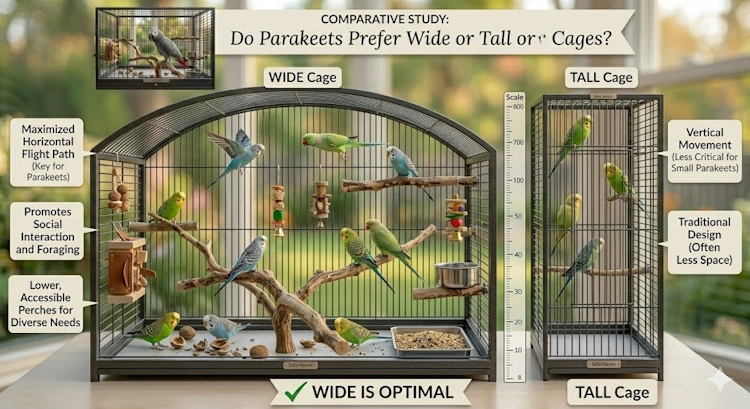
If you’re shopping for a new home for your pet budgie, you’ve probably asked yourself: Do parakeets like tall or wide cages? It’s a common question for new and experienced owners alike, because picking the wrong shape can limit your bird’s ability to fly, play, and stay healthy. Parakeets (also called budgerigars or budgies) are active, social birds with specific spatial needs that many first-time owners overlook.
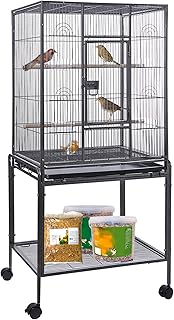
HSM 53 Inch Wrought Iron Large Bird Flight Cage with Rolling Stand
Check PriceWhy Cage Shape Matters for Parakeets
Unlike cats or dogs that move mostly on horizontal surfaces, many pet owners assume birds need tall cages to fly up and down. For parakeets, this is a critical misconception. Wild budgies live in the open grasslands of Australia, where they fly long distances horizontally to forage, socialize, and escape predators. Their bodies are evolved for side-to-side flight, not vertical climbing or long upward flights.
When you put a parakeet in a tall, narrow cage, you’re restricting their ability to engage in natural behavior. A cage that is 36 inches tall but only 12 inches wide gives your bird less usable space than a 24-inch tall cage that is 30 inches wide. This mismatch between cage shape and natural behavior can lead to serious health and behavioral issues over time.

VEVOR Bird Cage, 24.6 x 16.7 x 53.9 inch, Flat Top, Wrought Iron Bird Flight Cage with Perches
Check PriceDo Parakeets Like Tall or Wide Cages? The Clear Answer
The short answer is: parakeets strongly prefer wider cages over tall, narrow ones. Width (the measurement of the cage from left to right, which determines horizontal flight space) is the single most important factor when choosing a cage for a budgie. Height only matters if the cage already meets minimum width requirements.
How Wild Parakeets Fly (And Why It Matters for Your Cage)
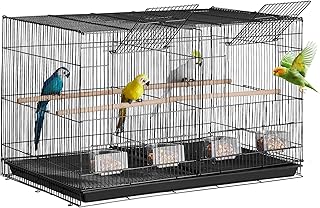
VEVOR 30-inch Flight Bird Cage, Stackable Divided Small Parakeet Cage for Parakeets
Check PriceWild budgie flocks can fly up to 100 miles in a single day, almost entirely in horizontal patterns across open terrain. They rarely fly straight up for more than a few feet, and they never navigate narrow, vertical spaces in nature. This instinct is hardwired into pet parakeets, even those born in captivity. When your bird flies inside its cage, it will naturally move side to side, not up and down, so a wider cage lets them get the exercise they need to stay healthy.
Risks of Choosing a Tall, Narrow Cage

Prevue Pet Products Wrought Iron Bird Flight Cage with Wheels for Parakeets
Check PriceIf you prioritize height over width, you may face several issues with your parakeet:
- Reduced flight exercise, which leads to obesity and fatty liver disease, a common and fatal condition in pet parakeets.
- Boredom and frustration, which can cause feather plucking, excessive screaming, and aggression toward owners or other birds.
- Difficulty accessing food and water if perches and toys are crammed into a narrow vertical space.
- Increased stress, as parakeets feel exposed in tall, narrow cages that don’t let them move freely.
Minimum Cage Size Requirements for Parakeets
These size guidelines follow expert recommendations and align with avian veterinary guidelines for pet bird housing from the Association of Avian Veterinarians. Always prioritize width first, then height, then depth (front-to-back measurement):
- Single parakeet: Minimum width 24 inches, depth 18 inches, height 24 inches. Bar spacing should be 1/2 inch to 5/8 inch to prevent escapes or head injuries.
- Two parakeets: Minimum width 30 inches, depth 18 inches, height 24 inches. Overcrowding can lead to fighting, so always size up if you’re unsure.
- Three or more parakeets: Minimum width 36 inches, depth 24 inches, height 24 inches. Never overcrowd cages, as parakeets are social but need personal space to avoid fighting.
Bar Spacing and Cage Construction Tips
Beyond shape and size, pay attention to bar spacing and construction. Parakeets can squeeze through bars spaced more than 5/8 inch apart, and they may get their heads stuck in bars spaced less than 1/2 inch apart. Choose cages with horizontal bars rather than vertical ones, as parakeets love to climb side to side, and horizontal bars give them better grip. Avoid cages with lots of decorative scrolling or tall, unused roof sections, which add height without adding usable space.
How to Pick the Right Cage for Your Parakeet
If you’re shopping for a new cage, follow these simple steps to avoid common mistakes:
- Measure the width first: Never buy a cage with a width smaller than 24 inches for a single bird, no matter how tall it is.
- Check usable space: Subtract the space taken up by perches, food bowls, and toys from the total dimensions. A cage that looks big may have very little open flight space once filled.
- Prioritize function over looks: Tall, decorative cages often sacrifice width for height, making them poor choices for parakeets.
- Read reviews: Look for feedback from other parakeet owners to confirm the cage is durable and safe. Our roundup of best parakeet cages on the market includes pre-vetted options that meet all safety and size standards.
For owners on a budget, single-bird setups don’t have to break the bank. Our guide to affordable budgie cages highlights safe, spacious options that cost less than $100, all of which meet minimum width requirements.
Frequently Asked Questions
Can a parakeet live in a tall cage if it’s wide enough?
Yes, as long as the cage meets minimum width requirements first. A tall cage that is 36 inches tall and 30 inches wide is perfectly fine for a single parakeet, because the width allows for horizontal flight. The problem only arises when tall cages sacrifice width to achieve extra height.
How much horizontal space does a parakeet need to fly?
A single parakeet needs at least 24 inches of unobstructed horizontal space to fly from one end of the cage to the other. If you have multiple birds, you’ll need 6-8 extra inches of width per additional bird to prevent collisions and fighting.
Do parakeets need height for perches?
Parakeets do use perches at different heights, but they don’t need extreme height to do this. A cage that is 24-30 inches tall is plenty for 2-3 perches placed at varying heights. You can always add extra perches, but never at the expense of width.
Is a flight cage better than a tall cage?
Yes, flight cages are specifically designed with extra width to let birds fly horizontally, making them ideal for parakeets. Most flight cages are shorter than decorative tall cages but offer far more usable space for active birds.
Conclusion
When it comes to choosing a cage for your parakeet, remember that width always beats height. The answer to do parakeets like tall or wide cages is clear: they thrive in wider cages that let them engage in natural horizontal flight. Prioritize a minimum width of 24 inches for a single bird, check bar spacing, and avoid tall, narrow decorative cages that sacrifice usable space for looks.

Hassan is a lifelong backyard birding enthusiast and the creator of Birdhouse Tales. Turning a passion for nature into a mission, they spend their days designing bird-approved DIY nesting boxes, testing squirrel-proof gear, and curating the best advice to help homeowners build safe wildlife sanctuaries. Whether you are trying to attract your first pair of bluebirds or looking for the perfect copper birdbath, Hassan provides practical, real-world guides to bring the joy of birdwatching right to your window.