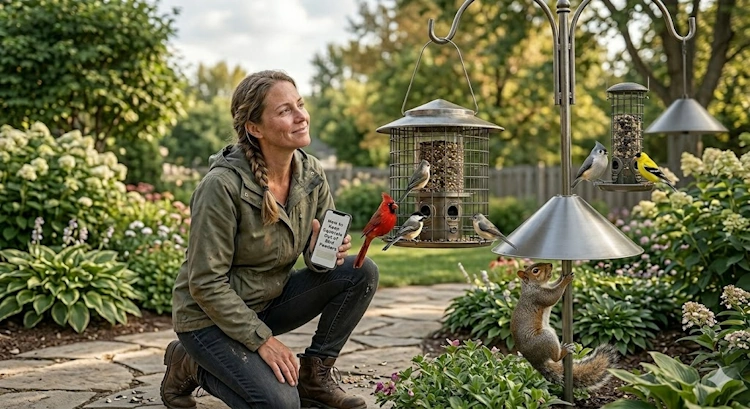
If you’ve ever filled your bird feeder with premium seed, only to find it empty and scattered across your deck the next morning, you’re familiar with the frustration of squirrel raids. These agile rodents can empty a feeder in hours, damage plastic and wooden feeder parts, and scare away the songbirds you’re trying to attract. For many backyard birders, the most pressing question is: what repels squirrels but not birds? You want to protect your feeders without harming the birds you love, and luckily, there are plenty of safe, science-backed methods to do exactly that.
Many birders find that upgrading to specialized feeders is the first line of defense. We’ve tested dozens of options in our guide to the best squirrel-proof bird feeders to help you choose the right fit for your yard.

Squirrel Buster Plus Squirrel-proof Bird Feeder w/Cardinal Ring and 6 Feeding Ports, 5.1-pound Seed Capacity, Adjustable, Pole-mountable (POLE ADAPTOR SOLD SEPARATELY), Green
Check PriceWhat Repels Squirrels But Not Birds?
Not all squirrel repellents are created equal. Many common DIY solutions or store-bought chemicals are toxic to birds, pets, and even children. Mothballs, for example, contain naphthalene, which is fatal to birds even in small doses. Glue traps meant for squirrels often accidentally catch small birds, and poison baits can lead to secondary poisoning if raptors or scavenging birds eat dead squirrels. That’s why it’s critical to choose repellents that target squirrel biology without affecting avian species.
The good news? Squirrels and birds have very different sensory systems. Birds have an extremely limited sense of smell, while squirrels rely heavily on their olfactory senses to find food. Squirrels also have specific taste receptors (including the TRPV1 receptor that detects capsaicin, the compound that makes peppers hot) that birds entirely lack. This biological difference is the key to finding repellents that work on squirrels but not birds.
Natural Scent-Based Repellents (Birds Can’t Smell These)
Since birds have almost no sense of smell, any repellent that works by scent will only affect squirrels. These options are non-toxic, affordable, and easy to apply:
Capsaicin (Hot Pepper)
In my 10 years of backyard birding, I’ve tested all these methods, and capsaicin-treated seed is by far the most low-maintenance option. Squirrels stop visiting within 2 days of switching to hot pepper seed, and my chickadees, finches, and cardinals keep coming back as usual. Capsaicin, the active compound in chili peppers, is one of the most effective squirrel repellents on the market. Squirrels have TRPV1 receptors that detect capsaicin as a painful heat, so they will avoid seed treated with even small amounts of cayenne, chili powder, or commercial capsaicin spray. Birds completely lack these receptors, so they can eat capsaicin-treated seed without any discomfort. Research from the Cornell Lab of Ornithology confirms that capsaicin has no negative effects on birds, making it a top choice for birders.
You can buy pre-treated “hot pepper seed” at most garden stores, or make your own by mixing 1 tablespoon of cayenne pepper powder per pound of bird seed. Wear gloves when mixing to avoid skin irritation, and avoid inhaling the powder. Reapply the mixture after heavy rain, as water will wash away the capsaicin. Pro tip: Don’t worry about birds avoiding the seed—they can’t taste or feel the pepper, so they’ll keep coming back as usual.
Peppermint Oil
Squirrels dislike the strong, minty smell of peppermint oil, while birds are entirely unaffected by it. To use, soak cotton balls in pure peppermint oil and place them near feeder poles, or mix 10 drops of peppermint oil with 1 cup of water in a spray bottle and spritz the base of feeder poles (avoid spraying directly on seed or perches). Reapply every 2 weeks, or after rain. Peppermint oil is non-toxic and safe to use around pets and children, unlike chemical repellents.
Used Coffee Grounds
Used coffee grounds have a strong, earthy smell that squirrels find unpleasant, but birds can’t detect. Sprinkle used grounds around the base of feeder poles every 1-2 weeks, or stuff them into mesh bags and hang them near feeders. Coffee grounds are also a mild nitrogen fertilizer, so they’ll benefit your garden plants while deterring squirrels. Make sure to use unflavored, unsweetened grounds—added sugars or flavors can attract ants or other pests.
Predator Urine
Fox and coyote urine is a natural squirrel repellent that works by triggering squirrels’ innate fear of predators. Squirrels smell the urine and assume a predator is nearby, so they avoid the area. Birds do not recognize mammalian predator scents the same way, so they are completely unaffected. Predator urine comes in granular or liquid form—sprinkle it around feeder areas every 3-4 weeks. Note that it can have a strong odor for humans, so it’s best used in rural or suburban yards rather than dense urban areas.
Physical Barriers That Exclude Squirrels Only
Physical barriers are one of the most reliable ways to keep squirrels away from feeders, as they don’t rely on scent or taste—they simply block squirrels from accessing the seed while letting birds pass through. For a full walkthrough of setting these up, check out our step-by-step guide to keeping squirrels out of bird feeders.
Feeder Baffles
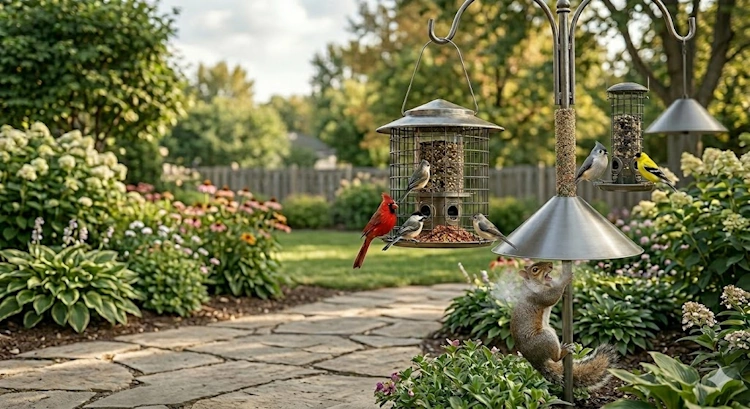
Baffles are dome-shaped or cylindrical barriers that attach to feeder poles below the feeder itself. Squirrels can’t climb over or around baffles, as they are too slippery to grip and too wide to bypass. Choose a baffle that is at least 18 inches wide for dome styles, or 6 feet long for pole-mounted cylinder styles. Place the baffle 4-5 feet off the ground to prevent squirrels from jumping over it from the ground.
Cage-Style Feeders
Cage-style feeders have a wire mesh cage surrounding the seed reservoir, with openings large enough for small songbirds (like chickadees, finches, and nuthatches) to pass through, but too small for squirrels (which are much larger) to fit. Look for cages with 1.5-inch or smaller openings—this will keep out squirrels while still allowing most common backyard birds to access the seed. Avoid cages with larger openings, as young squirrels may be able to squeeze through.
Proper Feeder Placement
Squirrels can jump up to 10 feet horizontally and 4 feet vertically, so feeder placement is critical. Place feeders at least 10 feet away from any structure squirrels can jump from: trees, fences, decks, or roofs. If you mount feeders on poles, make sure the pole is at least 5 feet tall, and add a baffle as described above. Feeders placed near windows should be within 3 feet of the glass to prevent bird collisions, but still 10 feet away from jumping structures.

Gbekery Squirrel Proof Bird Feeder for Outdoors Hanging, Metal Mesh Bird Feeder for Outsides with Gravity Protection for Small Birds, Weatherproof and Durable, Green
Check PriceSensory Deterrents (Safe for Birds)
Sensory deterrents use motion or sound to scare squirrels, without affecting birds. These options are best for yards where scent or physical barriers aren’t practical:
Motion-Activated Sprinklers
Motion-activated sprinklers detect movement and spray a short burst of water, which startles squirrels and teaches them to avoid the area. Most models can be adjusted to only trigger for animals over a certain size, so small birds won’t set them off. Place sprinklers near feeder areas, and adjust the sensitivity to avoid watering your house or sidewalks. Birds are not bothered by occasional sprinkler bursts, as they can easily fly away before getting wet.
Ultrasonic Repellents
Ultrasonic repellents emit high-frequency sounds (above 20kHz) that are intolerable to squirrels but completely inaudible to birds, which have a hearing range of up to ~8kHz. These devices are small, battery-powered, and can be mounted near feeders. Note that ultrasonic repellents may lose effectiveness over time, as squirrels can become habituated to the sound. Rotate between different deterrent methods to prevent this.
What to Avoid (Toxic to Birds)
To protect your backyard birds, never use any of the following repellents, even if they are marketed as “squirrel repellents”:
- Mothballs: Contain naphthalene, which is fatal to birds even in small doses.
- Glue traps: Often catch small birds accidentally, and are inhumane to squirrels.
- Poison baits: Squirrels may die in hidden areas, leading to secondary poisoning of raptors and scavenging birds.
- Chemical pesticides: Many store-bought repellents contain chemicals that are toxic to birds and pollinators.
- Shiny reflective objects: While these may deter squirrels, they can also scare away songbirds, especially during nesting season.
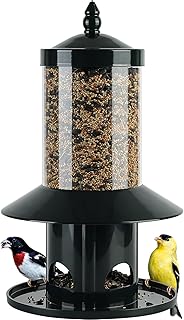
Squirrel Proof Bird Feeder – 360° Feeding Perch Tray for Outdoor Hanging Wild Bird Seeds, Dark Green
Check PriceFrequently Asked Questions
Does vinegar repel squirrels but not birds?
Yes, white vinegar has a strong smell that squirrels dislike, but birds cannot smell it at all. Soak rags in white vinegar and place them near feeder poles, or spray diluted vinegar (1 part vinegar to 2 parts water) around the base of poles. Reapply every 3-5 days, as the smell fades quickly. Avoid spraying vinegar directly on seed, as it can make the seed unpalatable to birds.
Will aluminum foil keep squirrels away but not birds?
Yes, squirrels dislike the feel of aluminum foil under their paws, and the reflective surface can startle them. Wrapping feeder poles in aluminum foil is an affordable, bird-safe deterrent. Avoid placing foil near feeder perches, as it may make it difficult for birds to grip while eating.
Is cayenne pepper safe for birds?
Absolutely. As noted earlier, birds lack the TRPV1 receptor that detects capsaicin, so cayenne pepper causes them no harm. It is one of the safest, most effective repellents for squirrels.
Do coffee grounds repel squirrels?
Yes, used coffee grounds have a strong smell that squirrels find unpleasant. They are non-toxic, safe for birds, and act as a mild fertilizer for your garden. Reapply every 1-2 weeks for best results.
Will Irish Spring soap repel squirrels but not birds?
Many birders report success with Irish Spring soap. Shave the soap into small flakes and sprinkle them near feeders—squirrels hate the strong scent, but birds are unaffected. Reapply after rain, as the scent washes away quickly.
Conclusion
Finding what repels squirrels but not birds doesn’t have to be complicated. By leveraging biological differences between squirrels and birds—like squirrels’ strong sense of smell and taste receptors—you can use safe, non-toxic methods to protect your feeders. Start with a simple solution like capsaicin-treated seed or peppermint oil, then add physical barriers like baffles or cage feeders for extra protection.
Remember that combining multiple methods is the most effective approach: a baffle on a properly placed pole, filled with capsaicin-treated seed, will deter 99% of squirrel raids while keeping your backyard birds happy and healthy. With a little trial and error, you’ll find the right combination for your yard, and get back to enjoying the songbirds you love.
Hassan is a lifelong backyard birding enthusiast and the creator of Birdhouse Tales. Turning a passion for nature into a mission, they spend their days designing bird-approved DIY nesting boxes, testing squirrel-proof gear, and curating the best advice to help homeowners build safe wildlife sanctuaries. Whether you are trying to attract your first pair of bluebirds or looking for the perfect copper birdbath, Hassan provides practical, real-world guides to bring the joy of birdwatching right to your window.