If you’ve ever watched backyard birds skip a full, clean bird bath in favor of a dripping hose or trickling stream, you’ve probably wondered: why do birds prefer moving water? It’s a common question among birders, and the answer lies in a mix of evolutionary instincts, safety needs, and practical hydration habits that have developed over millions of years. Whether you’re a new birder looking to attract more species to your yard or a seasoned enthusiast trying to understand local bird behavior, the reasons behind this preference are rooted in hard science and observable wildlife patterns.

Daoeny 35In Metal Bird Bath for Outside
Check Price7 Core Reasons Birds Prefer Moving Water
Moving Water Is Far More Visible From the Air
Birds have exceptional eyesight, with some species able to spot small insects from hundreds of feet in the air. But still water presents a challenge: it often blends into the surrounding environment, reflecting sky, trees, or grass in a way that makes it nearly invisible from above. A full bird bath with stagnant water can look like a patch of solid ground or a shadow to a flying bird, even if it’s brightly colored.
Moving water, by contrast, creates constant ripples, splashes, and light refraction that catch the eye instantly. The shifting surface reflects sunlight in irregular patterns, making it stand out against even dense foliage or flat lawns. For migratory birds flying overhead, a trickling stream or dripping bird bath is a beacon that signals a reliable water source from miles away, while still water sources often go unnoticed until a bird happens to fly low enough to spot them.
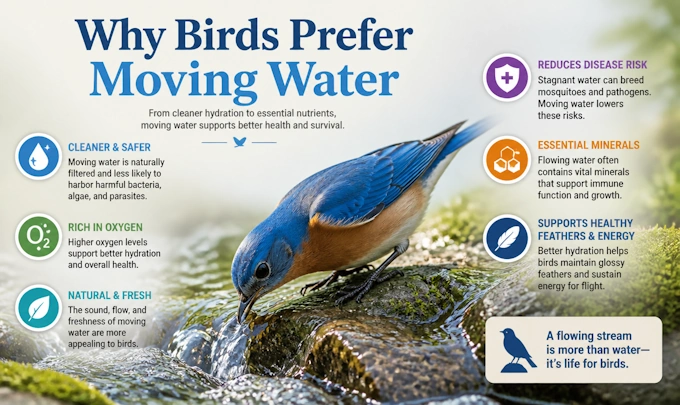
Moving Water Signals Freshness and Low Disease Risk
Stagnant water is a breeding ground for harmful bacteria, algae, and parasites that can make birds sick. Still bird baths left for days can develop outbreaks of avian trichomoniasis, a parasitic infection that spreads through shared water sources, or breed mosquitoes that carry West Nile virus. Birds have evolved an instinctive aversion to still, stagnant water because it’s historically been a source of illness in the wild.
Moving water is naturally oxygenated, which slows the growth of algae and prevents the buildup of harmful pathogens. It also dilutes waste from visiting birds more effectively than still water, keeping the source safer for repeated use. Even if a moving water feature hasn’t been cleaned in a few days, it’s far less likely to harbor dangerous contaminants than a still bird bath of the same age. This instinctive understanding of water safety is a key reason why birds will bypass a clean still bath for a slightly dirty moving stream.
Moving Water Attracts Supplemental Food Sources
For insectivorous birds like warblers, flycatchers, and swallows, moving water is more than just a drink stop: it’s a feeding station. Insects of all kinds are drawn to flowing water to lay eggs, drink, or cool off, creating a constant buffet for birds that eat them. A dripping bird bath or small fountain will attract gnats, moths, and mosquitoes, which in turn attract insect-eating birds that might not otherwise visit a water source.
Even seed-eating birds like finches and sparrows benefit from the extra insect activity: many species feed insects to their nestlings during breeding season, so a moving water source provides easy access to protein-rich prey right alongside drinking water. This dual benefit makes moving water far more valuable to birds than still sources, which rarely attract the same level of insect activity.
Moving Water Is Easier to Locate by Sound
Birds have incredibly sensitive hearing, able to detect sounds at frequencies far beyond human range. The sound of dripping, trickling, or splashing water carries up to 10 times further than visual cues, especially in dense woods or shrubby yards where line of sight is limited. A bird sitting in a thick tree 200 feet away can hear a dripping hose clearly, even if it can’t see the water source at all.
This audio cue is especially valuable for shy species that avoid open areas. Birds like wrens, thrushes, and catbirds will often follow the sound of moving water to a yard, even if they’d normally avoid exposed bird baths. For backyard birders, adding a simple dripper to an existing bath can double or triple the number of species that visit, simply because the sound draws in birds that would otherwise fly right past.

OUISJYER 3″ Deep Metal Bird Bath for Outdoors
Check PriceMoving Water Reduces Predator Vulnerability
When birds drink from still water, they have to lower their heads and pause, making them vulnerable to predators like cats, hawks, and snakes. Still water also acts as a mirror: the reflection of the sky and surrounding trees can hide a predator approaching from behind, since the bird can’t see past the reflected image in the water’s surface.
Moving water breaks up this reflective surface with constant ripples and splashes. Birds can see their surroundings clearly while drinking, since the water no longer acts as a mirror. The sound of moving water also masks the quiet approach of predators, giving birds an extra second to fly away if a threat is near. This added safety makes moving water a far more appealing choice for skittish species that avoid still, open water sources.
Moving Water Mimics Natural Habitats
Birds evolved alongside natural moving water sources: streams, creeks, rivers, and trickling springs. These sources are consistent, reliable, and historically safe, unlike temporary still puddles that dry up quickly or stagnant ponds that become toxic in summer heat. Even birds raised in urban areas have innate instincts that draw them to moving water, since it signals a natural, trustworthy resource.
Still water sources like puddles, old tires, or unused bird baths are relatively new in evolutionary terms, and birds haven’t developed the same level of trust for them. A decorative fountain or dripping bird bath taps into these deep-seated instincts, making birds feel more at home in your yard than they would with a still water source. Migratory birds in particular rely on moving water cues, since natural streams are consistent landmarks during long flights.
Moving Water Stays Cleaner Longer
Even with regular cleaning, still bird baths accumulate debris like leaves, feathers, and droppings quickly. This debris sinks to the bottom, creating sludge that harbors bacteria and makes the water unappealing to birds. Moving water circulates constantly, preventing debris from settling in one spot and pushing lighter waste toward the edges where it’s easier to clean.
A still bird bath may need cleaning every 2-3 days in warm weather to stay safe for birds, while a moving water feature can often go a week or more between cleanings. This not only saves time for backyard birders, but also ensures that the water source remains appealing to birds for longer periods. Birds that visit a moving water source one day are far more likely to return, since they know the water will still be clean and safe when they come back.
How to Add Moving Water to Your Yard

Gtongoko Metal Bird Bath for Outside Heavy Duty
Check PriceYou don’t need expensive equipment to start attracting birds with moving water. Simple, low-cost setups work just as well as high-end fountains, and most can be assembled in minutes. If you’re looking to upgrade your current setup, our guide to the best bird baths for backyard birding breaks down top picks for every budget, many of which are compatible with simple moving water add-ons.
Below are the most effective, beginner-friendly ways to create moving water in your yard:
- Drip bottles: Punch a tiny pinhole in the cap of a plastic water bottle, fill it with water, and hang it 6-12 inches above your bird bath. The slow drip creates constant ripples and a soft dripping sound that birds love.
- Solar fountains: These floating fountains run on sunlight, creating a gentle spray or flow without any wiring. They work best in bird baths that get 6+ hours of direct sun per day.
- Misters: Attach a mister nozzle to your outdoor hose, and set it to create a fine spray that birds can fly through to cool off. Many species, including hummingbirds, love misters even more than drippers.
- Recirculating pumps: Small submersible pumps can turn any large container into a flowing water feature. They’re affordable, use very little electricity, and can be paired with a timer to run only during peak bird activity hours.
Regular maintenance is key to keeping your water feature safe for birds. Follow our step-by-step bird bath cleaning guide to remove algae and debris without harming local wildlife. Avoid using soap or harsh chemicals, which can leave residue that harms birds’ feathers and skin.
According to the Cornell Lab of Ornithology’s water attraction guide, moving water can increase backyard bird visits by up to 300% compared to still sources. Even adding a simple $5 drip bottle to your existing bath can make a noticeable difference in the number and variety of species that visit your yard.
Frequently Asked Questions
Do all bird species prefer moving water?
While the vast majority of bird species prefer moving water, a few exceptions exist. Ground-feeding birds like doves and quail sometimes prefer shallow still water, since they don’t perch well on the edges of moving baths. However, even these species will use moving water if it’s shallow enough, and most backyard birds (including cardinals, chickadees, and bluebirds) strongly favor moving sources.
Can moving water attract more birds than feeders?
In many cases, yes. Water is a more critical resource than food for birds, especially during summer heat or winter freezes. A moving water source can attract species that don’t eat seeds from feeders, including insectivores and migratory birds passing through. Many birders find that adding moving water brings in more new species than adding a new feeder.
How much moving water do I need to attract birds?
You don’t need a large water feature: even a slow drip that creates small ripples is enough to attract birds. A bird bath with 1-2 inches of water and a simple dripper is sufficient for most backyard species. Larger features like ponds or streams are great, but not necessary for attracting common backyard birds.
Will moving water work in winter?
Yes, if you use a bird bath heater or de-icer. Moving water freezes more slowly than still water, but in freezing temperatures, you’ll need a heater to keep the water liquid. Many birds rely on moving water sources even in winter, since natural streams may freeze over, making your yard a critical resource.
Is a dripper or fountain better for attracting birds?
Drippers are often more effective, since the sound of individual drips carries further than the hum of a fountain pump. Fountains create more visual movement, which is great for attracting birds from the air, but drippers are simpler, cheaper, and require less maintenance. Many birders use a combination of both for maximum effect.
Conclusion
Understanding why birds prefer moving water is the key to creating a backyard that attracts more feathered visitors year-round. From better visibility and safety to natural instinct and food benefits, moving water checks every box for what birds look for in a water source. You don’t need to spend hundreds of dollars to see results: a simple drip bottle or solar fountain can transform your existing bird bath into a bird magnet in minutes.
Remember to clean your water feature regularly, choose a setup that fits your yard’s sun and space, and be patient: it may take a few days for local birds to discover the new water source, but once they do, you’ll wonder why you didn’t add moving water sooner. With just a small investment of time and money, you can create a safe, appealing water source that supports local bird populations and gives you hours of enjoyment watching them visit.
Hassan is a lifelong backyard birding enthusiast and the creator of Birdhouse Tales. Turning a passion for nature into a mission, they spend their days designing bird-approved DIY nesting boxes, testing squirrel-proof gear, and curating the best advice to help homeowners build safe wildlife sanctuaries. Whether you are trying to attract your first pair of bluebirds or looking for the perfect copper birdbath, Hassan provides practical, real-world guides to bring the joy of birdwatching right to your window.