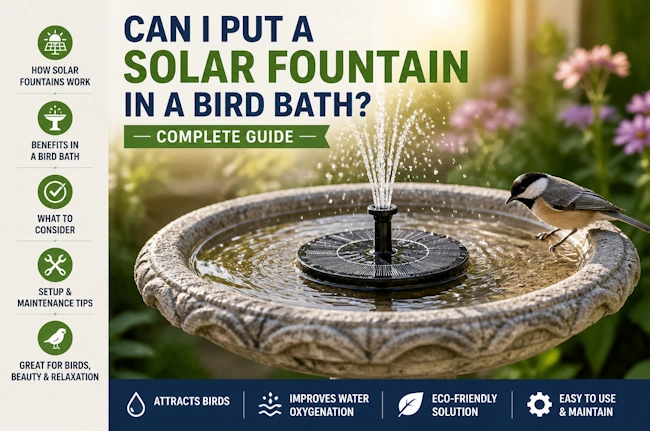
If you’ve ever watched chickadees, finches, and cardinals splash in your backyard bird bath, you’ve probably asked yourself: Can I put a solar fountain in a bird bath? The short answer is yes, solar fountains are a safe, eco-friendly upgrade for most standard bird baths, and they can double the number of bird species that visit your yard. But before you click add to cart on the first fountain you see, there are a few key compatibility, safety, and installation factors to consider to make sure both your birds and your bird bath stay in great shape.
Solar fountains work by using a small photovoltaic panel to power a submersible pump, which circulates water in your bird bath to create gentle movement, sprays, or bubbles. Unlike plug-in fountains, they don’t require any wiring or outdoor electrical outlets, making them a low-hassle addition for most gardeners. But not all bird baths are built to handle a fountain, and not all fountains are safe for birds. Below, we’ll break down everything you need to know to make the right choice for your backyard setup.
Mademax 1.4W Upgrade Solar Bird Bath Fountain
Check PriceIs It Safe to Put a Solar Fountain in a Bird Bath?
The number one concern most bird lovers have is whether a solar fountain will hurt the birds that visit their bath. When installed correctly, solar fountains are completely safe for birds. They operate on low voltage (usually 1.5 to 12 volts) and have no exposed wires, so there is zero risk of electric shock, even if the pump is fully submerged.
Safety risks only pop up when fountains are poorly chosen or installed incorrectly. The biggest hazard is deep water: birds need bird baths that are 1 to 2 inches deep at most to bathe safely, as deeper water can lead to drowning, especially for small songbirds. Some high-flow fountains can splash water out of the bath, or create deep pools in the center, which defeats the purpose of a bird-friendly bath. To avoid this, always choose a fountain with adjustable flow, and test the water depth after installation to make sure it stays within the safe 1-2 inch range.
Another minor safety note: avoid fountains with small, detachable plastic nozzles or decorative parts that birds could peck off and swallow. Stick to models with integrated nozzles, or nozzles that screw on tightly to the pump housing. If you have a ceramic or glass bird bath, make sure the fountain pump is lightweight enough not to crack the brittle material, most small solar pumps weigh less than 8 ounces, so they’re safe for most standard bird baths.
What to Check Before Adding a Solar Fountain to Your Bird Bath

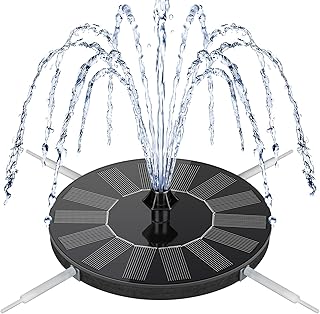
Mademax Upgraded Solar Fountain with 4 Nozzles
Check PriceBefore you buy a fountain, take 5 minutes to check your existing bird bath (or the one you plan to buy) against these three key criteria. If your bath checks all the boxes, you’re ready to shop for a fountain.
Bird Bath Compatibility
First, measure your bird bath’s diameter and depth. Most solar fountains are designed for bird baths 12 to 24 inches wide, and 2 to 4 inches deep. If your bird bath is smaller than 10 inches wide, look for compact models specifically labeled for small bird baths, we’ve rounded up our top picks for these in our guide to compact solar fountains for small bird baths. If your bird bath is deeper than 4 inches, you’ll need to add a layer of flat river rocks to the bottom to raise the water level to 1-2 inches for birds, which also gives them a place to perch while they drink.
Material also matters: plastic, concrete, and resin bird baths work perfectly with solar fountains, as they’re durable enough to handle the small weight of the pump. Ceramic bird baths are fine too, as long as the pump is lightweight. Avoid metal bird baths that sit in direct sun, as they can heat up and warm the water to unsafe temperatures for birds. Solar fountains circulate water, but they can’t cool down water that’s been heated by a hot metal bath. If you’re in the market for a new bird bath, check out our guide to the best bird baths to find a model that pairs perfectly with a solar fountain.
Sunlight Availability
Solar fountains only work if the photovoltaic panel gets enough direct sunlight. Most models need 6 to 8 hours of direct sun daily to run consistently. The good news? The panel does not need to be attached to the bird bath. Most solar fountains come with a 10 to 16 foot cord that connects the panel to the submersible pump, so you can place the bird bath in a partially shaded spot (where birds prefer to bathe, to avoid overheating) and run the cord to a sunny area of your yard to position the panel. If your yard gets less than 6 hours of sun daily, look for a fountain with a rechargeable battery backup—these store excess solar energy during sunny hours to keep the fountain running on cloudy days or in early morning/late evening.
Water Depth and Flow
As we mentioned earlier, birds need shallow water to bathe safely. Before adding a fountain, check that your bird bath holds 1 to 2 inches of water when filled, if it’s deeper, add river rocks or a bird bath insert to raise the water level. When choosing a fountain, prioritize models with adjustable flow rates: you want to be able to turn the flow down to a gentle bubble or low spray, rather than a high-pressure jet that will splash water out of the bath, make the surrounding area muddy, and waste water. Many fountains come with 3 to 5 interchangeable nozzles, so you can switch between a gentle bubbler (best for small birds) and a light spray (attracts hummingbirds and butterflies too).
How to Choose the Right Solar Fountain for Your Bird Bath

Mademax 1W Floating Solar Fountain
Check PriceWith hundreds of solar fountains on the market, it’s easy to get overwhelmed. Focus on these four key features to find a model that will last for years and keep your birds happy.
Size and Fit
Measure the interior diameter of your bird bath before shopping. A fountain that’s too large will tip the bird bath, especially if it’s a lightweight plastic model. For bird baths 12 to 18 inches wide, choose a fountain with a pump base 4 to 6 inches wide. For smaller bird baths under 12 inches, opt for a compact model with a 3-inch wide pump base. Most product listings will specify the maximum bird bath size the fountain is designed for, so double-check that before buying.
Flow Rate and Adjustability
Look for a fountain with a flow rate of 50 to 100 gallons per hour (GPH) at most. Higher flow rates (over 150 GPH) are meant for large ponds, not bird baths—they’ll splash water everywhere and make the bath too deep. Adjustable flow is non-negotiable: you want to be able to turn the flow down to almost zero for small songbirds, then up a bit if you want to attract hummingbirds with a light mist. Some budget fountains have fixed flow rates, which often end up being too high for bird baths—spend the extra $10 to get an adjustable model, it’s worth it.
Durability and Weather Resistance
Since your fountain will be outside 24/7, it needs to withstand rain, UV rays, and temperature swings. Look for models with an IP65 or higher water resistance rating, this means the pump is fully sealed against dust and low-pressure water jets, so it won’t short out if it rains. The pump housing should be made of UV-resistant ABS plastic, which won’t crack or fade after a summer of direct sun. Cheap models often use thin, non-UV-resistant plastic that will disintegrate after 3 to 6 months of use, so read reviews to confirm durability before buying.
Battery Backup Options
If you live in a cloudy climate, or want your fountain to run for an hour or two after sunset, choose a model with a built-in rechargeable battery. These fountains cost $20 to $30 more than basic models, but they’re far more reliable. Most battery backups will keep the fountain running for 4 to 6 hours after the sun goes down, or all day during overcast weather. Some models even have a small LED light built in, which can create a nice glow in your yard at night (though keep in mind the light may deter some birds from using the bath at dawn, so turn it off if that’s a concern).
Step-by-Step Guide to Installing a Solar Fountain in Your Bird Bath
Installing a solar fountain takes less than 10 minutes, no tools required. Follow these simple steps to get your fountain up and running:
- Clean your bird bath thoroughly first. Use a scrub brush and a 1:10 bleach-water solution to remove algae, debris, and old water residue, then rinse completely and let dry. This prevents debris from clogging the new pump.
- Position the solar panel. Find a spot that gets 6+ hours of direct sun daily, even if your bird bath is in shade. Use the included stake to secure the panel to the ground, angled toward the sun (south-facing is best in the northern hemisphere).
- Submerge the pump. Place the pump in the center of the bird bath, making sure the water intake (the small grate at the bottom of the pump) is not touching the bottom of the bath—this prevents it from sucking up sediment. Fill the bath with 1-2 inches of water.
- Attach the nozzle. Choose the gentle bubbler or low-spray nozzle, and screw it onto the pump. Adjust the flow control dial (if included) to the lowest setting first.
- Test the setup. Wait for the panel to get direct sun, then check that water flows consistently. Make sure the bird bath doesn’t tip, and the water depth stays at 1-2 inches. Adjust the flow up slightly if you want more movement, but stop if water starts splashing out of the bath.
Common Problems (and Fixes) for Solar Bird Bath Fountains
Even the best solar fountains can run into minor issues. Here’s how to fix the most common problems:
Fountain Stops Working on Cloudy Days
Fix: If you don’t have a battery backup, move the solar panel to a sunnier spot, or wipe off any dirt or leaves that may be blocking the panel. For long-term reliability, upgrade to a model with a battery backup.
Pump Clogs with Debris
Fix: Clean the pump intake every 1-2 weeks. Most pumps have a removable cover that pops off, so you can rinse the intake grate under running water. Add the included mesh pre-filter to the intake to catch leaves and debris before they clog the pump.
Water Splashes Out of the Bird Bath
Fix: Turn down the flow rate, switch to a bubbler nozzle (which creates almost no splash), or add a wider bird bath if your current one is too small to hold the water volume. You can also add a ring of river rocks around the edge of the bath to catch splashed water and return it to the bath.
Benefits of Adding a Solar Fountain to Your Bird Bath
Still on the fence? Here are the top reasons backyard birders love solar fountains, backed by data from the Cornell Lab of Ornithology’s backyard birding guides:
- Attracts more bird species: Moving water is visible to birds from up to 3 times farther away than stagnant water, and can double the number of species that visit your yard. It’s especially attractive to hummingbirds, warblers, and other species that prefer moving water to stagnant baths.
- Keeps water fresh: Stagnant water is a breeding ground for mosquitoes and algae. The circulation from a solar fountain prevents mosquito larvae from surviving (they need still water to develop) and reduces algae growth by up to 70%, so you’ll spend less time cleaning your bird bath.
- Eco-friendly and low cost: Solar fountains run entirely on free solar energy, so they add $0 to your monthly electric bill. They also have no cords or wires, so there’s no risk of tripping hazards or digging up your yard to run electrical lines.
- Low maintenance: Once installed, solar fountains run automatically. You only need to clean the pump every 1-2 weeks, and store the fountain indoors during freezing winter months.
Frequently Asked Questions
Will a solar fountain scare birds away?
No, most birds are naturally attracted to moving water. If you’re adding a fountain to a bath that birds already use, start with the lowest flow setting so they get used to the gentle movement. Within a day or two, you’ll see them splashing in the moving water just like they did in stagnant water.
Can I leave my solar fountain out in winter?
No, freezing temperatures will crack the pump housing and damage the internal components. When temperatures are consistently below 40°F, remove the pump from the bird bath, rinse it thoroughly, and store it in a cool, dry place indoors. You can leave the solar panel out if it’s weather-resistant, but bring it in if you get heavy snow or ice.
Do solar fountains work in shaded bird baths?
Yes, as long as the solar panel is placed in direct sunlight. The pump itself does not need sun—only the panel needs to be in direct light. Use the included cord to run the panel to a sunny spot, even if the bird bath is under a tree or porch.
How often do I need to clean my solar fountain?
Clean the pump intake every 1-2 weeks to remove debris, and deep clean the entire pump and bird bath once a month. To deep clean, soak the pump in a 1:10 vinegar-water solution for 10 minutes to remove algae buildup, then rinse thoroughly before reinserting into the bath.
Conclusion
So, to answer the question once and for all: yes, you can absolutely put a solar fountain in a bird bath, and it’s one of the best upgrades you can make to your backyard birding setup. Just make sure your bird bath is compatible, choose a fountain with adjustable flow and durable materials, and install it correctly to keep birds safe.
Start by measuring your bird bath and checking sunlight availability in your yard. If you’re shopping for a new fountain, head to our guide to compact solar fountains for bird baths to find a model that fits your needs, or check our best bird baths guide if you need to upgrade your vessel first. With a little prep, you’ll have a moving-water bird bath that attracts twice as many feathered visitors in no time.

Hassan is a lifelong backyard birding enthusiast and the creator of Birdhouse Tales. Turning a passion for nature into a mission, they spend their days designing bird-approved DIY nesting boxes, testing squirrel-proof gear, and curating the best advice to help homeowners build safe wildlife sanctuaries. Whether you are trying to attract your first pair of bluebirds or looking for the perfect copper birdbath, Hassan provides practical, real-world guides to bring the joy of birdwatching right to your window.