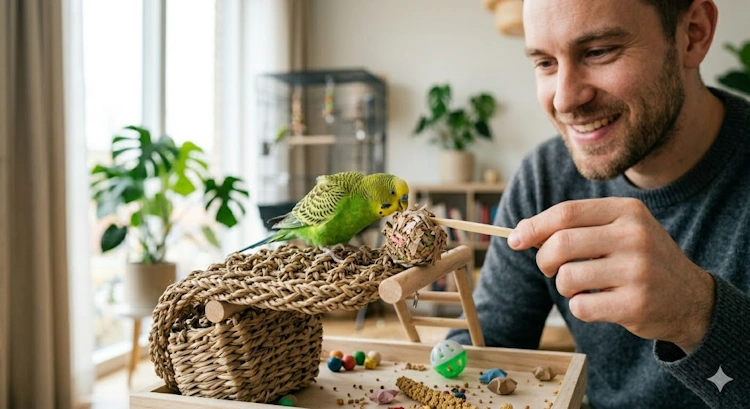
Wondering how to play with budgies without scaring them or breaking their trust? As a pet parakeet owner with over a decade of experience, I’ve learned that playtime isn’t just fun, it’s essential for your budgie’s mental health, physical fitness, and bond with you. Many new owners make the mistake of rushing play or using unsafe toys, which can lead to bitten fingers or a fearful bird. This guide will walk you through every step, from building initial trust to trying advanced games, so you and your feathered friend can enjoy stress-free play sessions.

VEVOR 64-inch Open Top Large Parrot Bird Cage with Detachable Rolling Stand for Parakeets Finches Canaries Lovebirds Cockatiels Budgies Small Quaker Conures Flight Birdcage with Swing and Perch
Check PriceWhy Playtime Matters for Budgies
Mental and Physical Health Benefits
Budgies are highly intelligent, social birds that evolved to fly long distances and forage for food in the wild. In captivity, they rely on you to provide that same level of stimulation. A bored budgie may develop destructive habits like feather plucking, excessive squawking, or chewing cage bars. Regular play helps them burn energy, maintain healthy muscle tone, and exercise their problem-solving skills. According to Petmed, daily enrichment is critical to prevent behavioral issues in pet birds.
Strengthening Your Bond
Play is also the fastest way to build trust with a new budgie. When you engage in positive, low-stress interactions, your bird learns to associate you with safety and fun. Over time, this turns a shy, flighty budgie into a cuddly companion that will hop onto your finger, mimic your words, and even snuggle against your neck. For pairs or groups of budgies, playtime also reinforces social bonds between the birds, reducing fighting and territorial behavior.
Prepare for Safe Play Sessions
Create a Hazard-Free Play Area
Before letting your budgie out of its cage, scan the room for dangers. Close all windows and doors, turn off ceiling fans, and cover any open water sources like toilets or sinks. Remove toxic plants, uncovered wires, and small objects your budgie could swallow, such as hair ties, beads, or coin batteries. If you have other pets, like cats or dogs, secure them in another room during playtime—even friendly pets can startle a budgie into flying into a wall.
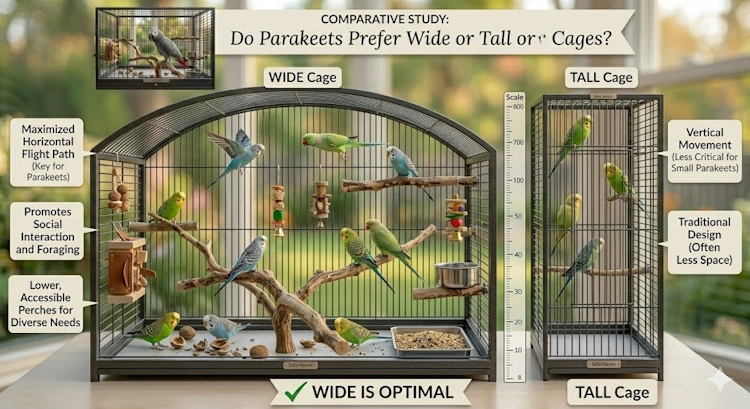
Your budgie’s cage should also be a safe retreat if they get overwhelmed. Before you start any play session, make sure your budgie’s home base is secure and spacious. We’ve reviewed the top-rated budgie cages and spacious cages for pairs of budgies to help you pick the right fit. A cage with a large door and flat roof makes it easy for your budgie to hop in and out on their own terms.
Choose Bird-Safe Toys and Props
Not all bird toys are safe for budgies. Avoid toys with small, detachable parts that could be a choking hazard, or those made with lead-based paint, zinc, or toxic glues. Opt for untreated wooden toys, shreddable paper, and soft rope (supervise use to prevent tangling) instead. Household items can double as play props too: empty cardboard tissue boxes, paper towel rolls, and clean plastic bottle caps (with no sharp edges) make great free, safe toys.
- Safe: Untreated pine wood, shredded paper, natural sisal rope, cardboard, stainless steel bells
- Unsafe: Toys with lead paint, small plastic beads, elastic hair ties, galvanized metal (contains zinc), scented candles or air fresheners
Read Your Budgie’s Body Language
Budgies can’t tell you when they’re scared or overstimulated, so you’ll need to watch for physical cues. A relaxed budgie will have smooth feathers, bright eyes, and may chirp softly or grind their beak. A scared budgie will fluff up their feathers, pin their eyes (rapidly dilate and constrict pupils), hiss, or lunge forward. If you see these signs, end playtime immediately and let your bird retreat to their cage. Never force a scared budgie to interact—this will set back your trust-building progress by weeks.
Step-by-Step: How to Play With Budgies for Beginners
Start With Trust-Building First
You can’t play with a budgie that doesn’t trust you. If you’ve just brought your budgie home, spend 1-2 weeks sitting near their cage for 10 minutes a day, talking softly or reading aloud. Offer treats like millet sprays through the cage bars, then gradually move the treat closer to your hand. Once your budgie will take a treat from your palm through the bars, you can move to the next step.
Gentle Hand Training Before Play
Before you start active play, teach your budgie to step onto your finger. Open the cage door, hold your index finger out flat near their lower belly, and say “step up” in a calm voice. If they don’t move, gently press your finger against their belly—budgies instinctively step onto a raised surface. Reward them with a millet treat immediately after they step up. Practice this for 5 minutes a day until they hop onto your finger without hesitation.
5 Easy Games to Try First
Once your budgie is comfortable stepping onto your hand, try these low-pressure games:
- Millet Chase: Hold a millet spray just out of reach and move it slowly so your budgie has to hop or fly short distances to get it. Keep sessions under 3 minutes to avoid overfeeding.
- Cardboard Foraging: Stuff a clean cardboard tissue box with shredded paper and hide a few millet seeds inside. Let your budgie shred the paper to find the treats.
- Mirror Play: Hold a small bird-safe mirror near your budgie and let them “interact” with their reflection. Most budgies will chirp, bob their heads, or tap the mirror.
- Finger Perch: Let your budgie sit on your finger while you walk slowly around a safe room, pointing out windows or toys. Talk to them softly the whole time.
- Shredding Time: Give your budgie a plain paper towel or unprinted cardboard square and let them tear it into tiny pieces. This mimics their natural foraging behavior.
Advanced Play Ideas for Confident Budgies
Foraging Games
Once your budgie masters simple shredding games, try more complex foraging. Hide treats in puzzle toys designed for small birds, or wrap millet sprays in unbleached cheesecloth and tie it loosely so your budgie has to work to unwrap the treat. You can also hide small treats around a bird-safe play gym and let your budgie hunt for them. Foraging games keep your budgie occupied for hours and prevent boredom.
Trick Training
Budgies are smart enough to learn simple tricks with positive reinforcement. Start with “wave”: hold a treat above your budgie’s head so they lift one foot to reach it, then say “wave” and give the treat. Other easy tricks include turning in a circle, nodding their head, or flying to a specific perch on command. Keep training sessions under 10 minutes, and always end on a success to keep your budgie motivated.
Out-of-Cage Adventure Time
Confident budgies can enjoy supervised out-of-cage time in a bird-proofed room. Set up a play gym on a table with perches, toys, and treats, and let your budgie explore on their own terms. You can also teach them to fly to you on command: say “come here” and hold out your finger with a treat, rewarding them every time they fly to you. Never grab your budgie out of the air—this will make them fear your hands.
Common Playtime Mistakes to Avoid
Rushing the Process
The biggest mistake new owners make is trying to play with a budgie that hasn’t built trust yet. If you grab at your budgie or force them out of the cage, they will become fearful and may bite. Take as much time as you need for each step—some budgies warm up in days, others take months. There’s no deadline for playtime.
Using Unsafe Items
Many household items are toxic to budgies. Non-stick cookware, for example, releases fumes when heated that can kill birds within minutes. Scented candles, essential oil diffusers, and aerosol sprays also release toxins that irritate budgies’ sensitive respiratory systems. Always check if an item is bird-safe before using it during playtime.
Forcing Interaction
If your budgie flies away or hides during playtime, don’t chase them. Chasing a budgie triggers their prey instinct, making them more fearful. Instead, sit quietly on the floor with a treat in your hand and wait for them to come to you. Letting your budgie set the pace of interaction is key to building long-term trust.
Frequently Asked Questions
How long should budgie play sessions be?
Start with 5-10 minute sessions once a day for new budgies. Confident budgies can handle 20-30 minute sessions twice a day. Watch for signs of overstimulation, like heavy breathing or fluffed feathers, and end the session early if needed.
Can I play with my budgie right after bringing them home?
No. Give your new budgie 1-2 weeks to adjust to their new environment before trying to interact. Sit near their cage and talk softly, but don’t reach in or try to handle them until they’re comfortable with your presence.
My budgie bites me during play—what should I do?
Budgie bites are usually a sign of fear, not aggression. Say “no” in a firm but calm voice, put your budgie back in their cage, and end the session. Do not yell or hit the cage—this will make them more fearful. Reassess your approach: you may be moving too fast or using unsafe toys.
Do I need to play with my budgie every day?
Daily play is ideal, but 4-5 times a week is also fine. Consistency is more important than length—short, regular sessions are better than long, infrequent ones. If you’re going to be away, leave foraging toys in their cage to keep them occupied.
Conclusion
Learning how to play with budgies is a rewarding process that strengthens your bond and keeps your pet happy and healthy. Remember to start slow, prioritize safety, and let your budgie set the pace of interaction. With patience and consistency, you’ll have a playful, cuddly companion that looks forward to every play session.

Hassan is a lifelong backyard birding enthusiast and the creator of Birdhouse Tales. Turning a passion for nature into a mission, they spend their days designing bird-approved DIY nesting boxes, testing squirrel-proof gear, and curating the best advice to help homeowners build safe wildlife sanctuaries. Whether you are trying to attract your first pair of bluebirds or looking for the perfect copper birdbath, Hassan provides practical, real-world guides to bring the joy of birdwatching right to your window.