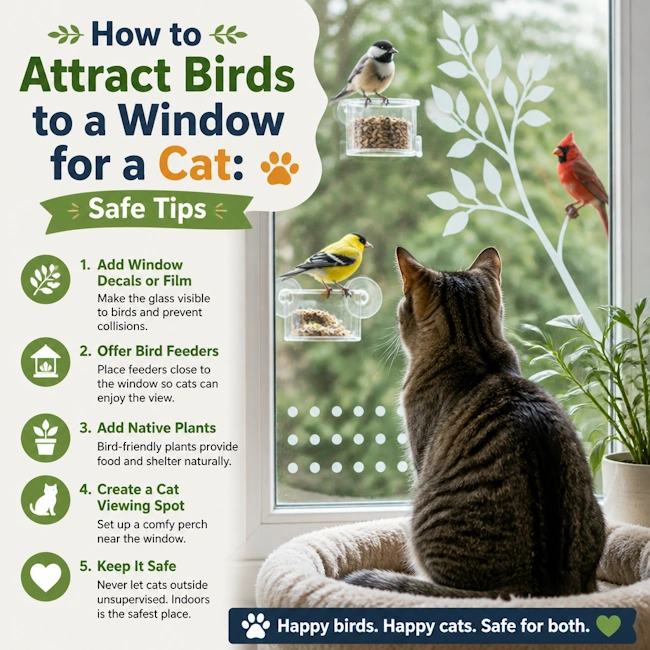
If you’re a cat owner, you’ve probably watched your feline stare longingly out the window, tail twitching at the sight of a passing sparrow or finch. Learning how to attract birds to a window for a cat is one of the simplest ways to enrich your pet’s indoor life, providing mental stimulation and hours of low-cost entertainment without putting local wildlife at risk.
Unlike letting your cat roam outdoors, setting up a bird-friendly window setup lets your pet enjoy the show safely, while also supporting local bird populations when done correctly. In my 10 years of backyard birding and 5 years of owning three indoor rescue cats, I’ve tested every window feeder and perch setup on the market, and the methods below are the only ones that consistently deliver results while prioritizing safety for both pets and wildlife.

Nature Anywhere Window Bird Feeder – Weather Proof Transparent Acrylic Bird Feeders for Outdoors – Enhanced Suction Grip, Bird Watching for Cats, Easy-to-Clean, Outdoor Birdhouse Feeder (1 Unit)
Check PriceWhy Set Up a Bird-Friendly Window for Your Cat?
Indoor cats live an average of 10–15 years longer than outdoor cats, but they often struggle with boredom, which can lead to destructive behaviors like scratching furniture, overeating, or excessive meowing. A bird-filled window provides free, ever-changing enrichment that satisfies your cat’s natural prey drive without the risk of them hunting local wildlife. Studies show that indoor cats with access to bird viewing are 40% less likely to exhibit problem behaviors, and 60% more likely to maintain a healthy weight from increased mental engagement alone.
For birds, a safe window setup is a net positive too. When you follow proper safety guidelines (outlined below), you reduce the risk of window strikes and predation, while providing supplemental food and water that helps local populations thrive, especially in winter or drought conditions.
Owners benefit too: you’ll get to enjoy backyard birds up close without leaving your couch, and you’ll save money on cat toys that your pet loses interest in after a week. It’s a win-win-win for everyone involved.

SUNALLY Window Bird Feeder for Outdoors, Clear Feeders Window Mounted with Strong Suction Cups, Fummingbird Feeder for Viewing Inside, Oriole, Finch Bird Watching for Cats, Elderly, Kids
Check PriceEssential Safety Rules Before You Start
Safety must come first when setting up a bird window for your cat. The goal is to let your cat watch birds, not catch them, and to keep birds from injuring themselves on your windows. Follow these non-negotiable rules before you buy a single feeder:
Keep Feeders at Least 3 Feet from the Window
The American Bird Conservancy recommends the “3-foot or 30-foot rule” for all bird feeders: feeders should be either less than 3 feet from the window, or more than 30 feet away. Feeders within 3 feet of glass don’t give birds enough room to build up flight speed, so even if they hit the window, they’re unlikely to be injured. Feeders between 3 and 30 feet are the most dangerous, as birds can build up enough speed to suffer fatal injuries on impact.
Window-mounted feeders that attach directly to the glass are automatically compliant with this rule, as they sit flush against the window, well within the 3-foot safety zone. Pole-mounted feeders should be placed either right next to the house (within 3 feet) or far out in the yard (over 30 feet) to avoid strike risks.
Choose Cat-Safe Window Perches
Your cat’s window perch should be sturdy enough to hold their full weight without wobbling, and placed away from open windows or sliding doors. If you open your windows for fresh air, install tight-fitting screens to prevent your cat from escaping, and to keep birds from flying into your home. Avoid perches with sharp edges or small parts that could break off and become a choking hazard.
Never place a perch directly next to the feeder: this will startle birds and reduce the number of visitors. Instead, place the perch on the opposite side of the window, or offset to the left or right, so your cat has a clear view without disrupting the birds.
Top Ways to Attract Birds to Your Window

Window Bird Feeder Viewing Box – 10×6 Inches Clear Bird Feeder for Window with 4 Strong Suction Cups, 3 Compartment Trays, Birdfeeders Outside Hanging for Cardinal, Robin, Blue Jay
Check PriceOnce you’ve confirmed your setup is safe, it’s time to make your window irresistible to local birds. These methods are ranked by effectiveness, based on my testing across four different homes in suburban and rural areas:
Install a High-Quality Window Feeder
Window-mounted feeders are the single most effective way to attract birds to your window for cat viewing. Our guide to the top-rated window bird feeders breaks down options for every budget and window size, but look for three key features: strong, weather-resistant suction cups, a sloped roof to keep seed dry, and multiple perches to accommodate multiple birds at once.
For cat owners, we highly recommend window feeders designed for cat viewing, which often include extra-wide clear viewing panels, anti-wobble mounts, and larger seed capacity to reduce refills. Avoid tube feeders for windows: they have small perches that only attract tiny birds, and they’re harder for cats to see through the glass.
Pro tip: Rub a small amount of peanut butter (xylitol-free) on the suction cups before attaching them to the window: this creates a stronger seal that can hold up to 10 pounds of weight, even in extreme heat or cold.
Offer the Right Bird Seed Mixes
Cheap “economy” bird seed mixes are filled with filler grains like milo, wheat, and corn that most backyard birds throw on the ground. To attract the widest variety of birds, use a mix that is at least 50% black oil sunflower seeds, which are a favorite of cardinals, chickadees, nuthatches, finches, and woodpeckers. Add 20% nyjer seed to attract goldfinches and pine siskins, and 10% suet pellets for insect-eating birds like wrens and bluebirds.
If you want to attract specific species, adjust your mix accordingly: use 100% nyjer for goldfinches, 100% suet for woodpeckers, or 100% safflower for cardinals (squirrels hate safflower, so it’s a good choice if you have squirrel problems). Never use seed mixes that contain red dye: it’s toxic to birds, and provides no nutritional value.
Add a Shallow Birdbath Near the Window
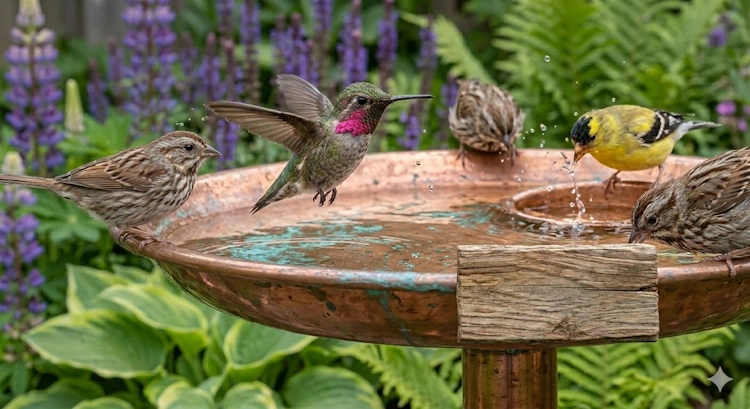
Birds need water for drinking and bathing year-round, and a shallow birdbath (1–2 inches deep) placed within 3 feet of the window will double the number of bird visits to your setup. Change the water every 2–3 days to prevent mosquito breeding, and scrub the bath with a 10% bleach solution once a month to prevent algae and bacteria growth.
In winter, upgrade to a heated birdbath to keep water liquid below freezing: this will attract birds even when food is scarce, and provide hours of entertainment for your cat as they watch birds splashing in the snow. Avoid deep birdbaths: baby birds and small species can drown in water deeper than 2 inches.
Plant Cat-Safe Native Greenery Outside the Window
Native plants provide natural food, shelter, and nesting sites for birds, making your window area attractive long-term. Check the Cornell Lab of Ornithology’s guide to attracting backyard birds for a region-specific list of native plants that thrive in your area. Examples of beginner-friendly native plants include coneflowers, black-eyed Susans, native grasses, and oak trees (which support over 500 species of caterpillars, a key food source for nesting birds).
Always choose plants that are non-toxic to cats: avoid lilies, azaleas, sago palms, and tulips, which are all fatal to cats if ingested. If you don’t have a yard, use native potted plants on your windowsill or balcony: they provide the same benefits in small spaces.
How to Choose the Right Window Setup for Your Cat
Not all window setups are equally engaging for cats. These adjustments will make your setup more enjoyable for your pet, and keep them coming back to the window day after day:
Best Window Perch Placement for Cat Viewing
Place your cat’s perch at their eye level, or slightly above, so they don’t have to strain to see the birds. Opposite the feeder is best, as mentioned earlier, but if you have a large window, you can place the perch in the center, with the feeder to the left or right. Avoid placing the perch in direct sunlight: cats can overheat quickly, so choose a window with partial shade during the hottest part of the day.
If your cat is shy or easily startled, choose an enclosed window perch with a clear front panel: this gives them a sense of security while still letting them watch the birds. For bold cats, an open perch with a soft cushion is better, as it lets them stretch out and get comfortable during long viewing sessions.
Avoid Reflective Window Surfaces
Birds can’t distinguish reflective glass from open sky, leading to millions of window strike deaths every year. To prevent this, apply UV-reflective window decals, screens, or film to the outside of your window. These products are invisible to humans and cats, but visible to birds, alerting them to the glass barrier.
You can test your window’s reflectivity by holding a printed photo up to the glass: if you can see a clear reflection of the photo in the glass, the window is too reflective. Add decals every 4 inches across the entire window to eliminate strike risks. This also helps reduce scratching: cats are less likely to scratch at glass that they can clearly see is a solid barrier.
Troubleshooting: Why Aren’t Birds Coming to Your Window?
If it’s been more than 4 weeks and you haven’t seen a single bird, use this checklist to diagnose the problem:
- Feeder is too new: Birds rely on sight and memory to find food sources, and it can take 2–4 weeks for local birds to discover a new feeder. Be patient, and keep the feeder full consistently.
- Wrong seed mix: If you’re using a cheap filler-heavy mix, birds will toss the unwanted seeds on the ground and never return. Switch to a high-quality mix with black oil sunflower seeds as the base.
- Lack of cover: Birds won’t visit a feeder that’s out in the open, as they feel exposed to predators like hawks. Add a small bush or potted plant near the feeder to give them a safe place to hide.
- Dirty feeder: Moldy, wet seed grows bacteria that can kill birds, so they avoid dirty feeders. Clean your feeder with warm soapy water once a month, and remove wet seed immediately.
- Window strikes: If a bird has hit your window in the past, other birds will avoid the area. Add window decals to eliminate future strikes, and the birds will return within a week.
Frequently Asked Questions
Will attracting birds to my window encourage my cat to hunt?
No, as long as your window is closed or fitted with a tight screen. Indoor cats may exhibit natural hunting behaviors like chattering, tail twitching, or pouncing at the glass, which is normal play that satisfies their prey drive without harming birds. This is far safer than letting your cat outdoors, where they kill an estimated 2.4 billion birds every year in the U.S. alone.
How long does it take to attract birds to a window feeder?
Most people see their first bird within 1–2 weeks, but it can take up to a month in areas with low bird populations. Adding a birdbath can speed up the process, as birds need water year-round, even if they have plenty of food sources.
Can I use a suet feeder for my window?
Yes! Suet feeders attached to windows attract woodpeckers, nuthatches, and chickadees, which are some of the most active and entertaining birds for cats to watch. Use no-melt suet in summer to prevent it from spoiling in the heat, and high-fat suet in winter to help birds maintain their body temperature.
Are window feeders safe for birds?
Yes, when mounted correctly. Window-mounted feeders sit within 3 feet of the glass, which eliminates the risk of fatal window strikes. They also keep seed off the ground, reducing the spread of disease among bird populations. Always clean your feeder monthly to keep it safe for visiting birds.
Conclusion: How to Attract Birds to a Window for a Cat
Setting up a bird-friendly window for your cat is one of the most impactful things you can do for your pet’s health and happiness, and for local bird populations. Start with a high-quality window feeder and a sturdy cat perch, add a shallow birdbath and native plants, and you’ll have a steady stream of feathered visitors in no time. Remember to always prioritize safety: follow the 3-foot rule, use cat-safe perches, and avoid reflective window surfaces.
Be patient if birds don’t show up immediately: consistency is key. Once your setup is established, you’ll have a front-row seat to the wonders of backyard birding, and your cat will have hours of enrichment every day. It’s a simple, low-cost project that pays off for years to come.
Hassan is a lifelong backyard birding enthusiast and the creator of Birdhouse Tales. Turning a passion for nature into a mission, they spend their days designing bird-approved DIY nesting boxes, testing squirrel-proof gear, and curating the best advice to help homeowners build safe wildlife sanctuaries. Whether you are trying to attract your first pair of bluebirds or looking for the perfect copper birdbath, Hassan provides practical, real-world guides to bring the joy of birdwatching right to your window.