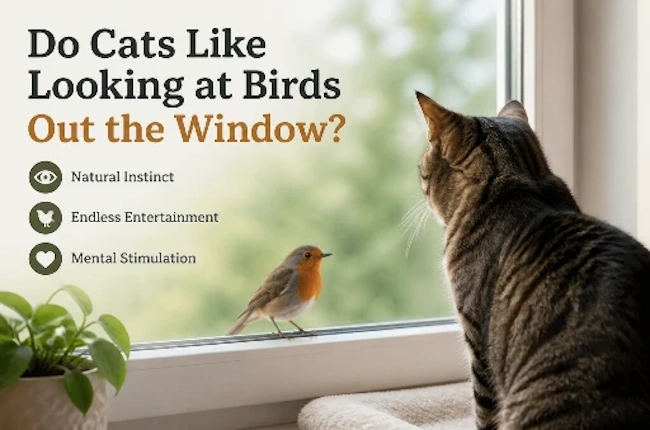
If you’ve ever caught your cat frozen in place on a windowsill, ears twitching and tail tip flicking at a sparrow flitting outside, you’ve probably asked yourself: Do cats like looking at birds out the window? The short answer is a resounding yes for the vast majority of felines, from playful kittens to sedentary senior cats. This common behavior isn’t just a quirk; it’s rooted in their biology, natural instincts, and even their emotional well-being. Whether you’re a first-time cat owner or a lifelong pet parent, understanding why your cat loves this pastime can help you make the experience safer, more enriching, and better for local bird populations, too.

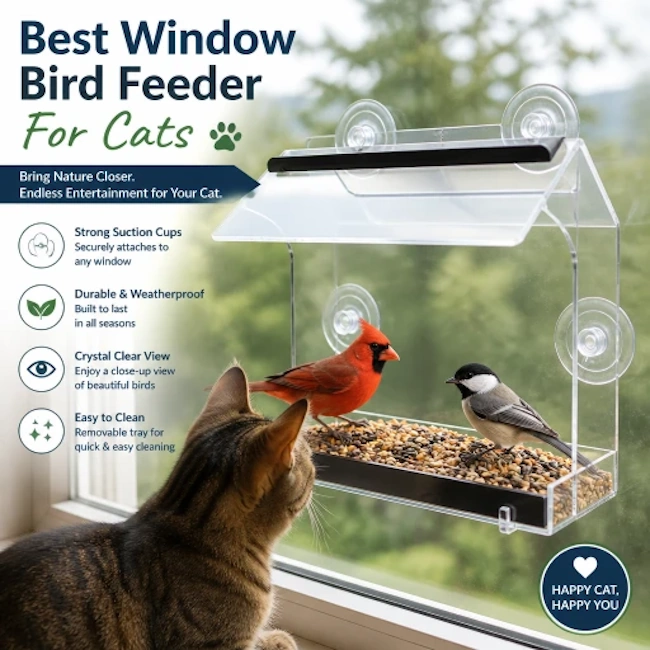
Nature Anywhere Window Bird Feeder – Weather Proof Transparent Acrylic Bird Feeders for Outdoors – Enhanced Suction Grip, Bird Watching for Cats, Easy-to-Clean, Outdoor Birdhouse Feeder (1 Unit)
Check PriceWhy Do Cats Love Watching Birds Out the Window?
It Taps Into Their Predatory Instincts
All cats, even those born and raised entirely indoors, retain the full predatory drive of their wild ancestors. Birds are ideal visual triggers for this instinct: they’re small, move erratically, make high-pitched sounds, and flutter in ways that mimic the prey cats evolved to hunt over thousands of years. For indoor cats that never get to chase real prey, watching birds through a window provides a safe, low-stakes way to engage this core part of their biology.
Unlike playing with a laser pointer or a feather wand, where a human controls the “prey” movement, birds move on their own terms. This unpredictability keeps cats engaged for longer periods. You may notice your cat chirping, chattering their teeth, or twitching their paws while watching — these are all natural predatory behaviors that would normally precede a hunt. The window acts as a safe barrier, letting your cat enjoy the thrill of the chase without the physical effort or risk of actually catching a bird.
It Provides Critical Mental Stimulation
Indoor cats face a common problem: boredom. Without regular environmental enrichment, they’re far more likely to develop destructive behaviors like scratching furniture, knocking items off shelves, or overeating leading to obesity. Birdwatching is one of the most effective forms of passive enrichment for cats. It engages multiple senses at once: they watch the birds move, listen to their songs, and may even catch faint scents of feathers or seeds if the window is cracked open.
Veterinarians often recommend window birdwatching as a low-cost enrichment tool for cats that don’t enjoy active play. Just 15 minutes of watching birds can provide the same mental stimulation as a 10-minute session of interactive play with a toy. This is especially valuable for senior cats with mobility issues, or shy cats that get stressed by direct human interaction or loud toys.
It’s Low-Effort Entertainment
Cats are masters of energy conservation, spending up to 16 hours a day sleeping. Activities that require them to run, jump, or pounce can be exhausting, especially for less active cats. Birdwatching is entirely passive: your cat can sit, lay down, or curl up on a perch and watch for hours without expending more than a few calories. This makes it a favorite activity for cats of all energy levels, from hyperactive kittens to geriatric cats with joint pain.
Unlike a TV show or a tablet game designed for cats, which often have repetitive, artificial movements, real birds provide ever-changing, unpredictable stimulation. Your cat will never get bored of the same flock of sparrows, because their movements, numbers, and behaviors change every day. Many cats will return to the same windowsill at the same time each day, waiting for their daily “bird TV” session.

SUNALLY Window Bird Feeder for Outdoors, Clear Feeders Window Mounted with Strong Suction Cups, Fummingbird Feeder for Viewing Inside, Oriole, Finch Bird Watching for Cats, Elderly, Kids
Check PriceIs Window Birdwatching Good for Cats?
Benefits for Indoor Cats
For fully indoor cats, window birdwatching offers a long list of proven benefits. Findings from the Cornell Feline Health Center show that indoor cats with access to engaging window views have lower cortisol (stress) levels, reduced rates of urinary tract issues linked to stress, and healthier body weights than cats with no window access. Birdwatching also reduces the likelihood of behavioral issues like aggression toward other pets or destructive chewing.
Many cat owners report that their cats are calmer and more affectionate after regular birdwatching sessions. The mental engagement tires them out gently, making them more likely to nap or cuddle after watching birds, rather than zoom around the house at 3 a.m. For multi-cat households, window perches can also reduce resource guarding, as each cat can have their own spot to watch without competing for space.
Potential Risks to Watch For
While birdwatching is largely safe, there are a few risks to keep in mind. First is window safety: thousands of cats each year are treated for “high-rise syndrome” after falling out of open windows or loose screens. Even a fall from a first-floor window can cause serious injury. Always install secure, pet-proof screens on any window your cat can access, and never leave windows open more than 2 inches when your cat is in the room.
Second, some cats get overstimulated or frustrated by watching birds they can’t catch. This can lead to redirected aggression: your cat may bite your hand, scratch the couch, or pounce on another pet after watching birds for too long. Watch for warning signs of overstimulation: flattened ears, dilated pupils, a twitching tail tip, or low growling. If you notice these, gently redirect your cat to a different activity like a snack or a quiet petting session.
Finally, consider the impact on local bird populations. If you place a bird feeder right outside your window, birds may fly into the glass and injure themselves. We’ll cover how to avoid this later in our setup guide.
How to Set Up a Safe Bird-Viewing Spot for Your Cat

Window Bird Feeder Viewing Box – 10×6 Inches Clear Bird Feeder for Window with 4 Strong Suction Cups, 3 Compartment Trays, Birdfeeders Outside Hanging for Cardinal, Robin, Blue Jay
Check PriceChoose the Right Window
Start by picking a window that’s low to the ground (to reduce fall risk) and has a clear view of trees, shrubs, or flower beds where birds naturally gather. Avoid windows that face busy streets, construction sites, or loud playgrounds — too much stimuli can stress sensitive cats. If you don’t have many birds visiting your yard naturally, check out our step-by-step guide to attracting songbirds to windows for tips on planting native foliage and choosing the right seed to draw in local species.
South-facing windows are ideal in cooler climates, as they get warm sunlight that cats love to bask in while watching birds. In hot climates, east-facing windows that get morning sun are better to avoid overheating. Make sure the window is easy for you to clean, as bird droppings on the glass can block your cat’s view over time.
Add a Cat-Safe Perch
Never let your cat sit directly on a bare windowsill: they can easily slip on smooth surfaces, especially if they get excited by a bird. Instead, install a sturdy window perch that suctions to the glass, or place a cat tree or window seat next to the window. Look for perches with non-slip surfaces and weight limits that exceed your cat’s current weight by at least 5 pounds to ensure stability.
Many cats prefer perches with soft, removable covers that you can wash regularly. If you have multiple cats, consider installing two perches on the same window so they don’t have to fight for space. For senior cats or cats with arthritis, choose a perch that’s low to the ground and has a ramp or step to make it easy to climb up.
Attract Birds Without Endangering Them
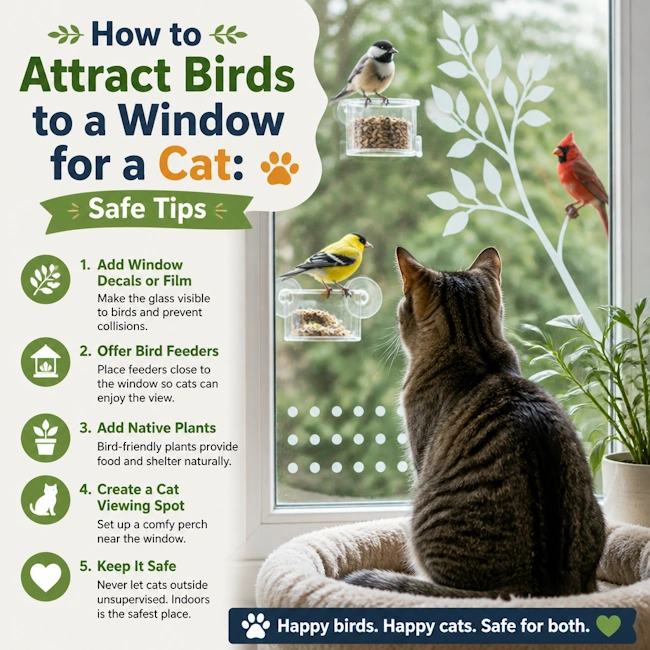
A window-mounted bird feeder designed for feline viewers is a great way to bring more birds right to your cat’s line of sight. However, it’s critical to place the feeder at least 3 feet away from the glass, or use decals on the window to make the glass visible to birds. This prevents collisions that can injure or kill birds, and keeps your cat from getting frustrated by birds that land directly on the glass.
Avoid using seed mixes that contain filler grains like milo or wheat, which most songbirds don’t eat. Instead, use black oil sunflower seeds, nyjer seed, or suet cakes that attract finches, sparrows, chickadees, and other small songbirds. Planting native shrubs like dogwood or elderberry outside the window gives birds cover from predators, making them feel safer visiting your feeder. Never use pesticides on plants near the window, as these can poison birds and make your cat sick if they lick their paws after walking on treated surfaces.
Frequently Asked Questions
Can watching birds out the window make my cat aggressive?
Some cats do experience frustration when they can’t catch the birds they’re watching, which can lead to redirected aggression toward owners, other pets, or furniture. If your cat starts biting or scratching after birdwatching sessions, limit their viewing time to 10-15 minute increments, and distract them with a favorite toy or treat as soon as you notice signs of frustration. Most cats adjust to the barrier of the window over time and stop showing aggressive behavior.
Should I let my cat sit on an open windowsill to watch birds?
Never leave a cat unattended on an open windowsill, even on the first floor. Cats can be startled by loud noises, slipped by sudden movements, or tempted to jump at a low-flying bird, all of which can lead to falls. Install pet-proof screens that screw into the window frame (don’t rely on tension rods, which cats can push out), and keep windows open no more than 2 inches when your cat is in the room. For open windows, add a window guard with bars spaced no more than 3 inches apart to prevent your cat from squeezing through.
How long can cats safely watch birds out the window?
Most healthy adult cats can watch birds for 20-30 minutes at a time without overstimulating. Senior cats, kittens, and cats with anxiety may do better with shorter 5-10 minute sessions. Watch for signs that your cat has had enough: flattened ears, rapid tail twitching, dilated pupils, or growling. If you see these, gently call your cat away from the window with a treat or a favorite toy. You can let them return to the window once they’ve calmed down.
Do outdoor cats like looking at birds out the window too?
Yes, even cats that spend time outdoors will often pause to watch birds through windows, especially indoor-outdoor cats that split their time between inside and outside. However, outdoor cats may be less interested in window birdwatching than fully indoor cats, since they have access to real prey, other outdoor stimuli, and more space to roam. If you have an outdoor cat that comes inside, they’ll likely still enjoy the occasional birdwatching session on a rainy or cold day.
Conclusion
So, do cats like looking at birds out the window? For nearly every feline, the answer is a clear yes. This simple activity taps into their natural instincts, provides critical mental stimulation, and offers low-effort entertainment that fits into any cat’s routine. By setting up a safe viewing spot, attracting birds responsibly, and watching for signs of overstimulation, you can make window birdwatching a positive part of your cat’s life.
Remember to prioritize safety for both your cat and local bird populations: use secure window screens, place feeders away from glass, and limit viewing time if your cat gets frustrated. With a little setup, you can turn an ordinary windowsill into your cat’s favorite spot in the house — and enjoy watching them enjoy the show too.

Hassan is a lifelong backyard birding enthusiast and the creator of Birdhouse Tales. Turning a passion for nature into a mission, they spend their days designing bird-approved DIY nesting boxes, testing squirrel-proof gear, and curating the best advice to help homeowners build safe wildlife sanctuaries. Whether you are trying to attract your first pair of bluebirds or looking for the perfect copper birdbath, Hassan provides practical, real-world guides to bring the joy of birdwatching right to your window.