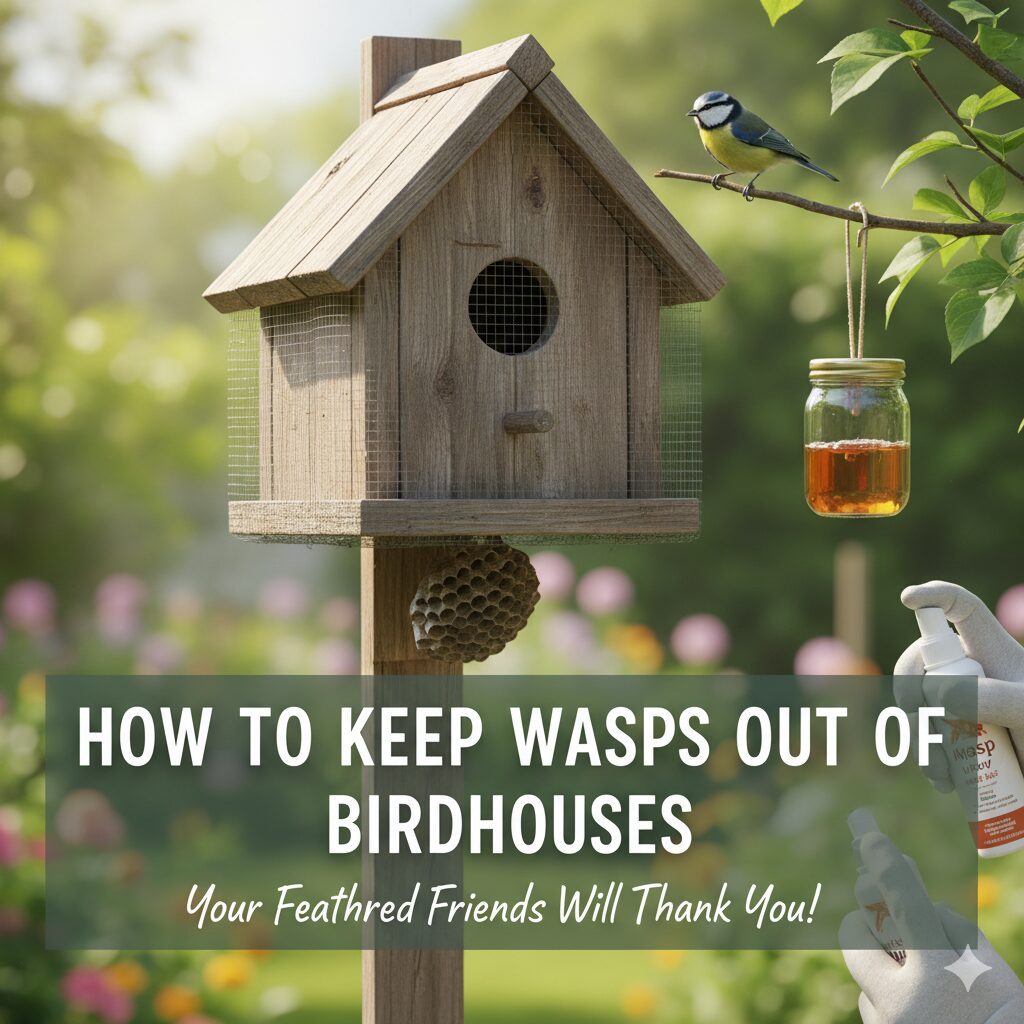
It’s one of the most exciting moments for a backyard birder: you see a pair of bluebirds, wrens, or chickadees inspecting the beautiful birdhouse you set up for them. They go in, they come out, they chirp… and then, a week later, they’re gone. You go to investigate, and your heart sinks. You see it: the unmistakable papery-gray swirl of a wasp nest, with angry guards patrolling the entrance.
As seasoned bird lovers and the experts at Birdhouse Tales, we’ve experienced this frustration more times than we can count. A wasp infestation in a birdhouse isn’t just an annoyance; it’s a direct threat that can kill vulnerable nestlings and drive off potential bird families. The internet is full of quick fixes that are dangerous, ineffective, or both. Your first instinct might be to grab a can of wasp spray, but that is the single worst thing you can do.
This is the definitive, E-E-A-T (Experience, Expertise, Authoritativeness, Trustworthiness) guide on how to keep wasps out of birdhouses, the 100% bird-safe way. We will cover proactive prevention, safe removal, and the expert-vetted tools you need. Your birds are counting on you to be a good, safe landlord.
The 7 Bird-Safe Ways to Keep Wasps Out of Birdhouses
If you’re in a hurry, here is the expert-approved, bird-safe strategy:
- The Slippery Ceiling Trick (Best Method): During your annual birdhouse clean-out, rub the inside ceiling of the birdhouse with a bar of unscented soap or a block of paraffin wax. Wasps can’t get their nests to stick and will move on.
- The Decoy Nest Trick: Hang a fake paper wasp nest near the birdhouse. Paper wasps are territorial and will avoid building a nest near what they think is an existing, rival colony.
- Never Use Pesticides: Ever. Wasp sprays and pesticides are lethal to birds, especially delicate nestlings. The residue can kill for months. This is our 1 rule.
- Understand Wasp Life Cycles: The best time to wasp-proof is in late winter or very early spring, before the queen wasps emerge from hibernation to scout new locations.
- Choose the Right Birdhouse: Select houses made from quality wood with good ventilation. Avoid perches, which wasps can use as anchor points.
- Proper Placement: Wasps often prefer houses in shady, sheltered areas. Many birds, like bluebirds, prefer houses in the open, which can deter some (but not all) wasp activity.
- Active Removal (If It’s Too Late): If a nest is present before birds have claimed the box, wait for a cold night, suit up, and quickly scrape it out. Never use sprays.
The Wasp Problem – Know Your Enemy And Why They Love Your Birdhouse
Before you can fight them, you need to understand them. Not all wasps are the same, and they are attracted to your birdhouse for very specific, logical reasons. Our expert experience shows that if you understand the why, you can solve the how much more effectively.
Why Are Wasps Attracted to a Birdhouse?
A birdhouse is a wasp’s dream real estate. From a wasp’s perspective, what birds use birdhouses for and what wasps use them for is identical: a safe, secure, dry place to raise a family. It offers:
- A Dry, Sheltered Structure: It’s a pre-built cave that is perfectly protected from rain, wind, and sun.
- A Perfect Anchor Point: The flat, wooden ceiling is the ideal surface for a queen paper wasp to attach the stalk of her new nest.
- Protection from Predators: It’s a single-entrance box that’s easy to defend from other insects or predators.
- A Blank Slate: When you follow our advice on what to put inside a birdhouse (which is absolutely nothing!), it’s an empty, clean space perfect for a new colony.
Identifying the Primary Culprit: The Paper Wasp
While some Yellow Jackets might build inside a box, the most common U.S. invader we see, from our experience, is the Paper Wasp (genus Polistes). Here’s how to identify them:
- Appearance: Slender, long-legged wasps, often brown or reddish-brown with yellow markings. Their legs famously dangle in flight.
- The Nest: This is the key. They build the classic, open-comb, umbrella-shaped nest. It’s a single, open layer of hexagonal cells, usually hanging from a single stalk on the ceiling of your birdhouse.
- The Timing (Crucial for Prevention): In the spring, a single, fertilized queen emerges from hibernation. She alone scouts for a new nest site. If she can build her starter nest, she’ll lay eggs that become her first generation of workers. The entire key to prevention is stopping this one, single queen in the spring.
The E-E-A-T Cardinal Rule – Why You Can NEVER, EVER Use Pesticides
This is the most important section of this entire article. It is the foundation of our Trustworthiness as birding experts. We get this question all the time: Can’t I just quickly spray the nest with wasp spray and wipe it out?
The answer is an absolute, unequivocal NO.
A LETHAL WARNING: Pesticides are a Death Sentence for Birds
Using any insecticide, pesticide, or wasp spray (like Raid) in or on a birdhouse is a death sentence for any bird that tries to use it. Here is the science:
- Direct Poisoning: Nestlings (baby birds) are incredibly fragile. They are born with thin, bare skin and developing respiratory systems. The lingering toxic residue from a single spray will be absorbed through their skin and inhaled, leading to a slow, agonizing death.
- Contaminated Food Chain: The parent birds, who wake up early to hunt, will bring insects back to the nest. These insects may land on the contaminated entrance hole, pick up the poison, and feed it directly to their babies.
- Long-Term Residue: These chemicals are designed to keep killing for weeks or months. Wood is porous and absorbs the poison. You cannot wipe it out. The only way to fix a birdhouse that has been sprayed is to throw it away.
Expert Verdict: Using pesticides in a birdhouse is not a shortcut. It is a trap. You are turning a safe house into a gas chamber. There are 100% bird-safe alternatives. Do not do it.
Proactive Prevention – How to Wasp-Proof Your Birdhouse
The best time to solve a wasp problem is before it starts. This is all about making your birdhouse as unattractive to wasps as possible, while keeping it 100% attractive to birds. The best time to do this is during your annual birdhouse cleaning in late winter or early spring.
Method 1: The Slippery Ceiling Trick (Our 1 Recommendation)
This is, by far, our most experienced and effective method. The queen paper wasp must attach her nest’s stalk to the ceiling. If she can’t, she will give up and leave. Your job is to make that surface impossible to build on.
- Get an Unscented Bar of Soap: A simple, cheap bar of Ivory soap is perfect. Scented soaps (especially floral or sweet ones) might attract wasps, so stick to the basics.
- Rub It On: Open your birdhouse. Take the bar of soap and vigorously rub it, waxy-side down, all over the entire inside ceiling. You want a thick, visible, waxy layer. Don’t miss the corners.
- (Optional) The Walls: For good measure, rub it on the top 2-3 inches of the interior walls as well.
That’s it. The waxy, slippery soap film makes it impossible for the nest’s stalk to adhere. Birds don’t care about it at all. It’s cheap, safe, and wildly effective. This single step will solve 90% of your wasp problems.
Ivory Bar Soap (Unscented)

Don’t overthink it. This is the perfect tool for the Slippery Ceiling trick. Why? It’s unscented (won’t attract new pests), it’s high in stearic acid (which creates the waxy, slippery film), and it’s 100% bird-safe. It’s the most effective, cheapest, and safest wasp-proofer you can buy. A single bar will last you for years and cover your entire collection of birdhouses.
Method 2: The Wax Method (A More Durable Alternative)
This is a slightly more heavy-duty version of the soap trick. It’s great for birdhouses in very damp climates where a soap layer might wear down.
- Get Paraffin or Beeswax: A block of food-grade paraffin wax (used for canning) or a bar of natural beeswax is ideal.
- Crayon It On: Just like with the soap, rub the block of wax hard on the inside ceiling and upper walls. You are essentially drawing a thick layer of wax.
This method is equally bird-safe and creates a long-lasting slippery surface that wasps can’t grip.
Food Grade Paraffin Wax Bars

If you want a one-and-done application for the season, paraffin wax is your best bet. This food-grade wax is 100% non-toxic and safe for birds. It creates a very slick, durable surface. This is what we use on our birdhouse gourds, as the interior surface is more uneven. Just crayon it on the ceiling. A single block is enough for a whole fleet of birdhouses.
Method 3: The Decoy Nest (Psychological Warfare)
This is a fascinating and surprisingly effective method that leverages a wasp’s own instincts. Paper wasps are highly territorial. If they think another colony has already claimed a turf, they will actively avoid the area.
Hanging a fake, or decoy, paper wasp nest near your birdhouse can act as a No Vacancy sign. The scouting queen sees it, thinks, Oops, this spot is taken, and moves on. You can buy pre-made ones or even crumple up a small brown paper bag to mimic a starter nest. Hang it from the birdhouse hook or a nearby branch.
Product Recommendation: Wasp Nest Decoys (4-Pack)
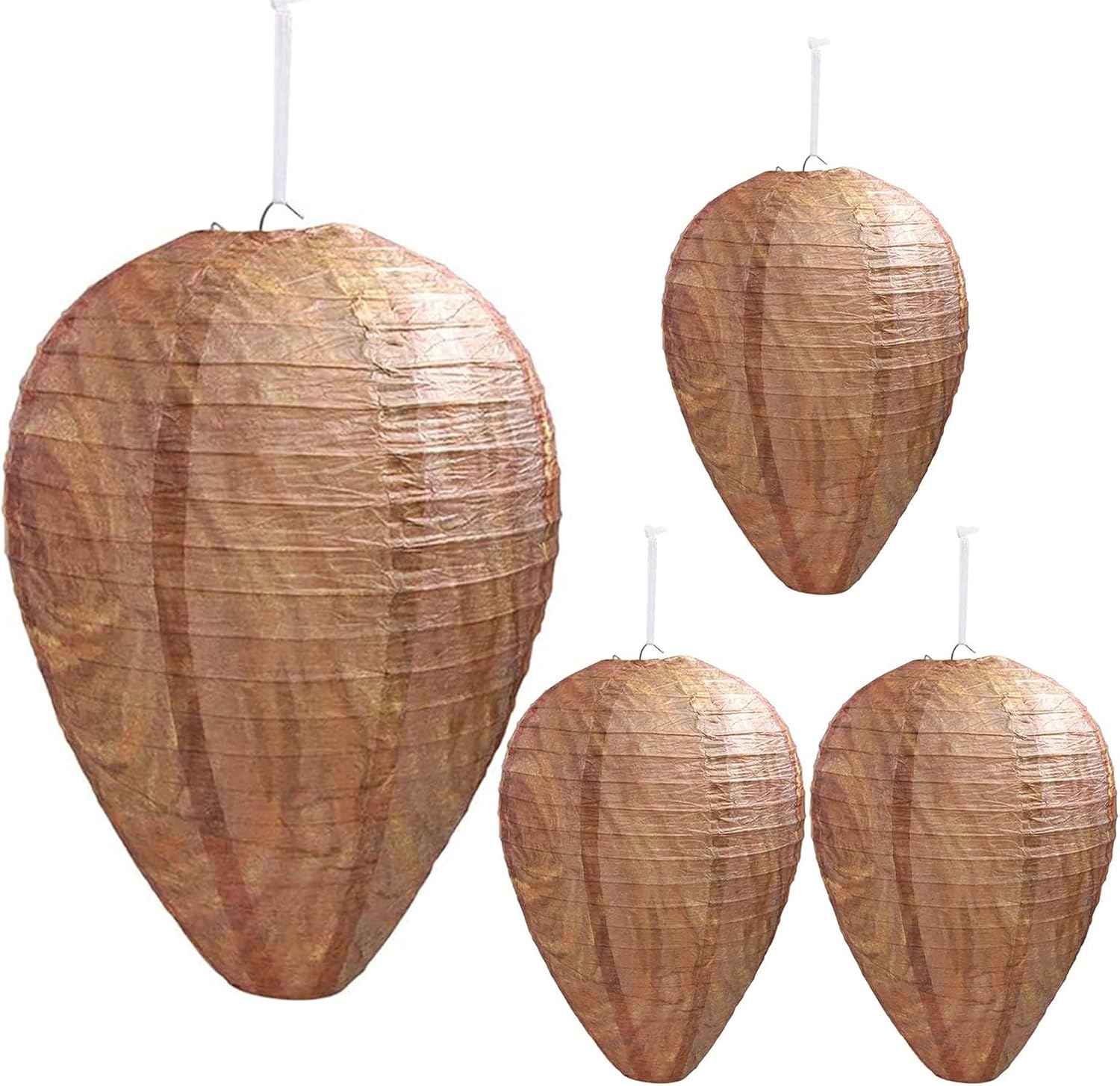
Why make one when you can buy a set of durable, weather-resistant decoys? These are a great, non-toxic, set-and-forget solution. Hang one from your birdhouse pole, a nearby hook, or under the eaves of your porch. This set of 4 lets you create a perimeter of no-go zones, protecting your birdhouses and your patio at the same time.
Strategic Birdhouse Design, Placement, and Mounting
Sometimes, your choice of house and location can make a big difference. This is where your expertise as a bird landlord comes in.
- Choose the Right House:
- No Perches: This is a key rule in our birdhouse reviews. Perches are not needed by birds and only offer a landing spot for predators and a potential anchor for wasps.
- Good Ventilation: Wasps often prefer stagnant, humid air. A well-ventilated house (with small gaps at the top) is healthier for birds and less appealing to some wasps.
- Proper Hole Size: A correct hole size, as detailed in our birdhouse dimensions chart, won’t stop a wasp but will stop larger birds, reducing competition. Ensure you have the right house for the bird you want. (e.g., Cardinals won’t use a box, but wrens love them!)
- Choose the Right Location:
- Open vs. Shady: This is a trade-off. Paper wasps tend to prefer shady, sheltered, protected spots (like under a porch eave). Bluebirds and Tree Swallows prefer houses mounted in the wide open. Therefore, a bluebird house on a birdhouse pole in the middle of a yard is less likely to get wasps than a wren house tucked in a shady corner. Know the bird you want and its preferences.
- Direction: What direction should a birdhouse face? Generally east, away from prevailing winds. This doesn’t affect wasps much, but it’s critical for bird survival.
I Already Have a Wasp Nest! How to Safely Remove It
Okay, so your prevention failed. You look inside a birdhouse you’d hoped to get birds to nest in, and there’s already a nest. DO NOT PANIC. You have a clear, safe, step-by-step plan.
As a lifelong birder, my calendar is my most important tool. The when you act is just as important as the how. Checking your boxes before nesting season is the 1 way to prevent conflicts.
Sarah Thompson Birdhouse Tales Resident Ornithologist
Step 1: The Most Important Question: Are There Birds?
This is the first and only question that matters. Open the birdhouse (from the side, never the front) and check.
- If YES, there are birds, eggs, or nestlings: YOU CANNOT DO ANYTHING. It is illegal and unethical to interfere with an active bird nest. You cannot spray the wasps. You cannot remove the nest. Your only hope is that the parent birds are aggressive enough to defend their young (some, like wrens, are!). You must simply accept this box is lost for this season and focus on preventing it in your other boxes.
- If NO, there are no birds (just the wasp nest): You are clear to act. Proceed to Step 2.
Step 2: Wait for the Right Time
Do not attempt to remove a wasp nest in the middle of a hot summer day. The wasps will be active, aggressive, and you will get stung.
- Best Time: A cold night. Wasps are ectothermic, meaning their body temperature is regulated by the air around them. On a cold night (below 50°F / 10°C), they are immobile, dormant, and all gathered on the nest.
- Second-Best Time: Late fall or winter. After the first hard frost, the entire colony (except for new, hibernating queens) dies off. The nest will be empty and easy to remove during your end-of-season clean-out.
Step 3: Gear Up for Safety
Even on a cold night, be smart. Wear long sleeves, pants, and a good pair of thick gloves. You’re dealing with a pest, so protect yourself.
Step 4: The (Bird-Safe) Removal
Your goal is speed and efficiency.
- Bring a small bucket of soapy water (a few squirts of dish soap).
- Open the birdhouse.
- Use a long, flat tool (like a putty knife or scraper) to quickly scrape the nest off the ceiling.
- Knock the nest directly into the soapy water. The soap breaks the surface tension and drowns the (dormant) wasps quickly.
That’s it. No sprays. No chemicals. Just a simple, physical removal.
Product Recommendation: Red Devil 3-Inch Putty Knife/Scraper

Every birdhouse owner needs one of these. It’s the perfect tool for your annual clean-out and for emergency wasp removal. The 3-inch stiff blade is perfect for scraping old nests, caked-on mud, and (most importantly) the hard-to-remove stalk of a paper wasp nest. It’s durable, cheap, and essential. This is what we use to clean our birdhouses every single year.
Step 5: Clean and Wasp-Proof the Box
Now that the nest is gone, you must treat the box to prevent a new queen from trying again.
- Scrub it Out: Use a stiff brush and a 10% vinegar-to-water solution to scrub the inside of the house. This removes any scent or pheromones the wasps may have left.
- Let it Dry: Let the house air-dry completely.
- Apply Prevention: This is the most important step. Now, apply the Slippery Ceiling soap or wax trick from Part 3.
You have now successfully removed the threat and prevented a future one, all without a single drop of poison.
Part 5: Creating the Ultimate Bird-Friendly Habitat
A wasp-free birdhouse is just one part of a larger, healthier backyard ecosystem. Your goal as a backyard birder is to create a total environment that supports your birds from the moment they wake up to the moment they go to sleep.
Here at Birdhouse Tales, our E-E-A-T-driven philosophy is that a good host provides more than just a house. Here are some key resources, now that your houses are safe:
- The House Itself: Make sure you have the right house. Are you using a wooden box? A birdhouse gourd? Have you learned how to grow your own or how to dry them? Have you picked the best paint and the best wood?
- Safety & Security: Is your house safe? We highly recommend a birdhouse entry protector to keep out predators. Is it mounted on a predator-proof pole?
- Food & Water: A safe house is good, but a house near a reliable food source is better. Add a window bird feeder with the best bird seed to see your new tenants up close.
- Get the Full Experience: The ultimate reward is seeing the nestlings. A birdhouse with a camera (or a wireless birdhouse camera you add yourself) lets you watch the entire miracle, wasp-free.
Final Word: You Are Your Birds’ Best Defender
It’s easy to get frustrated and just want the quick fix. But as responsible bird lovers, our expertise and trustworthiness demand that we put the birds’ safety first. Keeping wasps out of birdhouses isn’t about a war on wasps; it’s about smart, safe, and effective management.
By understanding the wasp life cycle, using simple, non-toxic tools like soap and wax, and performing timely clean-outs, you can all but guarantee your birdhouses will be safe, available, and ready for the feathered tenants you intended. Your bluebirds, wrens, and chickadees will thank you.
Sanom is a lifelong nature enthusiast and passionate backyard birder who has spent years observing bird behavior and building DIY birdhouses. With a deep curiosity for species like chickadees, wrens, and woodpeckers, he shares practical tips and heartfelt stories to help others attract, shelter, and appreciate the wild birds around them. Whether you’re crafting your first birdhouse or simply enjoying morning songbirds, Iftekhar’s guides on BirdHouseTales.com are designed to bring you closer to the magic of birdwatching.